What should you look for when choosing?
Start with the programmes you want to use. Then compare RAM, screen, storage and portability based on the way you work.
| What to consider |
What to look for |
Who should prioritise this? |
| Windows and editor |
Check the RAM in the exact configuration and whether it can be upgraded. The Dutch Consumers’ Association recommends 16 GB where possible for running several programmes; 8 GB may be enough for light use. |
I want to switch quickly between browser tabs and my editor without having to limit myself to light use. Around 29% of consumers rank RAM for running multiple windows as their top priority. |
| Screen space |
Compare the screen size, resolution and finish of the configuration you are considering. Lenovo describes the screen on the configuration reviewed as glossy, while Dell describes its selected screen as anti-glare. |
I want to view the site and a preview page side by side, especially when I’m working without an external monitor. Around 23% of consumers put screen space first. |
| Development software |
Make a note of your editor, browser and any local tools before choosing an operating system. Google warns that Linux may not be available on a Chromebook managed by your workplace or school. |
I want to know in advance whether my development tools will work on the laptop I choose, rather than having to look for an alternative after buying it. Software compatibility is the main concern for around 18% of consumers. |
| Local media storage |
Estimate how many photos and recordings you’ll store locally, then compare SSD capacity. The Dutch Consumers’ Association recommends 512 GB or more if you regularly use large photo or video files. |
I want to store choir photos or recordings locally, not just leave room for website files. Around 18% of consumers put storage for local media at the top of their list. |
| Portability and power |
Compare the screen size and ports on the exact configuration. Also check whether the required charger is included. |
I regularly take my laptop to rehearsals and want to know in advance how much built-in screen space I’ll be giving up for a more compact design. Portability matters most to around 12% of consumers. |
Joybuy laptops for browser windows and website building
These Joybuy laptops run Windows and have screens of 16 inches or larger. Configurations vary in RAM, storage, screen and included power supply.
 No image available
HP OmniBook Ultra Next Gen AI 16-bk0004nd
The 16-inch configuration is an option if you keep lots of windows open and also want to store media files locally.
128 GB RAM and a 2 TB SSD. 3K OLED touchscreen, Windows 11 Pro and a 140 W USB-C adapter.
View at Joybuy
 No image available
HP OmniBook X Flip NG AI PC 16-as0050nd D75LQEA#ABH
The 16-inch screen and 360-degree hinge suit anyone who wants to view windows side by side and switch between different ways of using the laptop.
Touchscreen with a resolution of 1920 × 1200 pixels, Windows 11 Home and a stated weight of 1.88 kg. The description lists laptop, tablet, tent and stand modes, as well as Thunderbolt 4.
View at Joybuy
 No image available
Lenovo Yoga 9 16N1X11 83N70020MH
This 16-inch 2-in-1 configuration may suit you if you want to view several windows and also use tablet mode.
32 GB of RAM and a 1 TB SSD. OLED touchscreen with a resolution of 2880 × 1800 pixels, Windows 11 Home and a 360-degree hinge.
View at Joybuy
 No image available
MSI Venture 16 AI A2HMG-068NL
The 16-inch configuration with an anti-glare screen is an option if you want to view lots of windows side by side.
32 GB DDR5 RAM and a 512 GB SSD. Intel Core Ultra 7 255H, a screen with a resolution of 1920 × 1200 pixels and Windows 11 Pro. The adapter is not included and must be purchased separately.
View at Joybuy
 No image available
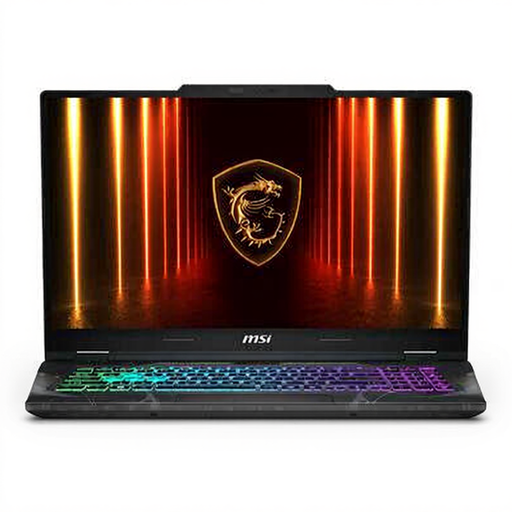
MSI Cyborg 17 B2RWEKG-023NL
The 17.3-inch screen gives you plenty of built-in space if you want to arrange windows on a single screen.
16 GB DDR5 RAM and a 512 GB SSD. Full HD screen and Windows. The charger is not included and must be purchased separately.
View at Joybuy
Frequently asked questions
Do you really need 32 GB of RAM for this website?
Not for the task described here. The Dutch Consumers’ Association recommends 16 GB for running several programmes at once and 32 GB for demanding, data-intensive work. Only consider higher requirements once you know which software you’ll use and how demanding your workload is.
Can you build the site on a Chromebook using a local code editor?
You can if the Linux development environment you need is available on the device. Google describes how to use code editors in this environment, but warns that Linux may not be available on a Chromebook managed by your workplace or school.
What should you check about the charger and battery care?
First, check whether a charger is included with the configuration you choose, and use a suitable power supply. The Dutch Consumers’ Association recommends checking for a smart charging feature, if your laptop has one, and avoiding extreme heat. The setting varies between laptops.
Do you need to buy an extended warranty to have the right to a repair in the Netherlands?
No. Statutory guarantees apply to consumer purchases, in addition to any commercial warranty. ACM ConsuWijzer explains that the seller is responsible for providing an appropriate solution free of charge if a product fails sooner than you could reasonably expect under normal use. There is no fixed general warranty period in the Netherlands.
Can you hand in your old laptop when buying a new one?
According to the Dutch Government, when a private individual buys a similar new device, they can use the free take-back scheme for old appliances, including when buying online. This scheme does not apply to business purchases. Ask the seller how to hand in your old device with the delivery method you choose.


