Start with the app and files you use. A Chromebook may be enough for browser-based study and supported offline files, while software designed specifically for Windows or macOS may require a Windows laptop or MacBook. Then compare the screen and keyboard on the exact model you’re considering. Simple vocabulary lists don’t necessarily need a powerful processor, although having several windows open can require more memory. The Consumentenbond says 8 GB is enough for light use, while 16 GB is mainly useful when running several programmes at once.
Who is this choice for?
Users of a learning programme
You want to know whether your existing programme and files will work on the laptop, including when you study offline. Google Chromebook Help and Anki Docs explain what to consider when it comes to offline files and syncing.
Readers of long vocabulary lists
You spend long periods at the table and want to view text, and possibly a second window, comfortably. In that case, screen space may matter more than having the most compact laptop possible.
People creating their own flashcards
You regularly enter words and switch between a list and study materials. The keyboard layout and the space available for working with several windows are therefore worth considering.
What should you look for in a laptop for vocabulary lists?
Chromebook
Choose this option if: your learning programme works on ChromeOS and you mainly study in a browser or with supported files.
Bear in mind: offline files may need to be prepared in advance, and some apps don’t work offline.
Windows laptop
Choose this option if: you need a programme designed for Windows or edit vocabulary lists using other locally installed software.
Bear in mind: check your programme’s requirements and the keyboard layout of the specific model.
MacBook
Choose this option if: the software you need works on macOS and you also want to use the laptop for other tasks.
Bear in mind: Apple’s stated battery life is based on specified test activities, not your study session. Simple vocabulary lists don’t need a high-spec configuration in themselves.
| What to consider |
What to look for when buying |
Who is this important for? |
| Apps and offline access |
Check the operating system, app and file formats, and try the offline setup you need. |
If I want to keep using my familiar learning programme and files, I’ll check compatibility first. Around 33% of consumers prioritise compatibility. |
| Readability and screen space |
Compare the screen size, resolution, panel and anti-glare finish of the exact model. Also consider how much space the laptop takes up on the table. |
If I’m reading for a long time or want to open an explanation alongside a vocabulary list, a comfortable screen is important to me. Around 27% of consumers prioritise readability. |
| Typing and windows |
Check the keyboard layout and how many programmes you usually use at once. The Consumentenbond says 8 GB is enough for light use, while 16 GB is mainly for running several programmes. |
When I make my own flashcards, I want to type comfortably and switch easily between materials. Around 20% of consumers make ease of input their top priority. |
| Suitable performance and storage |
Choose a configuration to suit your apps and other files. The Consumentenbond recommends 256 GB for everyday office work and suggests considering 512 GB or more for large files. |
If I mainly view simple lists, I don’t want to choose unnecessary performance or storage. Other large files can affect how much space you need. Around 20% of consumers prioritise a suitable configuration. |
Common pitfalls when choosing
-
Choosing a Chromebook without checking your apps and offline files
Google Chromebook Help notes that some apps don’t work offline and that files need to be made available offline in advance. This could affect how you study if you want to work without an internet connection.
Check the app requirements and try your complete offline setup with your own vocabulary list.
If an app doesn’t work without an internet connection, you may need to change the way you study or use another device.
-
Assuming every model in a range has the same features
According to Lenovo, the Lenovo IdeaPad Slim 3 82XN008RMH has an English (Euro) keyboard. Other models may have different features, so the model range alone won’t tell you which layout you’ll get.
Compare the full model code, screen specifications and keyboard layout of the model you want to buy.
-
Treating an outdated ranking as a current buying recommendation
Studenten Wegwijzer’s student laptop list is dated 2 January 2026 and includes a MacBook Air M4. Apple now lists specifications for an M5 model in the Netherlands. A model’s position in a ranking also won’t necessarily tell you whether it’s right for your vocabulary lists.
Use an older list for comparison at most, and check the exact model and current product information before making a decision.
Brands to consider
Lenovo
According to Lenovo, the IdeaPad Slim 3 model 82XN008RMH is a Windows laptop with a 14-inch Full HD IPS screen, 16 GB RAM and a 512 GB SSD.
- Lenovo lists an anti-glare screen for this model.
- The keyboard is English (Euro) and the memory is soldered. Check that the keyboard layout suits you.
ASUS
ASUS describes the Vivobook 14 M1407 as a range that includes models with a 16:10 IPS screen and Windows.
- For the M1407, ASUS lists a WUXGA IPS screen and keyboard features.
- The range includes several models. Compare the full model code before assessing the screen, memory or keyboard.
Apple
According to Apple, the MacBook Air range in the Netherlands includes an M5 model with a 13.6-inch screen. It’s a macOS option if your learning programme works on that operating system.
- Apple lists 16 GB memory and a 512 GB SSD for the 13-inch M5 model.
- The stated battery life applies to specific test activities and won’t predict how long your vocabulary study session will last. Extra processing power isn’t necessary for simple list work.
HP
HP describes the OmniBook X Flip 14-kc0600ndx as a Windows 2-in-1 with a 14-inch touchscreen.
- HP lists 16 GB RAM and a 512 GB SSD for this model.
- A touchscreen and convertible design aren’t essential just for reading vocabulary lists, so check whether you’ll use these features.
Laptops at Joybuy
This selection includes Windows laptops and a MacBook for reading and editing vocabulary lists. Check that your learning programme works with each model.
 No image available
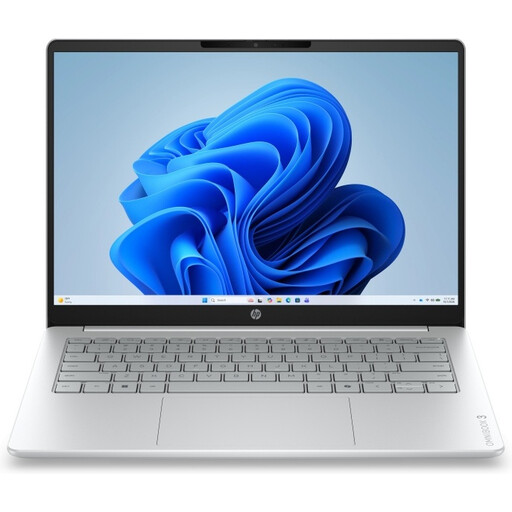
HP OmniBook 3 14-HY0005NDX, AMD Ryzen 5 130, 12 GB RAM, 512 GB SSD
A Windows option if you use a Windows learning programme and want to view vocabulary lists on a 14-inch screen.
The product name lists a 2K IPS screen and Windows 11 Home. The charger isn’t included and must be bought separately.
View on Joybuy
 No image available
Lenovo IdeaPad Slim 3 15AHP10, 15.3 inch, Ryzen 7 8840HS, 16 GB RAM, 512 GB SSD
The larger screen may suit you if you want to view long vocabulary lists at the table. Check that the keyboard layout is suitable for how you plan to use it.
According to the product name, this model has an English QWERTY keyboard. The charger must be bought separately.
View on Joybuy
 No image available
Apple MacBook Air 15-inch M5, 16 GB, 512 GB, Starlight, QWERTY
A macOS option if the learning app you need works on macOS and you want to view vocabulary lists on a larger screen.
According to the product name, this model has 16 GB memory and a 512 GB SSD. A USB-C power adapter isn’t included; you’ll need an adapter rated at 35 W or higher.
View on Joybuy
 No image available
ASUS Zenbook A14 UX3407QA-QD479W, Snapdragon X, 16 GB RAM, 512 GB SSD
According to the product name, this Windows model has a 14-inch WUXGA OLED screen and a Dutch QWERTY layout—features worth considering for reading and typing.
A compatible 65 W USB-C Power Delivery charger is required but isn’t included. Check in advance that older software, drivers and specialist applications work on Windows on Snapdragon.
View on Joybuy
 No image available
Samsung Galaxy Book4 NP750XGK-KG3NL, 15.6 inch, Intel Core 7 150U, 16 GB RAM, 512 GB SSD
A Windows option with a 15.6-inch screen if you want to view long vocabulary lists on a larger display.
The product name lists a Full HD screen and Windows 11 Home.
View on Joybuy
Frequently asked questions
Can you view a vocabulary list on a Chromebook without Wi-Fi?
You can use supported files that you’ve made available offline in advance. Google Chromebook Help mentions Docs and Sheets, among others, but not every app works offline. So try your own learning app and files beforehand.
How can you keep flashcards in sync across several devices?
If you use Anki, you can use AnkiWeb to sync your collection. When syncing for the first time, take care to choose which existing collection to upload or download so that you don’t overwrite any data.
Do you need 16 GB RAM for vocabulary lists?
Not necessarily. The Consumentenbond says 8 GB is enough for light use, while 16 GB is mainly useful when running several programmes at once. Also check the requirements of your own learning programme.
What are your rights if you’re unhappy with a laptop bought online or it breaks soon after purchase?
According to ACM ConsuWijzer, when you buy from a business online, the statutory cooling-off period generally ends 14 days after delivery. You’re also entitled to a product that meets your expectations; the Dutch government says there is no fixed statutory warranty period in the Netherlands. If there’s a fault, contact the seller.


