For simple flashcards you create in a browser, a laptop for everyday use is a sensible starting point. If you use lots of windows, images or desktop software, it’s worth comparing the memory capacity and system requirements you need. Before buying, check that your software and printer work with the operating system you choose. When printing at home, paper size, margins and a test print are still important.
Who is this buying guide for?
Home printing flashcards
You create flashcards to print or cut out at home and want to avoid text falling outside the cutting margin or using the wrong paper size. Canva recommends allowing for margins and taking your printer’s capabilities into account.
Making lots of flashcard sets
You regularly work with several windows, images and files, and want a screen that lets you see the layout clearly. The Consumers’ Association recommends using 16 GB of RAM as a benchmark for comparison, where possible.
Using specific design software
You need to keep using a particular desktop programme or an existing printer. So check the programme’s requirements and printer support first. For example, Google advises Chromebook users to check the exact printer model.
What should you look out for?
Start with the software and printer you want to keep using. Then compare screen space and memory with the number of windows and files you work with.
| What to consider |
What to look for when buying |
Who should prioritise it |
| Printing flashcards |
Check that your printer works with the operating system, then set the paper size and margins. Print a test copy. |
If I print flashcards at home, I want the size to be right and the text to stay within the cutting margin. Around 36% of consumers put print quality first. |
| Screen space |
Compare the screen size and resolution of the exact configuration; screen options can vary within a product range. |
If I want to arrange text and images clearly, I look at how much workspace the screen offers. Around 29% of consumers put screen space first. |
| Memory and storage |
Decide whether you’ll mainly do light browser-based work or use lots of programmes and large files at once. The Consumers’ Association says 8 GB is enough for light use and recommends considering 16 GB where possible. |
If I don’t need more capacity than my work calls for, I compare the configuration with how I’ll use it. Around 21% of consumers prioritise a good fit for everyday use. |
| Desktop software |
Note the name and version of your programme, then compare its system requirements with the laptop’s operating system. |
If I need to keep using a specific desktop programme, I check the requirements before choosing an operating system. Around 14% of consumers put compatibility with this software first. |
Common buying mistakes
-
Assuming a good-looking screen guarantees a good print
Print quality also depends on the paper size, margins and your home printer’s capabilities. Canva warns that not all printers support borderless printing or crop marks.
Check your printer’s settings and capabilities, then print one flashcard as a test.
-
Assuming general range claims apply to the laptop you’ve chosen
The screen and other components can vary between configurations. A specification listed for a product range won’t necessarily apply to every model in it.
Compare the full model or part number with the specifications for the configuration you want to buy.
-
Choosing a different operating system without checking your software and printer
Browser support doesn’t automatically mean that a required desktop programme or every printer will work.
Check the exact software version and printer model before choosing between Windows, macOS and ChromeOS.
-
Assuming all the necessary chargers and adapters are included
The accessories included and the connections available can vary between configurations.
Check what’s in the box and which connections your printer and other devices need.
Brands worth considering
Lenovo
The IdeaPad Slim 5 16 configuration 82XG0094MH is a Windows option with a large built-in screen.
- Lenovo lists 16 GB of RAM, a 512 GB SSD and a glare-free 16-inch IPS screen with a resolution of 1920 × 1200 for this configuration.
- The RAM is soldered. The stated colour coverage is 45% NTSC; claims about other configurations in the range don’t automatically apply to this model.
HP
The OmniBook 5 16-bm0615ndx is a Windows configuration with a 16-inch screen.
- HP lists 16 GB of RAM, a 512 GB SSD and a 16-inch 2K screen for this configuration.
- Before buying, check what’s included in the box: the Dutch product listing reviewed recommends a 65 W USB-C adapter, sold separately.
Apple
The MacBook Air with M5 is a macOS option if you’ve checked that your software and printer work with macOS.
- For the 13-inch base configuration reviewed, Apple lists 16 GB of memory, a 512 GB SSD and two Thunderbolt 4 ports with USB-C.
- Check that your peripherals are compatible with these connections or whether you’ll need a suitable adapter.
Acer
The Chromebook Plus 514 with part number NX.JKAEH.001 is a ChromeOS option for browser-based work.
- Acer lists a 14-inch screen, 8 GB of RAM and a 256 GB SSD for this configuration.
- Acer warns that general range descriptions don’t give the exact specifications of every configuration. Also check printer compatibility and ask for this model’s update end date; Google says it varies by device.
Joybuy laptops for designing flashcards
These Windows laptops are worth comparing for designing flashcards at a fixed workstation. Consider screen space, memory and the connections you need.
 No image available
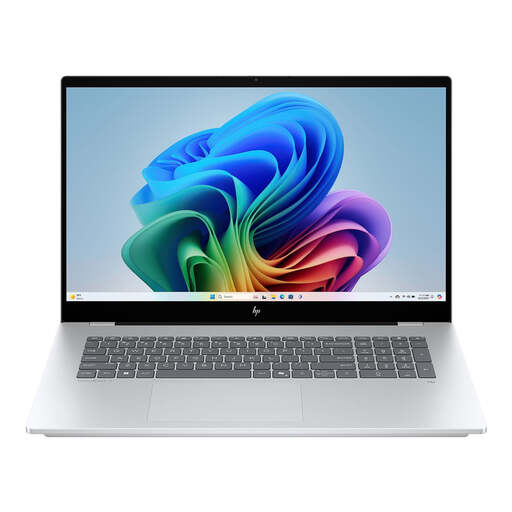
HP OmniBook 7 NG AI PC 17-dc0051nd D75LTEA#ABH
If you use several windows side by side, compare this configuration’s screen size with the space available on your desk.
According to the product information, a USB-C charger is sold separately; check which power supply is included.
View at Joybuy
 No image available
ASUS Vivobook 18 M1807HA-S16512W
The 18.4-inch screen gives you a large built-in workspace for viewing flashcard layouts.
The product name lists a Ryzen 7 260, 16 GB of RAM, a 512 GB SSD and a QWERTY keyboard. A mains adapter isn’t included; the description recommends a suitable USB-C PD charger.
View at Joybuy
 No image available
Lenovo ThinkBook 16 G8 IAL 21SK00EBMH
This configuration could suit you if you want to stick with a Windows setup and lay out flashcards on a 16-inch screen.
The product name lists a glare-free WUXGA IPS screen, Intel Core Ultra 5 135H, 16 GB DDR5, a 512 GB SSD and Windows 11 Pro.
View at Joybuy
 No image available
HP OmniBook Ultra Next Gen AI 16-bk0002nd
Consider comparing this configuration if you use lots of files or programmes at once.
The product name lists 64 GB of RAM, a 2 TB SSD and a 16-inch 3K OLED touchscreen.
View at Joybuy
 No image available
Lenovo Yoga 9 16N1X11 83N70020MH
The 16-inch 2-in-1 design is worth comparing if you’d like to consider different ways of using your laptop, as well as the standard laptop setup.
The product name lists 32 GB of RAM, a 1 TB SSD and a QWERTY keyboard.
View at Joybuy
Frequently asked questions
Do you need a powerful laptop for Canva?
Not just to use Canva in a browser: first check that your browser is up to date and supported, and that JavaScript is enabled. More memory becomes useful if you also use lots of windows or other programmes at the same time.
How can you check that vocabulary flashcards print properly at home?
Set the paper size, keep important text within the margins and print a test copy. Canva offers a print-ready PDF and warns that not all home printers support borderless printing or crop marks.
Does every printer work with a Chromebook?
You can’t tell from the laptop name alone. Google Chromebook Help recommends checking with the manufacturer that your exact printer model is compatible with Chromebook; Google’s lists aren’t exhaustive.
How long will a Chromebook continue to receive updates?
The end date varies by device. Google Chromebook Help explains where to find the automatic update end date in ChromeOS; ask for the date for the exact configuration before you buy.
Can you return a laptop bought online in the Netherlands within 14 days?
For most consumer purchases made at a distance, you have a cooling-off period of up to 14 days after delivery, subject to legal exceptions and rules on trying out and returning the item. ACM ConsuWijzer explains these conditions; the cooling-off period is separate from your rights if the product is faulty.


