Start with your source files, editing software and how you want to show the film during your portfolio review. For lighter editing, a portable laptop with a proxy workflow may be a good fit; Adobe describes proxies as a way to edit footage, including 4K, more smoothly on less powerful hardware. For complex 4K projects, having the right amount of memory and a suitable GPU matters more, but check the screen, storage and ports on the specific configuration too. Specifications alone cannot guarantee how your project will play back or export.
Who is this buying guide for?
Editor working with demanding footage
You work with complex or high-resolution footage and want to find out which memory, GPU and storage configuration will suit your software. Adobe’s Premiere recommendations and Consumentenbond’s buying advice offer useful pointers, but they are no substitute for checking your own project.
Editor on the move
You edit in different locations and weigh portability against timeline space and the ports you need for your review. Adobe describes proxy workflows for editing high-resolution footage, among other formats; Apple lists the ports available on each MacBook Air configuration.
Creator whose work is judged on screen
You want to assess colours and details during your portfolio review and check whether the laptop screen or an external display is suitable. Compare the screen specifications for the exact configuration with the conditions in which you’ll show the film.
Which purchasing priorities matter?
For a canal film that you want to edit on time and show at a portfolio review, editing performance, portability, image assessment and the cost of your complete setup could each be deciding factors.
Compact laptop with a proxy workflow
A good fit if: you often edit on the move and your software supports proxies.
The trade-off: a smaller screen gives you less timeline space; use the original media for the final export.
Larger Windows laptop with a dedicated GPU
A good fit if: your project is demanding or you want plenty of timeline and image space on your laptop.
The trade-off: memory, GPU, screen and power supply vary by configuration; specifications alone won’t predict your export time or battery life.
MacBook Pro for more demanding macOS editing
A good fit if: you use macOS and the Pro’s configuration suits your footage and software.
The trade-off: compare the full chip, memory and storage configuration with an Air, and check that it connects to your presentation display.
| What to consider |
What to look for |
Who this matters to |
| Editing performance |
Check your software requirements and the memory and GPU in the exact configuration. |
If I work with high-resolution footage or complex effects, I want to know whether my software and source files are suited to the configuration. Around 37% of consumers prioritise editing performance. |
| Portability and presenting |
Check the weight, screen size, ports and compatibility with the display you plan to use for your presentation. |
If I take my laptop with me and connect it during the review, I weigh its size against the ports I need. Around 27% of consumers prioritise portability and presentation. |
| Assessing images |
Compare the screen technology and colour and brightness specifications for the configuration; also consider the screen on which you’ll show your portfolio. |
For my portfolio review, I want to assess colours and details on the screen the film will actually be viewed on. Around 18% of consumers put image assessment first. |
| Complete setup |
Check the internal storage capacity, external storage options and which accessories are included. |
I want to factor in space for source files and cache without choosing more hardware than my project needs. Around 18% of consumers prioritise the total cost of their setup. |
What to check before you buy
-
Assuming a creator laptop has one fixed configuration
Memory, GPU and storage can vary between configurations with similar model names. The product family alone won’t tell you whether a laptop suits your software and source footage.
Before buying, compare the full model or item number and the selected components with your software and footage.
-
Looking only at SSD capacity for the final file
Source footage, projects and media cache also take up storage space. Adobe recommends fast SSD or NVMe storage for video production and suggests fast external storage when internal space is limited.
Allow for space for your whole project and cache, and check which ports are available if you plan to use external storage.
If internal storage is limited, fast external storage could become an extra part of your editing setup.
-
Assuming a power adapter is always included
What’s in the box can vary by configuration. ASUS states that the adapter is not included with a specific ProArt P16 configuration.
Check the included power supply and the adapter required for the exact configuration you’re considering.
-
Confusing the manufacturer’s warranty with your full statutory protection
According to the Dutch government, there is no fixed statutory warranty period in the Netherlands. Your statutory rights depend, among other things, on what you could reasonably expect from the product; a commercial warranty is a separate arrangement.
Read the commercial warranty terms separately and keep your proof of purchase in case you have questions about your rights with the seller.
Brands and configurations for reference
Apple
The MacBook Air M5 is a compact macOS option. Compare the exact configuration with a MacBook Pro if your editing workload or need for memory and storage is more demanding.
- Apple Netherlands lists a 13.6-inch screen, support for formats including H.264, HEVC and ProRes, and two Thunderbolt 4 ports for the 13-inch Air M5.
- The stated battery life is not a measured editing runtime; memory and storage vary by configuration.
ASUS
The ProArt P16 H7606 is a Windows option with a larger screen and a dedicated GPU; check the specifications for the exact model.
- For the configuration reviewed, ASUS lists a 16-inch OLED screen, RTX 5070 Laptop GPU, 32 GB of integrated memory and a 1 TB SSD.
- According to ASUS, the memory is not upgradeable; these specifications do not automatically apply to other P16 configurations.
Lenovo
The Yoga Pro 9i Gen 11, item number 83SF003UMH, is a Windows alternative with a large screen for a more demanding editing setup.
- For this item number, Lenovo lists 32 GB of soldered memory, a 1 TB SSD and an RTX 5060 Laptop GPU with 8 GB GDDR7.
- The 16-inch OLED screen is glossy, so consider your viewing environment. The listed components are manufacturer specifications, not measured editing or export performance.
Dell
The configurable XPS 16 DA16260 is worth considering if you want a large Windows screen and would like to select the components yourself.
- The selected base configuration on the Dutch product page lists 16 GB of memory, a 512 GB SSD and Intel Graphics.
- Don’t assume every XPS 16 has a dedicated GPU or 32 GB of memory; check your chosen configuration before buying.
Joybuy laptops for editing and portfolios
This selection includes laptops you can take with you, as well as larger models with a dedicated GPU. Compare the configuration, weight, screen specifications and required accessories for each model; specifications alone can’t predict how your footage will be processed.
 Image unavailable
Thunderobot 16 Gaming Laptop, Core i7-14700HX, RTX 5070, 32 GB, 1 TB
The 16-inch configuration could suit you if timeline space and storage matter; also check that the screen specifications meet your image assessment needs.
Listed specifications: 16-inch, 2560 × 1600 IPS, 240 Hz and 100% DCI-P3; Core i7-14700HX, RTX 5070, 32 GB RAM and 1 TB SSD.
View at Joybuy
 Image unavailable
ASUS ROG Strix G16 G614FR-S5252W, Ryzen 9 9955HX, RTX 5070 Ti, 16 GB, 1 TB
This configuration could suit you if you’re looking for a dedicated GPU and a large laptop screen; consider the screen specifications alongside the display you’ll use for your portfolio presentation.
Listed specifications: RTX 5070 Ti with 12 GB GDDR7, 16 GB of memory, 1 TB SSD and a 16-inch 2560 × 1600 screen with 100% DCI-P3 and anti-glare.
The power adapter must be purchased separately for this configuration.
View at Joybuy
 Image unavailable
Apple MacBook Air 15-inch M5, 16 GB, 512 GB, Starlight
With a listed weight of 1,23 kg, this configuration could suit you if you often take your laptop with you and want a 15.3-inch screen.
Listed specifications: M5 chip, 16 GB of memory, 512 GB SSD, 15.3-inch Liquid Retina screen and two Thunderbolt 4 ports.
No power adapter is included; this configuration requires a suitable USB-C adapter rated at 35 W or higher.
View at Joybuy
 Image unavailable
MSI Titan 18 HX AI A2XWJG-492NL, Core Ultra 9 285HX, RTX 5090, 64 GB, 6 TB
This configuration could suit you if you want plenty of screen space and storage for a large project; its listed weight makes portability an important consideration.
Listed specifications: 18-inch UHD+ Mini LED screen, 120 Hz, 100% DCI-P3, 64 GB of memory, 6 TB SSD and RTX 5090 with 24 GB GDDR7.
The listed weight is 3,6 kg.
View at Joybuy
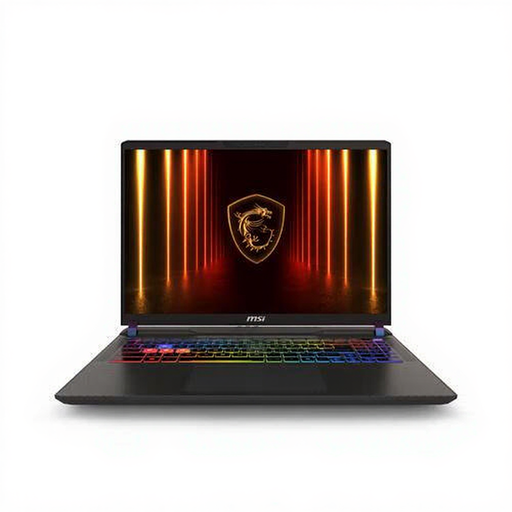 Image unavailable
MSI Vector A16 HX A8WIG-025NL, Ryzen 9 8940HX, RTX 5080, 16 GB, 1 TB
This 16-inch configuration could suit you if you’re looking for a dedicated GPU, upgradeable memory and an SD card reader; bear its listed weight in mind if you’ll be carrying it often.
Listed specifications: RTX 5080 with 16 GB of video memory, 16 GB RAM expandable to 96 GB, 1 TB SSD and a 2560 × 1600 Quad HD+ IPS screen.
According to the product details, the laptop weighs 2,7 kg and has HDMI 2.1 and an SD card reader.
View at Joybuy
Frequently asked questions
Can you edit high-resolution footage on a lighter laptop?
You may be able to with a proxy workflow, if your software and project support it. Adobe describes proxies as a way to edit footage, including 4K, more smoothly on less powerful hardware; use the original media for the final export.
How can you stop source footage and cache from filling up your drive?
Allow space for your source files, project and cache. Adobe recommends fast SSD or NVMe storage for video production and suggests fast external storage when internal space is limited, so check your laptop’s ports too.
What should you check before showing your film on an external display?
Compare the ports on the exact laptop configuration with the input and required resolution of the presentation display. Also check whether you’ll need a suitable cable or adapter; Apple lists the ports available on each MacBook Air configuration.
Do you always get exactly two years’ warranty on a laptop bought online in the Netherlands?
No. According to the Dutch government, there is no fixed statutory warranty period in the Netherlands; you’re entitled to a product that is fit for purpose, and what you could reasonably expect from it is one of the factors taken into account. A separate manufacturer’s warranty does not replace this statutory right.
Can you return a laptop ordered online?
For eligible consumer purchases made at a distance, the Dutch government says you’ll often have a 14-day cooling-off period. Check who the seller is for your order and which terms apply; a purchase from a private individual does not necessarily fall under the same rules.


