
Student with downloaded research files
You want to store, open and compare documents and data locally. For example, KNMI hourly data is available as ASCII downloads; start by checking the formats and file sizes you need.


Start with the files and software you actually need: documents and small downloads call for different specifications from local analysis of large maps or raster files. Then compare available storage, memory, screen size and portability, and check that the software you need works with your chosen operating system before you buy.
You want to store, open and compare documents and data locally. For example, KNMI hourly data is available as ASCII downloads; start by checking the formats and file sizes you need.
If you plan to edit raster or map files in desktop software, check that the software works on your laptop and how much storage large files need. QGIS warns that high-resolution raster files can use a lot of storage.
You move between home, lectures and the library, balancing screen space against size and battery use. Check the exact screen size and configuration; quoted battery life applies to a specific test scenario.
First decide whether you’ll just read the files or edit them locally too. Then work out how much free storage and screen space you need, and check the software requirements.
| What to consider | What should you check? | Who is this important for? |
|---|---|---|
| Software and file compatibility | Check the required software, operating system and file formats. On Windows on Arm, an application may work even if the required drivers are not compatible. | If I need specific desktop software or file editing for my assignment, I want to know in advance that it will work. Around 33% of consumers say compatibility is their top priority. |
| Local storage and processing | Compare the actual file sizes with the available SSD space, and remember to allow for copies and edited files. Choose the amount of memory to suit the software and files you’ll have open at the same time. | If I want to store downloads locally or edit large raster files, having enough space for files and processing matters a lot. Around 27% of consumers say local files and processing are their main consideration. |
| Screen and portability | Compare the screen size, resolution, weight and dimensions of the exact configuration. Assess battery figures only in the context of the stated usage scenario. | If I want to read documents or maps in different study locations, I need a practical screen without having to carry unnecessary weight. Around 20% of consumers prioritise portability and reading. |
| Purchase and included accessories | Check the memory and storage configuration, included power supply and terms of the specific offer. | If I want a suitable laptop without unnecessary extras, I want to know what’s included in the configuration. Around 20% of consumers say the total purchase cost is their main consideration. |
KNMI hourly data is available as relatively small ASCII zip files, while QGIS notes that high-resolution raster files can need a lot of storage. So the size of one download won’t tell you how much space your full workload requires.
Check the formats and sizes of your own files before choosing a storage configuration.
Apple gives separate maximum figures for video streaming and wireless internet use. These figures don’t measure battery life during your research work.
Compare test scenarios and check the power supply included with the exact configuration.
If you won’t have access to a power socket while you’re out, you may need to recharge during your study day.
What’s in the box can vary by configuration; some laptop descriptions state that no charger is included.
Check the box contents and the charging equipment required for the exact model you’re considering.
You may need to buy a compatible adapter separately.
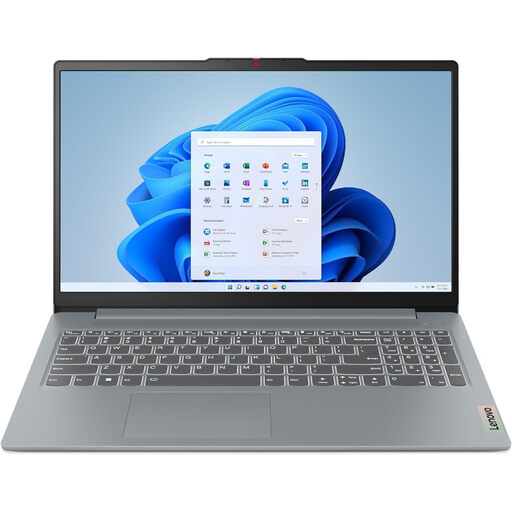
The IdeaPad Slim 3 82XN008RMH is a specific example of a Windows laptop for local study work.
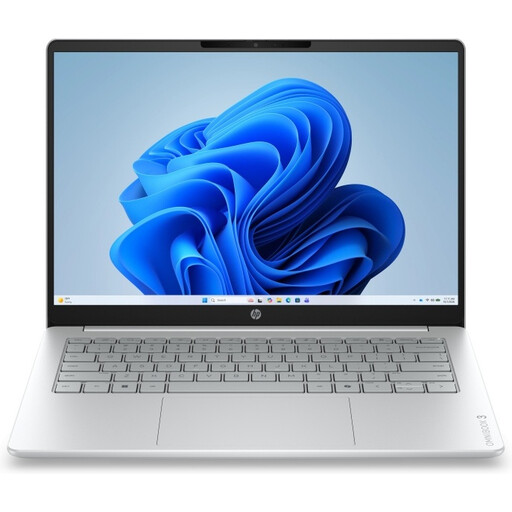
The OmniBook X Flip 14-kc0600ndx is worth comparing if a touchscreen and different working modes would be useful.
The 13-inch MacBook Air M5 is a macOS option if the study software you need works on macOS.
The Dell 14 Plus is a configurable 14-inch range to compare against your list of required software.
The Vivobook 14 range is a compact Windows option to compare for screen and connectivity.
These laptop options are aimed at local study work with downloaded files and Windows software. Compare the storage, screen size and included power supply with what your own assignment requires.
 No image available
A Windows configuration with a touchscreen for reading documents and storing material locally.
16 GB memory and a 512 GB SSD.
14-inch OLED touchscreen with 1920 × 1200 resolution.
A compatible USB-C charger of at least 45 W is not included.
 No image available
A Windows configuration with SSD storage for keeping study materials locally.
12 GB memory and a 512 GB SSD.
14-inch IPS screen with 1920 × 1200 resolution and an anti-glare finish.
The laptop is supplied without a charger; the description specifies 45 W charging.
 No image available
A Windows configuration with 1 TB SSD storage for keeping material locally.
16 GB DDR5 memory and a 1 TB SSD.
14-inch IPS screen with 1920 × 1200 resolution and a 16:10 aspect ratio.
The product name specifies a QWERTY keyboard.
 No image available
The larger screen can be useful if you want to view documents side by side; bear in mind the size when taking the laptop with you.
16 GB memory and a 512 GB SSD.
15,3-inch IPS screen with 1920 × 1200 resolution and an anti-glare finish; the stated weight starts at 1,63 kg.
The product name specifies a QWERTY keyboard. The charger is not included.
No image available
A larger screen can give you more room to view documents; the 16-inch format is less compact to carry around.
16 GB memory, a 512 GB SSD and two M.2 storage slots.
16-inch anti-glare IPS screen with 1920 × 1200 resolution; the stated weight is approximately 1,70 kg.
Windows 11 Pro. The product name specifies a QWERTY keyboard.
Not necessarily. First find out what files you’ll receive and whether you’ll just read them or edit maps and raster files yourself. For example, KNMI hourly data is available as downloadable ASCII files, while QGIS warns that high-resolution raster files can require a lot of storage.
First check which software your course requires. QGIS offers downloads for Windows, macOS and Linux; before installing it, check that the required version is suitable for your device and course.
No. KNMI warns that hourly series may not be homogeneous because of station relocations and changes in measurement methods, making them unsuitable for trend analysis. For this purpose, KNMI recommends homogenised daily series or the Central Netherlands Temperature; this is a limitation of the data, not the laptop.
According to the Dutch government, when you buy at a distance, the seller must provide information about the product and the cooling-off period, which is usually 14 days. Products must also meet statutory requirements; if there’s a problem, contact the seller. Check the terms and any exceptions that apply to your specific purchase.