Start with the space on your desk and the way you write. Compare the dimensions of the whole laptop, keyboard and screen, not just the screen size. A Chromebook suits browser-based writing if you make files available offline in advance; choose Windows or macOS if the software you need runs on those systems. Give battery life or photo storage extra weight only if they matter for your travel journal.
Who is this laptop choice relevant to?
Writer at a small desk
You want to type longer pieces regularly, but have little room for your laptop, hands and notes. Compare the laptop’s overall footprint and try the keyboard and screen. The Consumers’ Association lists screen size and other specifications as factors to consider when choosing a laptop.
Traveller without a reliable connection
You want to write even when there’s no Wi-Fi or power socket. Google Chromebook Help warns that some apps don’t work offline; Microsoft Support explains how OneDrive files can be synced with a computer for offline access.
Journal writer with lots of photos
You regularly add or edit travel photos, so you need to weigh up storage, screen quality and compatibility with your photo app against portability. The Consumers’ Association lists storage and screen quality as factors to consider; ASUS describes the screen features available for each configuration.
What should you look for in a laptop for a travel journal?
Compact Windows laptop
Best suited to: you need Windows programmes installed locally or want to manage documents and photos on your laptop.
Bear in mind: screen, weight, ports and included charger vary by configuration, so check the exact specifications.
MacBook
Best suited to: macOS works with the way you write and manage photos, and you’re looking for a compact laptop for travelling.
Bear in mind: Apple lists a 13.6-inch screen and two Thunderbolt 4 ports for the M5 configuration covered here. Check that the ports suit your accessories.
Chromebook
Best suited to: your journal is mainly in web apps and you make the files you need available offline in advance.
Bear in mind: a Chromebook uses web apps. Some apps don’t work offline, and changes made offline won’t sync until you’re connected again.
| What to consider |
What should you check? |
Who is this important for? |
| Comfortable writing in a small space |
Measure the available space and compare the full laptop’s width and depth. Assess the keyboard, touchpad and text display. |
I often write longer pieces at a small desk and want room for my hands and notes. Around 31% of consumers prioritise comfortable writing when desk space is limited. |
| Writing without Wi-Fi or a power socket |
Test your writing app offline, make files available offline in advance and check what usage a battery-life figure is based on. |
If I want to keep writing on the go without Wi-Fi or a power socket, I want to know which files work offline and how battery-life figures were measured. Around 23% of consumers prioritise offline writing and power. |
| Portability between writing spots |
Compare the weight and dimensions of the exact configuration, and factor in the charger too. |
I move my laptop around regularly and want to keep the weight I carry to a minimum, rather than guessing based on screen size alone. Around 31% of consumers prioritise portability. |
| Photos and compatible software |
Check your photo app’s requirements, the storage on the exact configuration and where you keep your files. |
If I add or edit travel photos, I want enough storage and an operating system that works with my app. Around 15% of consumers prioritise photos and software compatibility. |
Which buying mistakes can you avoid?
-
Focusing only on the screen size
The diagonal measurement doesn’t tell you how much space the whole laptop takes up or how comfortable its keyboard is for longer pieces.
Measure your available desk space and compare the laptop’s dimensions. If possible, try typing on the configuration you’re considering.
-
Assuming a cloud document will automatically work offline
Google Chromebook Help says you need to make relevant files available offline in advance, and that some apps won’t work without a connection. Changes to Drive files available offline will sync the next time you connect to the internet.
Make your journal files available offline in advance and test your chosen app without a connection.
If your files aren’t available offline, you may have to wait until you’re back online to access your journal.
-
Taking the stated battery life as guaranteed writing time
Apple lists separate maximum battery life figures for video streaming and wireless internet use. Neither activity is the same as a day spent writing.
Check what usage the battery-life figure is based on and plan how you’ll recharge, rather than treating the maximum as a guarantee.
-
Assuming every configuration includes a charger
For the OmniBook 7 Aero configuration covered here, HP stated that the charger was sold separately. This information applies to that configuration.
Check what’s in the box and the charging requirements for the exact model before you order.
You may need to buy a separate charger for this configuration.
Which brands are worth comparing?
Apple
The 13-inch MacBook Air is a macOS option for anyone looking for a compact laptop for writing and whose apps work with macOS.
- Apple lists a 13.6-inch screen and two Thunderbolt 4 ports for the M5 configuration.
- The stated battery life applies to specific activities. Check the ports and specifications of the configuration you choose.
Lenovo
The IdeaPad Slim 3 Chromebook is a ChromeOS option for browser-based writing; the ThinkPad X13 Gen 6 is a separate range of compact Windows laptops.
- Lenovo lists a 14-inch screen for the IdeaPad Slim 3 Chromebook range.
- Touchscreen functionality depends on the configuration. Optional 5G connectivity on the ThinkPad X13 Gen 6 isn’t included with every configuration.
ASUS
The Vivobook S14 and Zenbook 14 OLED are different 14-inch Windows configurations worth comparing.
- ASUS lists a weight of 1,4 kg for the Vivobook S14 range. For the Zenbook configuration covered here, ASUS lists 1,22 kg.
- The Zenbook configuration covered here has a glossy OLED screen. These manufacturer specifications aren’t an independent comparison of writing comfort.
HP
The OmniBook 7 Aero 13 is a compact Windows option for anyone who values a low laptop weight.
- HP listed a weight of less than 1 kg for the 13-bg1694ndx configuration covered here.
- HP also stated that the charger was sold separately and that this configuration was unavailable on the page reviewed. This doesn’t apply to other configurations.
Acer
The Swift Go 14 is a Windows option to compare if you’re looking for a 14-inch laptop.
- The OLED configuration covered here is the Swift Go 14 SFG14-73-79JL, part number NX.KSGEH.005.
- The screen specifications apply to that configuration. Check the screen, weight and storage again if you’re looking at a different model number.
Joybuy laptops for a small desk and life on the go
This selection includes compact Windows laptops and 13-inch MacBooks for writing at a small desk and on the go.
 Image unavailable
HP OmniBook 7 AeroNGAI 13-bg1051nd NL Copilot+
This 13.3-inch configuration is a compact Windows laptop for writing and managing files locally.
Windows 11, 16 GB RAM and 512 GB SSD. The screen has a 16:10 IPS panel, and the keyboard is backlit. Dimensions: 29,73 × 21,12 cm.
Joybuy
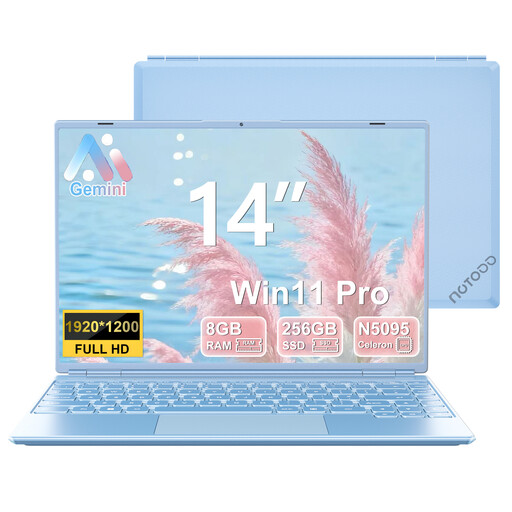 Image unavailable
NOTODD 14-inch laptop, Celeron N5095
A 14-inch Windows laptop to consider if you want to update documents at a small desk.
Windows 11, 8 GB RAM and 256 GB SSD. The screen has a resolution of 1920 × 1200; the stated weight is 1,39 kg.
Joybuy
 Image unavailable
MSI Modern 14 F1MG-867NL
This 14-inch Windows configuration is an option for writing and storing files locally.
Windows 11 Home, 16 GB DDR4 and 512 GB SSD. The Full HD screen is IPS-level, and the keyboard is backlit. Stated weight: 1,40 kg.
Joybuy
 Image unavailable
Apple MacBook Air 13-inch M5, 16 GB, 512 GB
This macOS configuration suits a writing and photo workflow that works with macOS.
13.6-inch screen, 16 GB memory and 512 GB storage. The product description lists a weight of 1,23 kg and dimensions of 30,41 × 21,50 cm. Apple lists two Thunderbolt 4 ports for the M5 configuration.
Joybuy
 Image unavailable
Apple MacBook Neo 13-inch A18 Pro, 8 GB, 512 GB
This 13-inch macOS laptop is a compact option for updating a travel journal.
8 GB memory and 512 GB SSD. The product description lists a weight of 1,23 kg. The USB-C power adapter isn’t included; according to the description, you’ll need an adapter of at least 20 W.
Joybuy
Frequently asked questions
Can you work on your travel journal on a Chromebook without Wi-Fi?
Yes, with supported files and apps, as long as you make the Drive files you need available offline in advance. Google Chromebook Help warns that some apps don’t work offline; changes will sync once you’re connected to the internet again.
How can you make sure changes you make on the go don’t stay only on your laptop?
Set up syncing and check the file status when you’re connected again. Microsoft Support explains how to sync OneDrive files with a PC or Mac for offline access; Google Chromebook Help explains how offline Chromebook files sync when you reconnect.
What should you check about accessories and the warranty?
Check what’s in the box and who the seller is. HP stated that the charger for the OmniBook configuration covered here was sold separately. According to ACM ConsuWijzer, the statutory guarantee applies alongside any commercial warranty. The seller is responsible if a product doesn’t perform as you could reasonably expect under normal use.
Do you have a cooling-off period when buying a laptop online in the Netherlands?
For a standard online purchase by a consumer, ACM ConsuWijzer says you generally have a statutory cooling-off period of up to 14 days after delivery. The regulator outlines some exceptions; check these if your purchase isn’t a standard laptop.


