
Editor working in a quiet study
Mostly edits text and makes corrections, wants to keep fan noise to a minimum when concentrating, and checks that their existing software works on the system they choose.


Start by checking the exact version of your layout software, then decide how much fan noise and screen space matter to you. The fanless MacBook Air M5 is a practical option if silence is important and your software runs on macOS; if you work on Windows, a Windows laptop may be a better fit. For Windows on ARM, check support for your specific software and version separately: Adobe describes native support for InDesign from beta 22.0.
Mostly edits text and makes corrections, wants to keep fan noise to a minimum when concentrating, and checks that their existing software works on the system they choose.
Lays out text and images on pages, reviews the finished layout and may supply a print-ready PDF. Screen space and the printer’s specifications are therefore important considerations.
Wants to keep using existing Windows software or a file workflow, so checks the processor architecture, software version and any required add-ons.
First check your software, version and essential add-ons. Then compare noise levels, screen space and connections based on your workspace.
Choose this if: you want to avoid audible fan noise and the software you need runs on macOS.
Consider: comparing the 13-inch and 15-inch models, the connections and the included power adapter. Fanless does not mean that every possible sound is eliminated.
Choose this if: your existing workflow requires Windows or your software’s system requirements specify Intel or AMD.
Consider: an OLED screen or slim design does not guarantee that a laptop is quiet. Check the noise levels of the exact model under your own workload.
Choose this if: you have confirmed that your exact layout software, version and add-ons work on Windows on ARM.
Consider: support for one programme does not guarantee that another programme or a production release will work. Adobe lists native InDesign support from beta 22.0.
| What to consider | What should you check? | Who should pay particular attention? |
|---|---|---|
| Quiet while editing | Check whether the specific model is fanless; compare other models while carrying out the tasks you do. | If I’m editing text in a quiet study, I don’t want to be distracted by fan noise. Around 36% of consumers prioritise quiet operation when editing. |
| Clear overview when laying out pages | Compare screen size and resolution; ask the printer about PDF settings and the required bleed. | If I’m reviewing text and images on pages, I want a clear overview and to be able to prepare the print file to the printer’s specifications. Around 29% of consumers prioritise seeing the page layout clearly and preparing files for print. |
| Software compatibility | Make a note of the software, version and essential plug-ins; check the operating system and processor architecture requirements. | If I need to keep using my existing layout software and add-ons, I want to know before buying whether they’ll work on the laptop. Around 21% of consumers make compatibility their top priority. |
| Workspace and connections | Compare screen size, ports and charging method; check whether the power adapter is included. | If I move between my desk and other workspaces, I want to be able to connect and charge my equipment. Around 14% of consumers give workspace flexibility top priority. |
The processor architecture and software version matter. Adobe describes native support for InDesign from beta 22.0, so check whether your production release and add-ons work.
Make a note of your exact software version and essential plug-ins, then compare them with the system requirements, or choose a system that is known to suit your workflow.
If essential software doesn’t work, you may need a different version, programme or workflow.
A screen specification does not tell you whether the bleed and PDF settings meet the printer’s requirements.
Ask the printer for their file submission specifications and use the recommended PDF setting. Adobe gives 3 mm as a common example of bleed, not a universal requirement.
If the file does not meet the submission specifications, you may need another round of corrections or a proof print.
Some laptop models do not include an adapter, or a recommended adapter may be available separately.
Check what’s in the box and the charging capacity required for the exact model before ordering.
You may need to buy a suitable adapter separately.
A manufacturer’s warranty is not the same as the seller’s legal responsibility for a faulty product. The Netherlands Authority for Consumers and Markets says there is no fixed statutory warranty period in the Netherlands.
Keep your proof of purchase and report any fault to the seller. Consider any paid extended warranty separately.
The MacBook Air M5 is worth considering if you can use macOS and a fanless design matters to you.
The Yoga Slim 7 Gen 10 is a Windows option to assess based on its screen configuration and your workflow.
The OmniBook Ultra 14 is a Windows option with a compact OLED screen to compare against your exact software requirements.
The Zenbook A14 is a Windows on ARM option to consider after checking that your layout software is compatible.
This selection includes Windows laptops for existing Windows workflows and a fanless MacBook Air for anyone who values quiet operation and can use macOS software. For each model, check that your exact layout software and essential add-ons are compatible.
 Image unavailable
A Windows model to consider if you want to keep your existing workflow; check the exact software version and add-ons before choosing.
 Image unavailable
An option for working with text and pages on one screen if the software you need runs on macOS; Apple says the MacBook Air M5 has a fanless design.
15-inch model, 16 GB of memory and 512 GB of storage. A power adapter is not included with this model; the product information specifies a USB-C adapter of at least 35 W.
 Image unavailable
A Windows option for laying out pages on the built-in screen; check whether the screen size suits the way you work.
15.3-inch screen, AMD Ryzen 5 7535HS, 16 GB of memory and a 512 GB SSD. The product information says the power adapter is not included and specifies USB-C Power Delivery of 45–65 W.
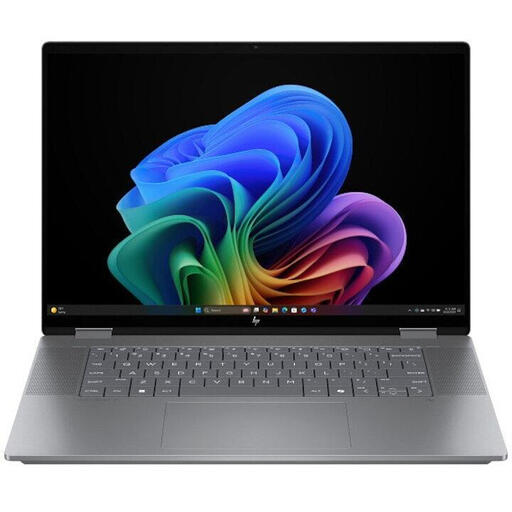 Image unavailable
A Windows option to compare if you want to review pages on the built-in screen; check software compatibility for the exact model.
The product information says the power adapter is sold separately; check what’s in the box before ordering.
 Image unavailable
A Windows option if you want to view pages on the built-in screen; check whether the screen resolution suits your layout work.
15.6-inch Full HD screen, AMD Ryzen 9 270, RTX 5070 with 8 GB GDDR7, 16 GB DDR5, 512 GB SSD and Windows 11 Home.
Not as a general buying requirement. Adobe lists separate requirements for optimal GPU performance in InDesign. Start with your software’s requirements, then check whether you need specific GPU features.
First, ask the printer for their specifications. Adobe recommends a print PDF using the preset recommended by the printer and gives 3 mm of bleed as a common example, not a universal requirement. Also check whether crop marks are needed.
No. Don’t assume it will based on the processor or Windows alone. Adobe describes native Windows on ARM support from beta 22.0; before buying, check that your production release and essential add-ons work.
For qualifying online purchases from a business, you will generally have a 14-day cooling-off period, although there are exceptions. Separately, the seller is responsible under your statutory rights if a product is faulty. According to the Netherlands Authority for Consumers and Markets, there is no fixed period for these statutory rights in the Netherlands; what matters is what you could reasonably expect from the product.