
Student who shares notes
You work with fellow students in shared documents or notebooks and want to know who can view or edit them. Microsoft Support explains why sharing permissions matter in OneNote.


Start with the apps and access permissions your study group uses. A Chromebook is a good fit if the browser apps and course software you need work on ChromeOS, while Windows or macOS may suit you if your required software is compatible. Then choose a setup that fits the way you work: a more compact laptop to carry around, extra screen space for viewing sources alongside your notes, or a 2-in-1 if you really want to annotate by hand. Check offline access, keyboard layout and included accessories too.
You work with fellow students in shared documents or notebooks and want to know who can view or edit them. Microsoft Support explains why sharing permissions matter in OneNote.
You take your laptop with you and want to be able to open your notes even when there’s no Wi-Fi. Google Help recommends setting up offline access in advance for the files you need.
You want to highlight or write on texts by hand, so you’ll need to check that a stylus works with the exact 2-in-1 configuration and is included with your purchase.
First, check that your course apps and shared documents work with the operating system you’re considering. Then choose a screen size and input method to suit where and how you work.
| What to consider | What to look for | Who is this most important for? |
|---|---|---|
| Collaboration and apps | Open your course apps and a shared test document on the operating system you’ve chosen. Check that group members have the right viewing or editing permissions. | I want to work on the same notes as my group and make sure the apps and access permissions are right; around 29% of consumers prioritise collaboration and compatibility. |
| Portability and offline working | Compare the weight of the exact configuration and make the files you need available offline in advance. Google Help recommends setting this up while you still have an internet connection. | If I often move between study spaces, I want to take my files with me and open them without Wi-Fi if needed; around 23% of consumers give portability and offline access top priority. |
| Screen space | Check the screen specifications for the full model number. Lenovo lists HDMI and USB-C with display support for the IdeaPad Slim 3 15IRH10 series, but check that these ports are included on the configuration you choose. | I want to view sources and notes side by side, even if that means choosing a larger device; around 18% of consumers prioritise screen space for reading and writing. |
| Handwritten notes | Check whether the exact model supports a suitable stylus and whether one is included in the box. A touchscreen alone doesn’t confirm either of these things. | When I draw or mark up notes by hand, I want to know whether a stylus will work with my configuration; around 12% of consumers make handwritten annotation their main priority. |
| Configuration you need | Compare the full model number, storage option and included charger or accessories. A series name doesn’t refer to one fixed configuration. | I want to choose a configuration that can handle my note-taking without missing accessories I need; around 18% of consumers prioritise the configuration and included items they require. |
Microsoft Support warns that a link to a section can give people access to the entire notebook.
Check the contents before sharing and decide carefully who can view or edit them.
For Google Docs, offline access needs to be set up in advance; not all the files you need will be available automatically.
Make important documents available offline in advance and test them without an internet connection, as Google Help recommends.
Manufacturers describe different configurations within laptop series. Keyboard layout, storage and included items can therefore vary between products.
Compare the full model or product number and check what’s in the box before ordering.
A different keyboard layout or an adapter you need to buy separately could mean you’ll have to sort out another practical detail.
The 2-in-1 label doesn’t confirm that a stylus is compatible or included.
Check stylus support and the box contents for the exact configuration.
You may need to buy a compatible stylus separately, so check before relying on handwritten notes.
The Chromebook Plus 514 range may suit a browser-based workflow, provided the apps and course software you need work on ChromeOS.
The Vivobook 14 M1407 series is a compact Windows option to compare, provided the software you need works on Windows.
The IdeaPad Slim 3 15IRH10 series is a Windows option to compare if you’re looking for a built-in larger screen or a connection to an external monitor at your study space.
An OmniBook 5 Flip may suit you if you’re considering a 2-in-1 as well as a traditional typing setup.
The MacBook Neo is a macOS option for typing, reading and collaborating, provided the course software you need is compatible.
This selection includes Windows laptops for document work, including several 2-in-1 models and one configuration with a larger screen.
 No image available
The different modes may suit you if you want to switch between using it as a laptop and a tablet.
The product description lists a 16-inch touchscreen, a 360-degree hinge, Windows 11 Home and an SSD. The charger must be purchased separately.
 No image available
This Windows laptop may suit you if you want to view notes on a large touchscreen.
The product description lists a 16-inch touchscreen, several flip modes and Windows 11.
 No image available
The touchscreen and different modes may suit you if you also want to view notes using touch controls.
The product description lists a 14-inch touchscreen with a resolution of 1920 × 1200 and a 16:10 aspect ratio, an Intel Core 5 120U, 8 GB of RAM, a 512 GB SSD and Windows 11 Home. The charger and stylus aren’t included.
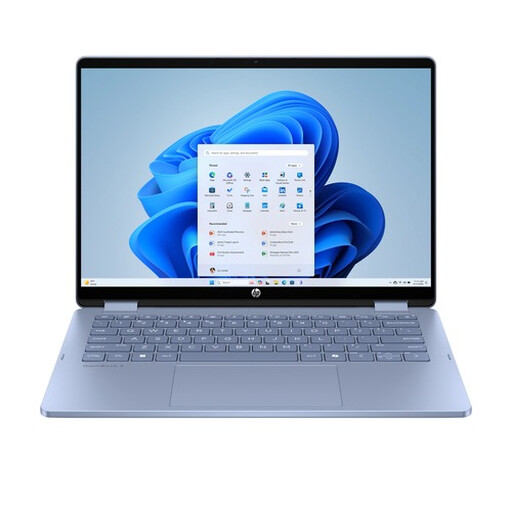 No image available
This 14-inch configuration may suit you if you want to combine document work on a touchscreen with a laptop-style setup.
The product description lists a 1920 × 1200 IPS screen with a 16:10 aspect ratio, an Intel Core 5 120U, 8 GB of RAM, a 512 GB SSD and Windows 11 Home. It weighs around 1.42 kg; the charger must be purchased separately.
 No image available
The large screen may suit you if you want to view sources and notes side by side, but bear its size in mind if you often move between study spaces.
The product description lists an 18-inch screen with a resolution of 2560 × 1600 and a 16:10 aspect ratio, Windows 11 Home, 16 GB of RAM, a 1 TB SSD and a QWERTY keyboard. It weighs around 3 kg and the charger is sold separately.
Microsoft Support warns that a shared link to a section can give people access to the entire notebook. Check the contents before sharing and decide for each recipient whether they can view or edit it.
Yes, if you set up offline access in advance while you’re connected and make the files you need available. Google Help lists Chrome or Edge, the enabled offline documents extension and enough storage space as things to consider.
Check the sync status and, if necessary, try syncing the notebook again. Microsoft Support explains automatic and manual syncing, as well as how to resync one or more shared notebooks.
No, your statutory rights aren’t dependent on buying an additional warranty. According to the Netherlands Authority for Consumers and Markets, the seller is responsible if a consumer product doesn’t meet what you could reasonably expect with normal use. If you’re considering an extended warranty, compare the extra cover it provides.
For online consumer purchases, the Netherlands Authority for Consumers and Markets says you usually have 14 days from delivery to change your mind. There are statutory exceptions, so check the terms that apply to your specific purchase.