
Reader of offline documents
You download study materials and want to read and search them without an internet connection, while using them alongside your notes.


For downloaded texts and reports, a comfortable, easy-to-read screen and enough local storage are important considerations; powerful graphics hardware is not necessarily essential. First, check which GIS software and version your course requires: QGIS is available for Windows and macOS, while the ArcGIS Pro 3.7 requirements we consulted specify Windows. When choosing, also consider the balance between screen space and portability.
You download study materials and want to read and search them without an internet connection, while using them alongside your notes.
You also work with maps or geodata and need to check which GIS application, software version and file formats your course uses.
You’re weighing up a compact design and battery life against the screen space you need for maps and documents.
Start with the software and files your course actually uses. Then compare local storage, screen space and portability to find what suits the way you study.
| What to consider | What to look for when buying | Who is this important for? |
|---|---|---|
| Offline storage | Check the SSD capacity, how much space will be available after installation, and whether you can open your files and apps without an internet connection. | If I want to use study materials and possibly geodata offline, everything needs to be stored locally. Around 33% of consumers prioritise offline access and storage. |
| Screen space | Compare the screen size and resolution of the exact model; if possible, view one of your own documents at the size you intend to use. | If I want to view texts, figures and notes side by side, the visible workspace matters. Around 27% of consumers prioritise reading space. |
| GIS compatibility | Ask your course provider which application, version, file types and licence you’ll need, then compare these with the laptop’s full specifications. | If my course requires GIS software, I want to know in advance whether it will run on the laptop and can be used offline. Around 20% of consumers prioritise compatibility. |
| Portability and battery life | Check the weight, including the charger you’ll need, and read the conditions under which the battery life was measured. | For studying in different locations, I want to be able to carry my laptop without sacrificing more screen space than necessary. Around 20% of consumers make mobility their main consideration. |
Google Chromebook Help explains that you need to change a separate setting to make Drive files available offline on a Chromebook. Google also notes that some apps don’t work offline.
Download or sync your materials in advance, then check that you can open them without an internet connection.
QGIS and ArcGIS Pro have different operating system requirements. With ArcGIS Pro, offline access to your licence may also depend on your organisation’s settings.
Ask your course provider which software, version and licence terms you need, then check the exact laptop model.
Apple gives separate battery life figures for specific activities, such as video streaming and wireless internet use. These figures don’t measure how long the battery will last with your combination of documents and GIS software.
Check the test conditions and consider the apps you use and the charger you’ll need.
Lenovo notes that some configurations are available only for certain models and may not be offered in every region.
Check the product page for the full model number, memory, storage, ports and keyboard layout.
A macOS option for portable document work and potentially QGIS, provided your course doesn’t require a directly supported Windows installation of ArcGIS Pro.
The HP OmniBook X Flip 14-kc0600ndx is a Windows option for anyone who wants to read documents and is considering a touchscreen.
The IdeaPad Slim 5 14IRH10 shows that different memory, storage and port configurations are available within a single Windows range.
Dell offers Windows laptops for studying; compare the configuration of a specific model rather than looking at the product family alone.
These laptops are suited to locally stored study files and reading documents; check separately whether a specific model meets your course’s GIS requirements.
 No image available
The stated SSD capacity and screen resolution may be useful for storing files locally and reading documents.
8 GB memory; 512 GB SSD; 14-inch touchscreen with 1920 × 1200 pixels.
A compatible USB-C charger isn’t included and must be purchased separately.
 No image available
A 14-inch screen and 512 GB SSD may suit document work and storing study files locally.
AMD Ryzen 5 7520U; 8 GB RAM; 512 GB SSD; 14-inch screen with 1920 × 1200 pixels and an anti-glare finish.
It weighs approximately 1.42 kg. The charger must be purchased separately.
 No image available
The 15.6-inch screen gives you more space to view documents and notes; bear the laptop’s size in mind when choosing.
16 GB DDR4 memory; 512 GB SSD; 15.6-inch FHD IPS screen.
The stated weight is 1.59 kg.
 No image available
The stated SSD capacity may be useful if you want to store study files locally.
AMD Ryzen 7 8840HS; 16 GB memory; 1 TB SSD; 14-inch WUXGA IPS screen with 1920 × 1200 pixels.
The stated weight is 1.39 kg. The USB-C power adapter must be purchased separately.
 No image available
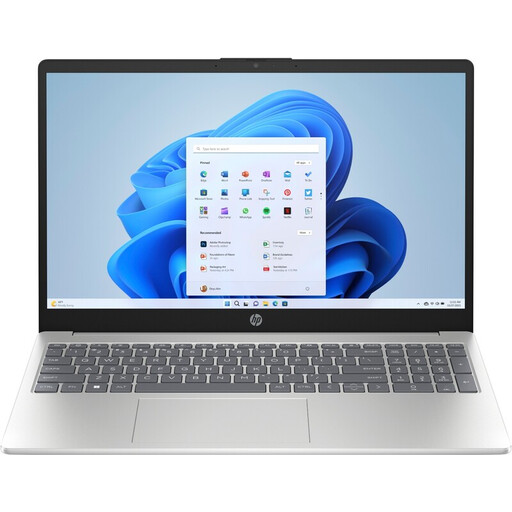
The 15.6-inch matte IPS screen gives you more space to view documents; consider the laptop’s size when making your choice.
Intel Core 5 120U; 8 GB DDR5 memory; 512 GB SSD; Full HD resolution.
The stated weight is 1,590 grams. A power adapter isn’t included.
Yes, as long as the required files and layers are available locally. QGIS documents local file formats and a way to save certain layers in advance for offline editing; check before you leave that the entire project opens.
No. Installing it doesn’t mean you can use your licence offline. With Named User licences, your organisation may manage the offline settings; ask your course provider which licence you’ve been assigned, whether offline use is permitted and whether there’s a time limit.
For everyday tasks, the Consumentenbond suggests 8 GB as a guide, but that doesn’t tell you whether it’s enough for your course’s GIS assignments. Ask which apps and datasets are required, and check the requirements for the specified software version.
According to ACM ConsuWijzer, online purchases generally come with a statutory cooling-off period of up to 14 days after the product has been delivered; check whether an exception applies. If a product is faulty, you also have statutory rights against the seller, even if you haven’t bought an additional warranty.