Who is this laptop advice for?

Student writing long texts

If you mainly work on drafts, quotations and revisions in your student room, compare the keyboard and screen space with the way you like to work. The Consumers’ Association considers basic office software part of everyday use.

Student weighing up the specs

If you mainly use your laptop for documents and sources, first work out which features you really need. The Consumers’ Association has a separate checklist for basic everyday use, so a higher-spec model isn’t automatically necessary.

Student working in different places

If you take your laptop to interviews, classes or the library, compare its size, the ports you need and the conditions under which the stated battery life was measured for the exact model.

What should you look for when choosing?

Windows laptop

A good fit if: your course or a programme you need requires Windows, or you prefer to work with it.

Keep in mind: the keyboard, ports and included accessories vary between specific models.

MacBook Air

A good fit if: the programmes you need run on macOS and you’re considering a compact laptop.

Keep in mind: check whether your peripherals need an adapter, and bear in mind the conditions used to determine the stated battery life.

Chromebook

A good fit if: you can work with documents and sources using the available web apps.

Keep in mind: Google describes Chromebooks as devices that use web apps instead of certain traditional desktop programmes, so check that they support the software you need.

What to consider What should you check? Who is this important for?
Comfort when writing Try the keyboard and touchpad if possible; compare screen size and readability, and the space available for sources alongside your text. If I write for long periods and compare quotations with my notes, I want a comfortable keyboard and an easy-to-read screen. About 40% of consumers make writing comfort their top priority.
What you need First work out which software and storage you need; then check the full model specification and whether a charger is included. If I mainly want to use my laptop for text and sources, I don’t want to choose features my way of working doesn’t call for. About 30% of consumers prioritise the specs they need.
Portability and battery use Compare the dimensions and weight of the exact model, the conditions used to determine its stated battery life, and the ports you’ll need when you’re out and about. If I also work at interviews, in classes or in the library, I want to be able to carry my laptop easily and connect my equipment. About 20% of consumers make portability their top priority.
Software and files Make a note of the apps and file types you need; check compatibility, the ports required and how you’ll store your files. If I work with interview files, I want to know whether my programmes and files suit the way I work. About 10% of consumers prioritise software and file compatibility.

Common mistakes

  • Assuming you automatically need a higher-spec model

    You don’t automatically need a model with higher specs for basic document work. The Consumers’ Association distinguishes basic everyday use from more demanding tasks.

    Start with the programmes and way of working you actually use. Only then compare memory, storage and extra features.

  • Choosing a Chromebook without checking the apps you need

    Google describes Chromebooks as devices that use web apps instead of certain traditional desktop programmes. So don’t assume that a transcription app or course-specific application you need will be available without checking first.

    Before buying, check the exact word processor, any transcription app and your course’s software requirements.

  • Assuming every model in a laptop range is the same

    Specifications can vary between models. Included accessories, such as a charger or stylus, can also differ from one product to another.

    Compare the full model name, specifications, keyboard layout, ports and what’s included with the model you’re considering.

Brands to compare

HP

The HP OmniBook range includes 14-inch Windows models. Always compare the full model details.

  • HP lists 16 GB RAM, a 512 GB SSD and a touchscreen for the OmniBook X Flip 14-kc0600ndx.
  • A convertible touchscreen isn’t necessarily useful for writing; check which features and accessories suit the way you’ll use it.

Apple

The 13-inch MacBook Air with M5 is a macOS option if the software you need runs on it.

  • Apple specifies 16 GB of memory, a 512 GB SSD and two Thunderbolt 4 ports for the base model.
  • Apple’s stated battery life is based on specified activities; it isn’t an independent measurement of a writing session.

ASUS

The Vivobook 14 M1407 is a 14-inch Windows range, with specifications that vary between models.

  • ASUS lists, among other features, a 14-inch WUXGA screen and various processor, storage and keyboard options.
  • Check the configuration of the specific model you’re considering.

Lenovo

According to Lenovo, the IdeaPad Slim 3 Gen 10 range includes models with 14-, 15- and 16-inch screens.

  • Lenovo lists features for the range including a WUXGA screen with a 16:10 aspect ratio and a battery of up to 60 Wh.
  • Features listed for the range don’t necessarily apply to every model; check the specifications of the full model name.

Laptops for writing and looking up sources

This Joybuy selection features Windows laptops for documents and study. Compare the screen size, keyboard, ports and included accessories of the model that suits your workspace.

HP OmniBook 5 Flip 14-fp0075nd C5VM5EA#ABH

HP OmniBook 5 Flip 14-fp0075nd C5VM5EA#ABH

The product information lists documents, spreadsheets and study as intended uses; compare the large touchscreen with the space available on your desk.

16-inch touchscreen, 16 GB memory, 512 GB SSD, backlit QWERTY keyboard and Windows 11 Home. The 360-degree hinge supports laptop, tablet, tent and stand modes.

View at Joybuy

HP OmniBook X Flip NG AI PC 16-as0050nd D75LQEA#ABH

HP OmniBook X Flip NG AI PC 16-as0050nd D75LQEA#ABH

This model could suit you if you want to view several documents side by side while writing; check that the larger screen works for your workspace.

16-inch WUXGA touchscreen with a 16:10 aspect ratio, 16 GB memory and 512 GB SSD. The 360-degree hinge supports laptop, tablet, tent and stand modes.

View at Joybuy

HP OmniBook 3 14-hy0058ndx

HP OmniBook 3 14-hy0058ndx

This 14-inch model is worth comparing if you want to use documents and online sources in different places.

14-inch IPS anti-glare screen, 8 GB memory, 512 GB SSD and Windows 11 Home. The screen has a 16:10 aspect ratio and a resolution of 1920 × 1200; the listed model weighs approximately 1,42 kg. Charger not included.

View at Joybuy
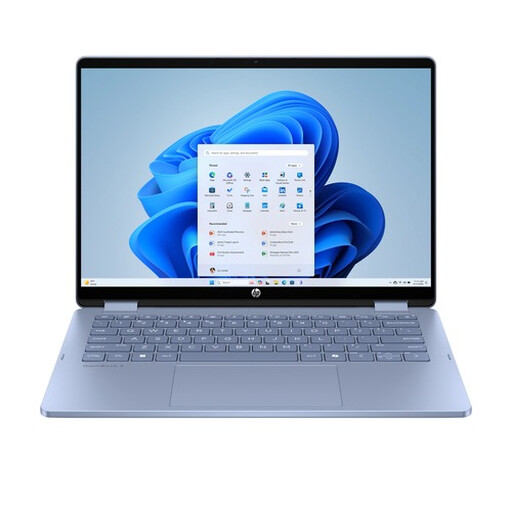
HP OmniBook 5 Flip 14-fp0251ndx

HP OmniBook 5 Flip 14-fp0251ndx

This model could suit you if you want to read and write documents and a backlit keyboard would be useful in your working environment.

14-inch IPS touchscreen with a resolution of 1920 × 1200 and a 16:10 aspect ratio, 8 GB memory, 512 GB SSD and backlit QWERTY keyboard. Charger and stylus are not included.

View at Joybuy

ASUS Vivobook 18 M1807HA-S16512W

ASUS Vivobook 18 M1807HA-S16512W

The large screen could work well for viewing text and sources on one screen; bear in mind how much desk space it takes up.

18,4-inch WUXGA screen with a 16:10 aspect ratio, 16 GB memory, 512 GB SSD and Dutch QWERTY keyboard with backlighting and a numeric keypad. The battery is 70 Wh. Power adapter not included; this model requires a compatible 45–65 W USB-C Power Delivery charger.

View at Joybuy

Frequently asked questions

Do I need a powerful laptop for writing and looking up sources?

Not necessarily. The Consumers’ Association has a separate checklist for everyday use, including browsing the internet, email and basic office software. Check whether your course or any additional software has other requirements.

Can I use my existing programmes on a Chromebook?

Check every programme you need. Google explains that Chromebooks use web apps instead of certain programmes for other computers; this doesn’t confirm whether your specific transcription or course software is available.

What should I check before working with interview files on my laptop?

Test whether your word processor, any transcription app and file transfer work with your files and devices. Also check how you’ll store and find your files; Google notes that a Chromebook has limited local storage.

Who can help if my laptop develops a fault after I buy it?

According to the Dutch government, the seller—not the manufacturer—must provide a solution if there’s a problem with a product. Check the terms of any additional warranty to see what extra cover it offers.

Can I return a laptop bought online if I don’t like the keyboard?

According to ACM ConsuWijzer, online purchases generally come with a statutory cooling-off period of up to 14 days after delivery; exceptions and conditions may apply. Read the relevant returns information before placing your order.

What should I consider if my interview profile contains personal data?

The rules that apply depend on how the data is processed and the context. The Dutch Data Protection Authority explains that collecting and using personal data requires a valid legal basis; consent is one possible basis, but it isn’t automatically the only one. Handle interview files carefully and check the rules set by your course or client.
