You don’t automatically need a high-spec music production laptop to edit and mix a few spoken-word tracks. Start by looking at your editing software, storage and microphone setup. If you record in the same room as your laptop in the evening, pay particular attention to fan noise. For lots of tracks, effects or live monitoring, processing power, audio drivers and connections become more important.
Who is this choice relevant to?
Short spoken lessons creator
You mainly edit voice recordings and want a capable laptop without paying for power that only becomes relevant for large DAW projects. Audacity doesn’t specify CPU or GPU requirements for Windows; Ableton lists separate requirements for Live.
Recording in a quiet room in the evening
You record close to your laptop and want to keep background noise out of your recording. The Audacity manual warns that sounds in the room can be picked up; Apple describes the MacBook Air with M5 as fanless.
Creator of lessons with multiple tracks
You combine several voices, music or effects, so you’ll want to consider the demands of your project, monitoring and your audio equipment’s connections. Ableton and Audacity provide software-specific guidance on system requirements and recording settings.
What should you look for?
Start with the software you use and the number of tracks. Then consider your recording environment, connections and preferred screen size.
| What to consider |
What to look for when buying |
Who should give this more weight? |
| Software and performance |
Check the requirements for your editor, operating system and storage. Ableton lists 8 GB RAM as the minimum for Live 12, and recommends 16 GB or more for demanding workflows. These aren’t general requirements for simple voice editing. |
If I mainly edit and mix short spoken lessons, I want my software to run well without choosing more power than my projects need. Around 36% of consumers prioritise having enough capacity without unnecessary over-specification. |
| Quiet recording |
Check whether the exact model has a fan. Make a test recording in your planned location and listen back with headphones. |
If I record close to my laptop in the evening, I want to minimise background noise before editing. Around 29% of consumers prioritise a quiet recording environment. |
| Multiple tracks and monitoring |
Compare the configuration with your DAW’s requirements, and check that your audio interface and drivers are compatible with your system. Ableton notes that an ASIO driver on Windows can support smaller buffer settings. |
If I work with multiple tracks, effects or live monitoring, I want everything to run smoothly and my interface to connect properly. Around 21% of consumers prioritise performance and monitoring for more complex mixes. |
| Screen and portability |
Compare the screen size and ports of the exact configuration with your workspace and equipment. A larger screen can make it easier to see your tracks, but it doesn’t in itself say anything about audio performance. |
If I edit my lesson mix in different places, I want a size that suits how I work and travel with it. Around 14% of consumers prioritise working on the go. |
Common buying mistakes
-
Assuming you always need a laptop for demanding music production
Ableton’s minimum and recommended specifications apply to Ableton workflows; Audacity has different requirements. A configuration suited to large projects isn’t automatically necessary for editing short spoken recordings.
Start with your editor, the number of tracks and the plug-ins you use. Then compare configurations.
-
Assuming a microphone, speakers and noise reduction guarantee quiet recordings
Sounds in the room can end up in your recording, and audio played through speakers can be picked up by the microphone again. According to the Audacity manual, noise reduction is intended for constant background noise, not one-off sounds such as a door slamming.
Make a test recording in your planned location and listen back through headphones.
-
Judging ports or audio latency by the processor name alone
Connections vary by model. Software monitoring can introduce latency; when using Ableton on Windows, a compatible ASIO driver can help you use smaller buffer settings.
Check the connections on the exact configuration and confirm that your own audio interface is supported.
-
Confusing the manufacturer’s warranty with your statutory rights
A commercial warranty period doesn’t automatically determine when your statutory rights end. ACM ConsuWijzer explains that the seller must resolve problems with a faulty product.
Keep your proof of purchase and contact the seller if your product is faulty.
Brands to consider
Apple
The MacBook Air with M5 is worth considering if a fanless design and portability are important to you.
- Apple describes the MacBook Air as fanless.
- The listed configurations have two Thunderbolt 4 ports and a mini-jack; check that these suit your recording equipment and software.
HP
The OmniBook 5 16-bm0615ndx is an example of a larger Windows laptop with 16 GB RAM and a 512 GB SSD.
- These specifications are listed for the 16-bm0615ndx configuration.
- Check the ports and box contents for that configuration; the product information says a USB-C adapter is sold separately.
Lenovo
The ThinkPad E14 Gen 7 (AMD) is a Windows option to consider if direct connections are important to you.
- The series specifications list USB-A, USB-C and headphone connections.
- The processor, memory and available configurations vary by model; check the full model number.
ASUS
The Vivobook S14 S3407 series offers several Intel configurations for anyone considering a more compact Windows laptop.
- The series includes different processor, screen and operating system configurations.
- Choose based on the full model number and check the configuration of the specific model.
Laptops at Joybuy
These laptops are suitable for editing spoken lessons, with options for different screen sizes, storage configurations and connection needs. Check that the software and audio equipment you use are compatible with each model.
 No image available
ASUS Vivobook 18 M1807HA-S16512W
The 18.4-inch configuration is worth considering if you’d like more screen space while editing.
Ryzen 7 260, 16 GB RAM and a 512 GB NVMe SSD. The listed description mentions USB-A, USB-C and a 3.5mm combo jack. A power adapter isn’t included; a suitable 45–65 W USB-C PD charger is required.
View at Joybuy
 No image available
ASUS Vivobook S16 S3607QA-SH109W
This 16-inch model gives you a larger screen for viewing lesson materials and audio tracks while editing.
WUXGA OLED screen, Snapdragon X processor, 16 GB LPDDR5X, 512 GB SSD and Windows 11 Home.
View at Joybuy
 No image available
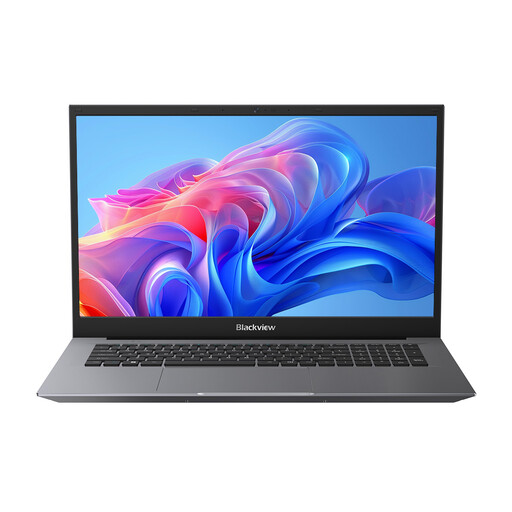
Blackview AceBook 10
The 18.5-inch screen is worth considering if you prefer editing with a larger workspace.
Intel Pentium Silver N6000, 16 GB DDR4 RAM, 512 GB SSD and Windows 11 Pro. The product description lists USB-C and USB-A ports.
View at Joybuy
 No image available
Apple MacBook Air 15-inch M5, 16 GB, 512 GB
Apple describes the MacBook Air as fanless, which is useful to know if your laptop and microphone will be in the same room while you record.
15-inch model with M5 chip, 16 GB memory, 512 GB storage, two Thunderbolt 4 ports and a headphone jack. According to the product description, the power adapter isn’t included.
View at Joybuy
 No image available
Samsung Galaxy Book4 15.6-inch, NP750XGK-KG3NL
The product description lists a combined headphone and microphone jack for connecting a headset.
Intel Core 7 150U, 16 GB RAM, 512 GB NVMe SSD and Windows 11 Home. The screen measures 15.6 inches.
View at Joybuy
Frequently asked questions
Do you need 16 GB RAM to mix a spoken language lesson?
No, not as a general rule. Audacity doesn’t specify CPU or GPU requirements for suitable Windows computers. Ableton lists 8 GB RAM as the minimum for Live 12 and recommends 16 GB or more for demanding workflows. Check the software and projects you use.
How can you avoid latency or feedback while recording?
Use headphones instead of speakers to stop the audio playing back from being picked up by the microphone. The Audacity manual warns that software monitoring can introduce latency. If you use Ableton on Windows, check whether your audio interface has a compatible ASIO driver.
Can software completely fix a noisy evening recording?
Don’t count on it. According to the Audacity manual, noise reduction is intended for constant background noise, not one-off sounds such as a door slamming. Make a short test recording first and listen back to it.
What are your rights when you buy a laptop online in the Netherlands?
When you buy from a business at a distance, you’ll usually have a 14-day cooling-off period, according to the Dutch government. A laptop must also meet what you could reasonably expect when used normally; this isn’t a fixed general period of exactly two years. ACM ConsuWijzer points out that the seller is your contact for a faulty product.
Can you use someone else’s music in a language lesson mix you share?
Not without permission. The Dutch government says you need the creator’s permission to use copyright-protected music. Check the usage rights before publishing or sharing your mix.
What should you consider if a lesson mix includes pupils’ voices?
A school that processes pupils’ personal data must meet GDPR obligations, including providing information and keeping the data secure. The legal basis and arrangements required for a particular audio recording depend on how it will be used; consent isn’t automatically the only possible legal basis.


