You don’t necessarily need a powerful gaming laptop for a savings calculator with local unit tests; a portable all-round laptop may be enough if it can run the editor, browser and tests you need. First check whether you’ll also need to run multiple browsers, containers or platform-specific software locally. Then compare the exact memory configuration, screen, keyboard and ports.
Who is this laptop choice relevant to?
Building a simple calculator
You write the calculation logic and run local unit tests, and want to tailor the configuration to your project. MDN Web Docs explains how to set up a code editor, browsers and a local test server; the pytest documentation covers local tests.
Testing a web interface
You test browser interactions as well as calculations. Playwright supports Chromium, WebKit and Firefox on Windows, Linux and macOS, so work out which browsers and test environment you’ll need to run locally.
Coding on the go
You often take your laptop with you, so you’ll need to balance screen space and ports against size. Apple’s Dutch MacBook Air specifications list two Thunderbolt 4 ports; for other models, check the ports on the exact configuration.
What should you look for in a laptop for a savings calculator?
Start with the software and tests you’ll run at the same time. Visual Studio Code’s memory recommendation applies to the editor itself; it doesn’t automatically cover the demands of your entire project.
| What to consider |
What should you check? |
Who is this important for? |
| Local coding and testing |
Check the memory and storage on the exact configuration, and match them to the editor, browser and tests you’ll use at the same time. |
I want to build the calculation logic locally and run unit tests without unnecessarily powerful hardware; around 33% of consumers prioritise this basic workload. |
| Test environment |
Work out whether you need browser or container tests, and check the requirements of your chosen tools and operating system. |
If my project also requires browser or container tests, I want to know whether the laptop and operating system can run the tools; around 27% of consumers put this test environment first. |
| Screen and portability |
Compare the screen size, keyboard layout and ports listed for the full model code. |
When I take my laptop with me often, I weigh a compact size against having enough room for code and test output; around 20% of consumers prioritise portability and comfort while working. |
| Right configuration |
Compare the specifications with the software requirements and check which ports and components are included. |
I want to choose features that my project will actually use; around 20% of consumers prioritise a suitable configuration without unnecessary extras. |
Laptop buying pitfalls for coding and testing
-
Mistaking an editor’s minimum requirement for a requirement for your entire project
Visual Studio Code’s memory recommendation applies to the editor itself. A browser and locally run tests may also be part of your workload.
Compare the configuration with the full set of programmes you plan to use, and check the specifications for the exact configuration.
-
Treating a product series name as a complete specification
Configurations in the same series can differ in screen, keyboard layout and ports. For example, the ThinkPad E14 configuration reviewed here has an English (EU) keyboard.
Before you buy, check the full model code, keyboard layout, ports and included components.
-
Confusing the manufacturer’s warranty with all your statutory rights
According to ACM ConsuWijzer, statutory warranty is separate from any manufacturer’s warranty.
Check what any additional warranty terms cover, and remember that your statutory rights are separate.
Brands to compare as a reference
The examples below apply to the configurations named; they are not recommendations for every model from each brand.
Lenovo
The ThinkPad E14 is a useful reference if you’re looking for a compact Windows laptop with a good range of ports.
- For configuration 21T9001TMH, Lenovo lists Windows 11 Pro, 16 GB RAM, a 512 GB SSD and a matte 14-inch screen.
- According to Lenovo, this configuration has an English (EU) keyboard; check the layout on the exact model.
Apple
The MacBook Air with M5 is a macOS option if the development software you need runs on it.
- For the 13-inch configuration, Apple lists 16 GB of memory and a 512 GB SSD, plus two Thunderbolt 4 ports.
- Apple’s quoted battery life is based on specific video and wireless internet tests, not this programming task. Also check which adapters you’ll need.
HP
The ProBook 4 G1i configuration mentioned here offers a Windows option with a 16-inch screen.
- For B9YJ5ET#ABH, HP lists Windows 11 Pro, 16 GB RAM and a 512 GB SSD.
- These specifications apply to that model code; check them again for the configuration you’re considering.
Acer
The Swift Go 14 is a compact Windows configuration with an OLED screen that you can use as a comparison point.
- For NX.KSGEH.00J, Acer lists a 14-inch OLED screen, 16 GB of memory and a 512 GB SSD.
- The screen is glossy and this configuration has a maximum of 16 GB of memory; consider whether that suits your workspace and software.
Joybuy laptops for local coding and testing
This selection includes Windows laptops and a MacBook Air for local coding and testing. If your software has platform requirements, check that it works with the operating system on the configuration you choose.
 No image available
ASUS V16 FX3607VP-RP061W, 16-inch
An option if you code locally and want room on one screen for both code and test output.
The product name lists 16 GB DDR5, a 1 TB SSD, a WUXGA screen with a 144 Hz refresh rate, Windows 11 Home and a Dutch QWERTY keyboard. The GeForce RTX 5070 mentioned is not a requirement for a savings calculator.
View on Joybuy
 No image available
Apple MacBook Air 13-inch M5, 16 GB, 512 GB, Midnight
An option if you can use the development tools you need on macOS and are looking for a 13-inch laptop.
The product name lists the M5 chip, 16 GB of memory and 512 GB of storage. Check that the QWERTY keyboard and any peripherals you need suit your work.
View on Joybuy
 No image available
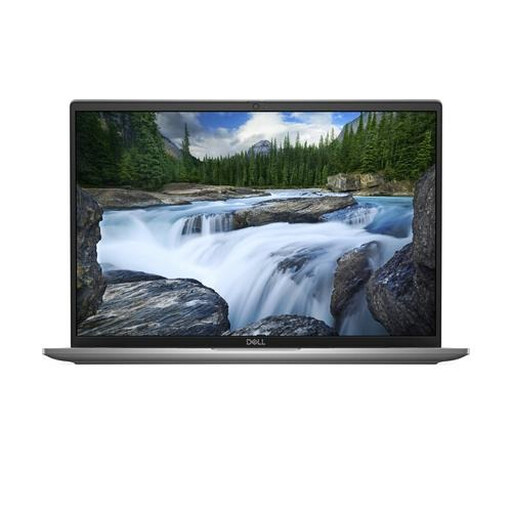
Dell Latitude 7650, Intel Core Ultra 7 155U, 16-inch
A Windows option if you code locally and want to compare a 16-inch screen with more compact configurations.
The product name lists 16 GB of LPDDR5x memory, a 512 GB SSD, Windows 11 Pro and an English QWERTY keyboard. Check that the keyboard layout suits the way you work.
View on Joybuy
 No image available
Lenovo IdeaPad Slim 5 15ARP10, Ryzen 5 7535HS
A Windows option if you code locally and want to view code and test output on a larger screen.
The product name lists a 15.3-inch screen, 16 GB of memory, a 512 GB SSD and a QWERTY keyboard. The product information specifies an English EU keyboard and says that a 45–65 W USB-C power adapter is not included.
View on Joybuy
 No image available
Samsung Galaxy Book4 NP750XGK-KG3NL, 15.6-inch
A Windows option to compare if you code locally and are looking for a 15.6-inch screen.
The product name lists an Intel Core 7 150U, 16 GB RAM, a 512 GB SSD, Full HD and Windows 11 Home.
View on Joybuy
Frequently asked questions
Do I need a dedicated graphics card for a savings calculator with automated tests?
The task described doesn’t require a dedicated graphics card. First work out whether you’re only testing calculation logic or also doing other graphics-intensive work; the Visual Studio Code, pytest and Playwright documentation doesn’t list a gaming GPU as a general requirement for this task.
How do I set up local Python tests?
If the project uses Python, pytest recommends installing it in a virtual environment and explains how to run tests. Python isn’t a requirement if your course or project specifies a different programming language.
Do I need to be able to run Docker Desktop?
Only if your project or course requires containers. If so, check the requirements for your operating system and chosen backend. The project description doesn’t imply that Docker is necessary if you’re only running local unit tests.
What rights do I have in the Netherlands when buying a laptop online or if it’s faulty?
According to ACM ConsuWijzer, when a consumer buys online, they will generally have up to 14 days after delivery to change their mind, with some exceptions. Statutory warranty is separate from any manufacturer’s warranty. If a product becomes faulty too soon under normal use, the seller is responsible for providing an appropriate remedy under your statutory rights. Terms may differ for private and business transactions.


