
Planner with a small desk
You compare floor plans, measurements and quotes, but still want space for paperwork and a mouse. Compare the laptop’s dimensions and consider whether documents will be easy to read on the screen.


Start with the software you plan to use for your renovation. A powerful laptop may not be necessary for creating floor plans in a browser, while local 3D software may have different requirements. Then compare the dimensions and ports of the exact model with your desk and equipment. A compact screen takes up less space, but leaves you with less room to view plans and quotes side by side.
You compare floor plans, measurements and quotes, but still want space for paperwork and a mouse. Compare the laptop’s dimensions and consider whether documents will be easy to read on the screen.
You create a layout online and manage documents in your browser. Before choosing a laptop for more demanding software, check that your chosen web tool has all the features you need.
You may want to create more complex models locally. The requirements of the specific software will determine whether memory and graphics hardware matter more than choosing the most compact laptop possible.
Floorplanner describes a browser-based tool that requires no installation, while SketchUp has separate requirements for its web and desktop versions. So first decide which software and features you need, then compare the laptop with your desk and equipment.
| What to consider | What to look for | Who should prioritise it? |
|---|---|---|
| Desk space | Compare the width and depth of the exact model with the space available, allowing room for cables and a mouse. Also consider whether the screen size and aspect ratio will work well for your documents. | I want to view plans and quotes without losing space for my mouse or paperwork. Around 25% of consumers say usable workspace is their main buying priority. |
| Compatibility with your planning tool | Make a note of the exact programmes and features you need, along with the supported operating systems. Compare the web and desktop versions separately. | If I need to rely on my chosen tool and its features, I check the software requirements first. Around 25% of consumers prioritise software compatibility. |
| More complex 3D plans | Compare the laptop’s full configuration with the minimum and recommended requirements for the software version you plan to use. | For more complex models, I want to know whether the laptop meets my software’s requirements, even if that means choosing a larger laptop or different specifications. Around 20% of consumers say 3D work is their main buying priority. |
| Ports | Check the ports on the exact model and whether you can connect an external monitor and your existing peripherals directly. | I want to connect my monitor and peripherals without a messy cable setup on a small desk. Around 15% of consumers give ports top priority. |
| Total cost | Check what’s included with the laptop and your chosen software plan, including any charger, adapter or paid features you may need. | When I add up the cost of the laptop, essential accessories and software, I want to know in advance what else I’ll need. Around 15% of consumers prioritise the total cost. |
A browser-based tool doesn’t mean that all the other software you need will be available locally. Update support also varies by Chromebook model.
Make a note in advance of the programmes and features you need. If you’re considering a Chromebook, check the support end date for the exact model.
SketchUp publishes separate requirements for its web and desktop versions, so meeting one set of requirements doesn’t automatically mean you’ll meet the other.
Compare the requirements for the version and features you actually plan to use with the laptop’s configuration.
The laptop, cables, mouse and any external monitor all take up space. Ports and included accessories can vary between models.
Measure your usable desk space and check the ports and box contents for the exact model you want to buy.
A suitable USB-C Power Delivery charger isn’t included with the HP OmniBook 5 Flip 14-fp0250ndx, so allow for this extra requirement.
ASUS offers compact Zenbook A14 and Vivobook 14 models. Compare the full model code to check you’re looking at the right configuration.
HP offers compact OmniBook models and 14-inch 2-in-1 laptops for anyone who wants to use different screen positions at a small desk.
The IdeaPad Slim 5 Gen 10 is a 14-inch range worth comparing for everyday use.
The Acer Chromebook Spin 314 CP314-2HN-C1L1 is listed as a 14-inch Chromebook in Techboer’s catalogue comparison. It’s an option to look into for browser-based planning.
These 14-inch models include compact Windows laptops and a MacBook Pro. Before you choose, check that your planning tool works with the operating system on the exact model.
 Image unavailable
This 14-inch touchscreen model is a compact option for viewing documents.
Intel Core 5 120U, 8 GB RAM, 512 GB SSD, 2K touchscreen and Windows 11 Home.
A suitable USB-C Power Delivery charger isn’t included.
 Image unavailable
This 14-inch model is for anyone looking for a compact laptop for planning and documents.
AMD Ryzen 5 7520U, 8 GB RAM, 512 GB SSD and Windows 11 Home.
This model is supplied without a charger.
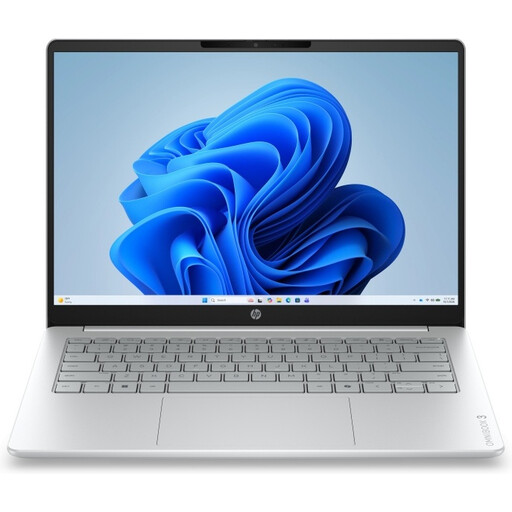 Image unavailable
This 14-inch model suits a compact workspace for web pages and documents.
AMD Ryzen 5 130, 12 GB RAM, 512 GB SSD, 2K IPS display and Windows 11 Home.
This model is supplied without a charger.
 Image unavailable
A 14-inch model to compare if both a compact workspace and your peripherals matter.
Full HD, Intel Core 7 150U 10-Core, Intel Graphics, 16 GB DDR4, 512 GB SSD and Windows 11 Home.
 Image unavailable
This compact Mac is an option if the planning tool you need is compatible with macOS.
24 GB, 1 TB, Space Black and QWERTY keyboard.
Yes. Floorplanner describes a browser-based tool that requires no installation. Check that the features and export options included with your chosen plan suit your project. A browser-based tool isn’t the same as SketchUp for desktop.
No, you don’t need extra cover as standard to have statutory rights. According to the Government of the Netherlands, there is no fixed statutory guarantee period in the country, and the retailer is your point of contact if a product is faulty. If you’re considering extra cover, check what additional rights it actually provides.
According to the Government of the Netherlands, distance purchases usually come with a 14-day cooling-off period. Check the retailer’s information and terms and conditions. A purchase from a private individual isn’t covered by the same example of a distance purchase.
The Consumers’ Association recommends cleaning the outside with a dry, lint-free microfibre cloth.