What should you consider when choosing?
First, compare your complete development stack with the exact laptop configuration. Then decide how much screen space and portability you need.
| What to consider |
What to look for |
Who should pay particular attention? |
| Securing local data |
Check which encryption options are supported by the exact operating system edition. Microsoft states that manually enabling BitLocker drive encryption requires Windows Pro, Enterprise or Education. Also plan a separate backup and check that you can restore it. |
If I store real participant data locally, I want to prevent unauthorised access and be able to restore files if they’re lost. Around 33% of consumers put data management first. |
| Running several services at once |
Make a note of the tools you use at the same time and check the exact configuration against their system requirements. For Docker Desktop on Windows, also check the intended backend and Windows edition. |
If my editor, database and containers all need to run together, I want to know the requirements for the whole setup. Around 27% of consumers prioritise running development services simultaneously. |
| Taking your workspace with you |
Compare the weight and screen size of the exact model, and check which ports you need. Don’t treat the stated battery life as guaranteed working time for your development tasks. |
If I often take my laptop to rehearsals, I weigh up a more compact bag against having enough room on screen for code and the schedule. Around 20% of consumers prioritise portability. |
| A simple development stack |
List your editor, browser, database and any additional tools. Visual Studio Code’s recommendation of 1 GB RAM applies to the editor itself, not the minimum for your entire development environment. |
If I mainly use an editor, browser and small local database, I don’t want to choose a more powerful configuration without good reason. Around 20% of consumers prioritise a simple development environment. |
Joybuy laptops to consider
These Joybuy options come with a range of screen sizes and listed memory and storage configurations. Compare the exact version with your development stack, preferred workspace and how you’ll use it on the go. Product titles alone don’t show whether a laptop meets all your software requirements.
 No image available
ASUS ROG Zephyrus G16 GU605CM-QR026W
A 16-inch version to consider if you’d like to view your code and schedule on a larger screen.
Intel Core Ultra 9 285H; RTX 5060; 16 GB RAM; 1 TB SSD; Windows 11 Home.
According to the product description, the power adapter must be purchased separately.
View at Joybuy
 No image available
ASUS ROG Strix G18 G814PM-S9012W
Consider this 18-inch version if screen space for code and your schedule is a priority.
AMD Ryzen 9 8940HX; RTX 5060; 16 GB DDR5; 1 TB SSD; Windows 11 Home; QWERTY keyboard.
According to the product description, the charger is sold separately.
View at Joybuy
 No image available
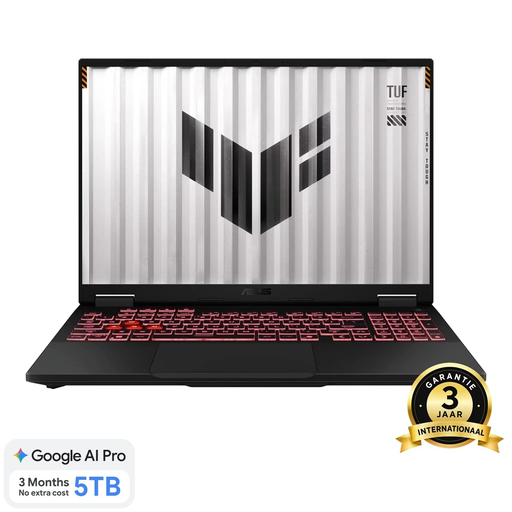
ASUS TUF Gaming A18 FA808UM-S8132W
An 18-inch version to weigh up against your preferred workspace and portability needs.
AMD Ryzen 7 260; NVIDIA GeForce RTX 5060 8GB; 16 GB DDR5; 512 GB SSD; WUXGA 144Hz; Windows 11 Home; QWERTY keyboard.
View at Joybuy
 No image available
Auusda T161N
This version has a 16-inch Full HD IPS screen to consider if you’re looking for a larger workspace.
Intel Core i3-1000NG4; 16 GB DDR4 RAM; 1 TB SSD.
View at Joybuy
 No image available
Auusda T156A
A 15.6-inch Full HD IPS screen to weigh up against the amount of workspace you need.
AMD 3050e; 16 GB DDR4 RAM; 512 GB SSD; backlit keyboard.
View at Joybuy
Frequently asked questions
Do I need 16 GB RAM to programme this planner?
No, not for the task described on its own. Microsoft recommends 1 GB RAM for Visual Studio Code itself; your browser, database and any containers will need additional resources. So compare the requirements of your complete software list with the exact laptop configuration.
How can I secure participant data stored locally?
If you process personal data as an organisation, decide what security measures are appropriate for the data and risks involved. The Dutch Data Protection Authority highlights the need for security and measures to prevent unauthorised access; storing data locally alone doesn’t guarantee this. Microsoft states that manually enabling BitLocker drive encryption requires a suitable Windows edition. Apple explains FileVault and recommends keeping a recovery key somewhere separate from the encrypted startup disk.
What do I need to maintain if the planner uses a local database?
Plan updates, restrict access and make a separate backup that you’ve checked you can restore. The right measures depend on the data and risks involved; a second copy on the same laptop won’t protect you if you lose that laptop.
What warranty rights do I have when buying as a consumer in the Netherlands?
The Netherlands Authority for Consumers and Markets’ ConsuWijzer explains that the seller is responsible if, under normal use, a product doesn’t do what you could reasonably expect it to. The statutory guarantee isn’t simply a fixed two-year period. For an online consumer purchase, you’ll generally have 14 days from delivery to change your mind, although you should check for exceptions before buying.
Can I simply put players’ or musicians’ personal data in the planner?
Not just because the data stays on your own laptop. The Dutch Data Protection Authority states that processing personal data requires an applicable legal basis; whoever is responsible must decide which legal basis and security measures are appropriate for the specific use. The same assessment doesn’t apply to fictional test data used exclusively for testing.


