
Mixer working with lots of recital tracks
You work with several recordings and effects at once, and want your session to keep running smoothly while you play it back and edit.


First, choose a laptop that runs your DAW, plug-ins and audio interface. Then consider the demands of your sessions, the storage you need for recordings and reference files, and the connections you’ll use. A MacBook Air M5 may suit a macOS workflow, while a Windows laptop makes more sense if your existing software or equipment requires Windows. Neither option guarantees, without testing, that a particular recital mix will run smoothly.
You work with several recordings and effects at once, and want your session to keep running smoothly while you play it back and edit.
You keep source recordings, reference files and different versions of your projects. SSD space and careful file management are important considerations.
You move your workspace around or already use a DAW and audio interface. Compatibility, connections and screen space all help determine what’s practical.
A good fit if: your DAW and plug-ins support macOS, or you use Logic Pro for Mac, and you’re looking for a compact setup.
Bear in mind: Apple lists two Thunderbolt 4 ports with USB-C connectors on the MacBook Air M5. Check that your interface and other devices can connect to them.
A good fit if: your existing DAW, plug-in or interface workflow requires Windows.
Bear in mind: check Windows support, the driver and connections for your particular DAW and audio interface.
| What to consider | What should you look for? | Who is this most important to? |
|---|---|---|
| Processing headroom for tracks and effects | Compare your DAW and plug-ins’ processor and memory requirements with the configuration you’re considering. Ableton lists 8 GB RAM as the minimum for Live 12; that doesn’t guarantee it will handle a demanding mix. | If I use lots of tracks and effects at once, I want to know whether my session can handle the workload. Around 33% of consumers prioritise processing headroom for tracks and effects. |
| Storage for recordings and reference files | Check the SSD capacity and work out how much space your source material, reference files and project copies will use. Ableton Live can link audio clips to files outside the project. | I want to keep source recordings, reference files and portable project versions together. Around 27% of consumers give storage and reference files top priority. |
| DAW and interface compatibility | Check the operating system, DAW version, plug-ins, driver and connectors required by your interface. Ableton recommends ASIO-compatible audio hardware for optimal audio performance with Live on Windows. | If I want to keep using my existing software and interface, I check their compatibility before buying. Around 20% of consumers start by checking compatibility with their existing software and equipment. |
| Screen and working on the move | Decide how many tracks you want to see on your laptop screen and check the connections for your interface and external storage. Apple lists 13- and 15-inch versions of the MacBook Air M5. | I want a clear view of the mix at my usual workstation, but I also want to be able to take my laptop elsewhere. Around 20% of consumers prioritise comfort and portability. |
A minimum memory requirement doesn’t tell you how many tracks and effects your particular session can handle.
Compare your own project and plug-ins with the software requirements and, if possible, test a representative session.
Choosing a configuration with too little headroom could mean changing the way you work later or needing a different configuration.
A laptop can have plenty of memory but still offer limited SSD space. Gathering project audio can also create extra copies of files.
Check memory and SSD capacity separately, and work out how much space your files actually use.
You may need extra external storage for source recordings and reference files.
A port on the laptop doesn’t, by itself, prove that your interface will work with the operating system and driver.
Before buying, check support for your interface model, the driver it needs and the connection it uses.
Depending on your equipment, you may need a suitable adapter or a different interface.
The MacBook Air M5 is worth considering if your existing audio workflow supports macOS.
The ThinkPad T14 Gen 6 (Intel) is a 14-inch Windows option for an existing Windows workflow.
The 16-inch EliteBook 8 G1i is a larger Windows laptop to consider if you’d like more screen space to work with.
These Windows laptops are options for recital mixes where screen space, storage, connections or existing Windows software may be important. Before buying, check that the configuration, DAW and audio interface will suit your session.
 Image unavailable
The 18.4-inch screen may suit you if you want to view tracks and reference files on your laptop screen.
The listed configuration includes a Ryzen 7 260, 16 GB of memory and a 512 GB SSD. Listed connections include USB-A, USB-C and HDMI; these don’t confirm how it will perform with a particular DAW.
The product description says that a mains adapter isn’t included. You’ll need a suitable 45–65 W USB-C PD charger.
 Image unavailable
The listed 1 TB SSD may be useful if you want plenty of space for recital projects and reference files.
The product name lists an i3 1000NG4 processor, 16 GB of DDR4 memory and a 1 TB SSD. The description mentions a 16-inch Full HD IPS screen, along with USB-C, USB 3.0, mini-HDMI and a TF card reader.
Check that the processor, software support and connections suit your DAW and interface.
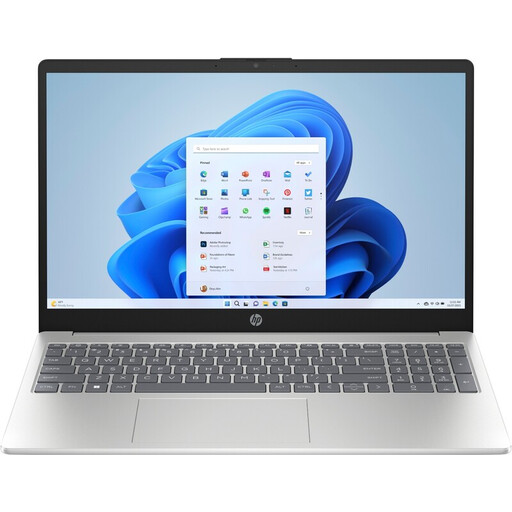 Image unavailable
The 15.6-inch Full HD IPS screen may suit you if you want room for your mix on your laptop screen.
The product name lists an Intel Core 5 120U, 8 GB of DDR5 memory and a 512 GB SSD. These are configuration details, not test results for a particular DAW.
The product description says that a mains adapter isn’t included.
 Image unavailable
This configuration may be worth considering if you’re looking for a 16-inch Windows laptop with several listed connections.
The listed configuration includes a 14-core Intel Core Ultra 5 135H, 16 GB of memory and a 512 GB SSD. Listed connections include Thunderbolt 4, USB-C, USB-A, HDMI and a 3.5mm combo jack.
The specifications don’t confirm how the laptop will perform with your DAW, interface or recital project.
 Image unavailable
The listed storage and memory may be useful if you keep lots of project files and work with several applications.
The configuration lists 64 GB of memory and a 2 TB SSD. The product name specifies a 16-inch 3K OLED touchscreen with a 120 Hz refresh rate and Windows 11 Pro.
These details aren’t an independent test of the laptop with your audio workflow.
Ableton lists 8 GB RAM as the minimum for Live 12, but that doesn’t guarantee that your number of tracks, plug-ins and other software will run smoothly. Compare the requirements of your own workflow and check the exact laptop configuration.
Start by checking your audio interface, driver and buffer setting. According to Focusrite, a lower buffer reduces latency but gives the processor less time to process audio; with a higher buffer, the trade-off works the other way round.
Check where your audio files are stored. In Ableton Live, clips can link to files outside the project. ‘Collect All and Save’ can gather files in the project folder, but these copies use extra storage space.
For an online purchase in the Netherlands, you’ll generally have a 14-day cooling-off period from delivery, subject to exceptions that you should check before buying. Your statutory guarantee is separate from any manufacturer’s warranty: if a product breaks down too soon under normal use, the retailer is responsible for providing an appropriate solution.
According to the Dutch government, a private copy for personal use must not be distributed or made available to the public. Ask permission to use copyrighted music beyond what your own rights or a valid permission allow; buying a laptop doesn’t change those rights.