Start with the software and files you use to edit recipes. A Chromebook may suit you if your files are compatible with Google, while Windows or macOS may make more sense if your existing workflow depends on them. Then compare the screen and keyboard with the laptop’s weight, ports and battery life. Before you leave, check that your files are available offline.
Who is this laptop guide for?
Recipe editor working with lots of sources
You compare recipes or notes as you write and want plenty of screen space and a comfortable keyboard. Apple and Acer list screen specifications for some of their models; check that the size and layout suit your documents.
Editor who travels to the library
You take your laptop with you and weigh its size and weight against screen space and the ability to work without a power socket. Lenovo and Acer list weights for specific product families and models, so check the configuration you’re considering.
Editor with existing files
You already have documents and a set app or cloud-based workflow, so compatibility and offline access matter. Google explains how to use certain Drive files offline on a Chromebook, while Microsoft explains how to make synced files available offline.
What should you consider when choosing?
Chromebook
A good fit if: you mainly edit recipes in Google Docs or other apps that work on your Chromebook.
Bear in mind: Google supports offline access to certain Drive files, but this doesn’t automatically apply to every app or file.
Windows laptop
A good fit if: you want to keep your existing Windows workflow or use Office files stored locally.
Bear in mind: Vivobook and IdeaPad models come in different configurations. Check the full specification and make any files you need available offline.
MacBook Air
A good fit if: your editing software works on macOS and you want a compact laptop for editing documents.
Bear in mind: the 13-inch model offers less screen space than the 15-inch version. Also check that the ports suit your needs.
| What to consider |
What should you check? |
Who might find this especially important? |
| Screen and input |
Compare the screen size, resolution and keyboard layout of the exact configuration. Check whether you can view your documents alongside your source material. |
I want to read recipes and sources side by side and type comfortably during long editing sessions; around 33% of consumers give screen space and input the highest priority. |
| Portability and power |
Check the weight of the configuration, what you need to charge it and the conditions behind any battery life claim. Assess noise separately. |
If I take my laptop with me and don’t want to keep looking for a power socket, I weigh portability against screen space; around 25% of consumers give mobility and working without a power socket the highest priority. |
| Software and offline working |
Check your apps, file formats and essential features. Test a document offline, then check that changes sync afterwards. |
I want to edit my recipes using familiar software, even when there’s no Wi-Fi; around 25% of consumers give software compatibility and offline access the highest priority. |
| Files and purchasing terms |
Check where files are stored, whether autosave is enabled and whether version history is available. If you’re considering extra cover, read what protection it adds. |
I want to keep my changes and understand the terms of my purchase in advance; around 17% of consumers give file retention and purchasing terms the highest priority. |
Which purchasing mistakes can you avoid?
-
Assuming cloud files are automatically available offline
Not every file or app works without an internet connection. Microsoft explains how to change the availability of synced files, while Google lists certain Drive files that can be used offline on a Chromebook.
Make the files you need available offline in advance, then test that you can open and edit them without Wi-Fi. Once you’re back online, check that your changes have synced.
-
Assuming a product family name means there’s only one configuration
ASUS offers several configurations in the Vivobook 14 X1404 family, so the name alone doesn’t tell you which specification you’re looking at.
Compare the full model name and specifications of the configuration on offer, including the screen, memory and ports.
-
Confusing an extended warranty with your statutory rights
According to the Dutch government, the seller must provide a solution if there’s a problem with a product. Any extended warranty is separate from your statutory rights.
Read what additional cover is being offered and compare it with your rights as a customer of the seller.
Brands to consider
Apple
The MacBook Air M5 is a macOS option for anyone using software that works with macOS.
- Apple specifies a 13.6-inch screen and two Thunderbolt 4 ports for the 13-inch model.
- Apple quotes up to 15 hours of wireless web browsing under its own test conditions. This isn’t a prediction of how long your editing session will last. Check software compatibility and ports, too.
ASUS
The Vivobook 14 X1404 is a Windows laptop family for anyone looking for a 14-inch laptop and an established Windows workflow.
- The product family gives you a starting point for comparing 14-inch models.
- ASUS lists several processor options. Check the full model name and configuration of the one you’re considering.
Lenovo
The IdeaPad Slim 5 Gen 9 14-inch AMD is a Windows option where weight may be a factor.
- Lenovo lists a weight of 1,46 kg for this product family.
- This manufacturer’s figure isn’t an independent comparison of portability or battery life. Check the specifications of the exact configuration.
Acer
The Chromebook Plus 514 CB514-5H-3544 is a specific ChromeOS option for editing work in compatible apps.
- Acer lists a matt 14-inch screen, 8 GB of memory, a 256 GB SSD and a weight of around 1,41 kg for this model.
- Acer quotes up to 17 hours of use; this is a manufacturer’s claim. Check that your apps and files are compatible, and bear in mind that your usage conditions may differ.
Laptops for recipes and documents
These Joybuy laptops come in a range of screen sizes and configurations for editing recipes and documents. Check that each model’s software compatibility, file workflow and practical features suit the way you work.
 No image available
HP OmniBook 3 14-hy0058ndx
This Windows model may suit you if you want to keep your existing Windows workflow and view recipes alongside your source material.
14-inch IPS screen, 1920 × 1200, 16:10, anti-glare; AMD Ryzen 5 7520U; 8 GB RAM; 512 GB SSD; Windows 11 Home; around 1,42 kg; USB-A, USB-C and HDMI ports. Charger not included.
Joybuy
 No image available
Auusda T161N
The larger stated screen size may be worth considering if you want more room to work while editing. Compare it with a more compact model.
16-inch Full HD IPS screen; Intel i3 1000NG4 processor; 16 GB DDR4 RAM; 1 TB SSD; backlit keyboard, numeric keypad and webcam cover.
Joybuy
 No image available
Auusda T156A
This model has a 15.6-inch screen and a backlit keyboard. Consider its size alongside how much room you want to leave in your bag.
15.6-inch Full HD IPS screen; 16 GB DDR4 RAM; 512 GB SSD; 3050E processor; fingerprint unlocking and backlit keyboard.
Joybuy
 No image available
Lenovo V15 G5 IRL
This Windows model may suit you if you want to continue with your existing Windows workflow. Weigh up the screen size and weight against how you plan to carry the laptop.
15.6-inch Full HD anti-glare screen; Intel Core i5-13420H; 16 GB DDR5 RAM; 512 GB SSD; Windows 11 Pro; Wi-Fi 6; from 1,61 kg.
Joybuy
 No image available
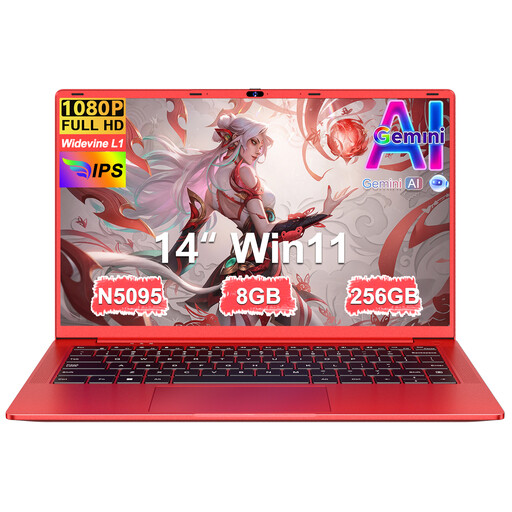
Ruzava 14-inch laptop
The stated screen size and weight can help you weigh up workspace against portability when taking your laptop to the library.
14-inch Full HD screen; 8 GB RAM; 256 GB SSD, expandable up to 1 TB; N5095 processor, up to 2,9 GHz; around 1,39 kg; numeric keypad, USB 3.0 and Type-C ports, and a 180° hinge.
Joybuy
Frequently asked questions
Can I carry on editing my recipes at the library without Wi-Fi?
Yes, as long as your app and the files you need work offline. Google lists certain Drive files that can be used offline on a Chromebook, while Microsoft explains how to make synced files available offline. Test your own document in advance, then check it has synced once you’re back online.
How can I avoid losing changes during a long editing session?
Check where your file is saved and whether Autosave and Version History are enabled for that storage location. Microsoft lists these features for files in OneDrive or SharePoint. You should also make sure your recipe collection has a suitable back-up.
Do I need to buy an extended warranty for a laptop in the Netherlands?
No, you don’t need an extended warranty to have statutory rights. According to the Dutch government, the seller must provide a solution if there’s a problem. Consider any offer of extra cover separately to see what it adds.
How long can I edit recipes for, based on the stated battery life?
A manufacturer’s claim won’t tell you exactly how long your editing session will last. Apple quotes up to 15 hours of wireless web browsing for the 13-inch MacBook Air under its own test conditions; Acer lists a maximum for the Chromebook Plus 514. Your apps, settings and usage may be different.


