What should you look for in a laptop for a recipe collection?
First, check that your existing programs and files work with the operating system you’re considering. Then look at screen space, memory, storage and the keyboard.
Windows laptop
A good fit if: your collection is in Windows programs or you want to view text and reference materials side by side on a larger screen.
Bear in mind: the memory may be soldered in on some configurations. Also check the screen specification and how much desk space you have.
MacBook Air
A good fit if: your editing programs and files work with the way you already use macOS. Models are available with 13- and 15-inch screens.
Bear in mind: check which connections you need and whether the model you choose includes a power adapter.
Chromebook
A good fit if: you mainly use Google Docs or Microsoft 365 on the web and have tested the features you need with your own files.
Bear in mind: you can’t install the Windows and Mac desktop versions of Microsoft 365 on a Chromebook. You’ll need to set up offline access in Google Docs in advance.
| What to consider |
What to look for when buying |
Who is this important for? |
| Screen and keyboard |
Compare screen size and resolution, check the keyboard layout, and consider whether you want to connect an external monitor. |
If I mainly write recipes and keep reference materials beside my document, I want to be able to type and read comfortably. Around 36% of consumers prioritise text-based work over other buying factors. |
| Photos and storage |
Consider how many photos you store locally and check the storage capacity of the exact model. The Consumers’ Association recommends 16 GB of memory and 512 GB of storage as a guide if you use more programs at once or work with photos. |
I want to work with and store food photos alongside my text. Around 29% of consumers put photo editing and storage first. |
| Specification and cost |
Compare the RAM, storage and screen of the exact model with the files and programs you use. The Consumers’ Association recommends 8 GB of memory and 256 GB of storage as a guide for light internet and office work. |
If I mainly create documents, I don’t want to pay for capacity I won’t use. Around 21% of consumers prioritise a suitable specification without unnecessary extra costs. |
| Software and offline access |
Open a sample file in the app you plan to use and check whether you need desktop features. Set up offline access to Google Docs in advance if you want to work without an internet connection. |
I want to keep using my existing editing app and files, even when I’m offline. Around 14% of consumers prioritise their choice of software and offline access. |
Brands to compare
The details below apply to the product ranges and configurations mentioned. Check the specifications of the exact model you’re considering.
Lenovo
According to Lenovo, the IdeaPad Slim 3 82XQ00SHMH is a Windows model with a 15.6-inch screen, 16 GB of memory and a 512 GB SSD.
- Lenovo lists an anti-glare IPS screen for this model.
- The memory is soldered in, and the listed keyboard layout is English (Euro).
HP
According to HP, the OmniBook 5 16-bm0615ndx is a 16-inch model with 16 GB of memory and a 512 GB SSD.
- The 16-inch screen may suit you if you’re looking for more screen space.
- HP recommends a USB-C adapter for this model, sold separately. Check what’s included in the deal.
Apple
The MacBook Air with M5 offers a macOS option in 13- and 15-inch models. For the base configurations reviewed, Apple lists 16 GB of memory and a 512 GB SSD.
- The two screen sizes give you a choice between a more compact model and a roomier one.
- The stated battery life is a manufacturer’s figure based on specific usage conditions. Also check which ports you need and whether an adapter is included.
Acer
In the examples reviewed, Acer offers both a Windows option with the Aspire Go 15 AG15-31P and a ChromeOS option with the Chromebook Plus 514 CB514-4HT.
- The ChromeOS model may suit a browser-based way of working.
- The Aspire Go model reviewed, NX.KRPEH.00E, has a stated maximum of 8 GB RAM. The Chromebook model is subject to ChromeOS software limitations.
ASUS
The Vivobook 16 OLED M1605 range is worth considering if screen space and connections are important to you.
- ASUS describes the range as featuring a 16-inch OLED screen and USB and HDMI connections.
- Check the screen, memory and available ports on the exact model; some specifications are listed as maximums.
Joybuy laptops for text and photos
These Joybuy models are suited to text and document work, with a range of screen sizes and specifications for working with files and photos.
 Image unavailable
HP OmniBook 5 Flip 14-fp0075nd C5VM5EA#ABH
A laptop option for editing recipes and other documents.
This model requires a compatible USB-C charger of at least 45 W, sold separately.
View at Joybuy
 Image unavailable
ASUS V16 FX3607VP-RP061W, 16-inch, 16 GB DDR5, 1 TB SSD
The 16-inch screen may suit you if you want to view text and reference materials on a larger built-in display.
Listed specification: 16 GB DDR5, 1 TB SSD, WUXGA 144 Hz, Windows 11 Home and Dutch QWERTY keyboard.
View at Joybuy
 Image unavailable
Microsoft Surface Laptop 7, 13.8-inch, Snapdragon X Elite, 16 GB, 512 GB SSD
A more compact screen option if you’re looking for a laptop for document work.
Listed specification: 13.8-inch touchscreen, 16 GB of memory and a 512 GB SSD.
View at Joybuy
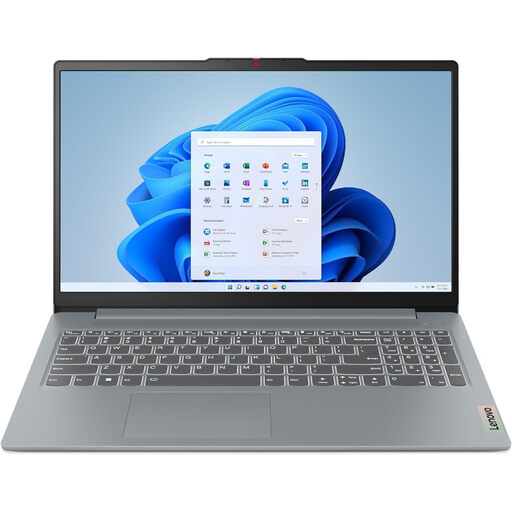 Image unavailable
Lenovo IdeaPad Slim 3 15AHP10, 15.3-inch, 16 GB DDR5, 512 GB SSD
The 15.3-inch screen may suit document work if you’d like more vertical space.
Listed specification: Ryzen 5 8640HS, 16 GB DDR5, 512 GB SSD and Windows 11 Home. The keyboard layout is listed as English QWERTY.
View at Joybuy
 Image unavailable
Apple MacBook Air 15-inch M5, 16 GB, 512 GB SSD, Starlight, QWERTY
A macOS option with a 15-inch screen if you’re looking for a larger display.
Listed specification: 16 GB of memory and a 512 GB SSD. The power adapter is not included and must be purchased separately.
View at Joybuy
Frequently asked questions
Do you need 16 GB of RAM for a recipe collection?
Not necessarily. The Consumers’ Association recommends 8 GB for light internet and office work, and advises choosing 16 GB where possible if you use several programs at once. Base your choice on how you work with photos and multitasking, not just on the subject of your collection.
Can you edit a recipe collection in Microsoft 365 on a Chromebook?
You can use Microsoft 365 on a Chromebook through the web, but you can’t install the Windows or Mac desktop versions. So, before choosing a Chromebook, test one of your own documents and the features you need, as Microsoft Support advises.
How can you work on your recipes without an internet connection?
You can work offline in Google Docs once you’ve set up offline access and made the files you need available. Check in advance that your document really does open offline.
How can you stop your recipes and photos from being lost?
Set up a backup for the documents and photo folders you use, and check that you can find your files. For example, Microsoft explains how to back up selected PC folders with OneDrive.
Can you include photos of people in a recipe collection shared publicly?
That depends on how you share the collection. According to the Dutch Data Protection Authority, the exception for personal or household use only applies to private use or sharing with a very limited group. The GDPR may apply if you publish more widely or use the collection professionally. If so, check which legal basis you need to process personal data.


