When you’re reading a chapter from a textbook and writing a summary at the same time, a comfortable keyboard and enough screen space matter more than powerful graphics. A basic laptop may be enough for light word processing. The Consumentenbond recommends 8 GB of RAM for light tasks and, where possible, 16 GB if you use several programmes at once. Choose between ChromeOS, Windows and macOS only after checking which apps and files you need.
Who is this choice relevant to?
Reader of digital chapters
You want to read and edit the source text and your summary clearly. Compare the screen size, resolution and keyboard on the exact model you’re considering. The Consumentenbond and HP Netherlands highlight screen space as an important consideration when working with multiple windows.
Student with basic writing tasks
You mainly write notes and documents, so you want the specifications to match how you’ll use your laptop. The Consumentenbond recommends 8 GB of RAM for light tasks and notes that 16 GB gives you more room to run several programmes at once.
Student who needs specific software
Check whether your course’s apps and files work on ChromeOS, Windows or macOS. Google Chromebook Help and Microsoft Support recommend checking the requirements for the specific apps you need.
What should you look for?
Chromebook
A good fit if: you mainly work in a browser or Google Docs and don’t need desktop software for your course.
Bear in mind: make sure any files you need are available offline in advance, and check the end-of-update date for the exact device.
Windows laptop
A good fit if: your course or way of working requires Windows programmes, or you edit documents locally.
Bear in mind: check the system requirements for each app, and choose memory and storage to suit what you use at the same time and keep locally.
MacBook
A good fit if: the study programmes you need work on macOS and you’re looking for a compact laptop to take with you.
Bear in mind: check in advance that your apps and files are compatible with macOS.
| What to consider |
What should you check? |
Who is this important for? |
| Reading space |
Compare the screen size, resolution, any anti-glare coating and the keyboard on the exact model. |
If I want to see the source text and my notes side by side, I look at how much text fits on screen at once. Around 40% of consumers say reading space is their main concern when buying. |
| Capacity for text-based tasks |
Compare the memory, storage and operating system with the apps you use and the files you want to keep locally. |
I want my laptop to suit note-taking and documents without choosing specifications my tasks don’t require. Around 30% of consumers focus mainly on the capacity they need for light text-based tasks. |
| Software and offline access |
Check any required apps and file formats, and whether you can make documents available without Wi-Fi. |
If my course uses specific software, I want to know in advance whether it works on the operating system I choose. Around 20% of consumers make compatibility or offline access their main buying concern. |
| Portability |
Think about how often you’ll carry your laptop, and compare the size and stated weight of the exact model. |
If I’m also taking my laptop to classes, I weigh up portability against the screen space I need at home. Around 10% of consumers prioritise portability. |
Common buying mistakes
-
Choosing a powerful processor before checking which study programmes you need
The Consumentenbond distinguishes between light office work and tasks that can benefit from more powerful hardware. For reading and word processing, it makes more sense to first work out which apps you’ll use and what kind of workload you have.
Check the requirements for your apps and course, then compare the different models.
-
Assuming a cloud document will automatically be available offline
On a Chromebook, you need to make eligible Drive files available offline in advance. Not every app works without an internet connection either.
Make the chapter and your document available offline in advance, and check that they’ve finished syncing before you work without Wi-Fi.
-
Assuming the manufacturer’s warranty covers all your legal rights
The Dutch government says there is no fixed statutory warranty period for every product, and that the retailer is your point of contact if there’s a problem with a product.
Check what additional cover an extended warranty provides and how it relates to your statutory rights.
Brands to compare
HP
The HP OmniBook 5 appears on a Dutch student laptop list and is worth considering if you want to use Windows apps installed locally.
- HP lists 16 GB of RAM and a 512 GB SSD for the OmniBook 5 14-hm0610ndx.
- These specifications apply to that model, not all HP laptops. Check whether they suit your text-based tasks.
Acer
The Chromebook Plus 514 offers a ChromeOS option for browser and document work. Always check the full model number.
- Acer lists a 14-inch anti-glare IPS screen, 8 GB of RAM and 128 GB of storage for the CB514-4HT-36BJ.
- Check that your apps work on ChromeOS, and look up the end-of-update date for the exact device.
Apple
The 13-inch MacBook Air is a macOS option if the study programmes you need work on it.
- Apple describes the MacBook Air as a compact 13-inch laptop.
- Apple quotes up to 18 hours of battery life for the MacBook Air range. This isn’t a guaranteed duration for your study session.
Lenovo
The IdeaPad Slim 5i 14IRH10 range is worth considering if you want to compare Windows models with different configurations.
- Lenovo offers models in this range with different screen, memory and storage configurations.
- Lenovo warns that configurations vary by model and region, so check the specifications for the exact model you’re considering.
Laptop options on Joybuy
This selection focuses on Windows laptops with enough screen space for study chapters and notes. Check that the specifications and included accessories on each model suit the way you’ll use it.
 Image unavailable
HP OmniBook 3 16-by0058ndx
The 16-inch screen could be a good fit if you want more space for documents while writing your summary.
AMD Ryzen 5 7520U, 8 GB RAM, 512 GB SSD, 2K IPS screen and Windows 11 Home. Charger not included.
View on Joybuy
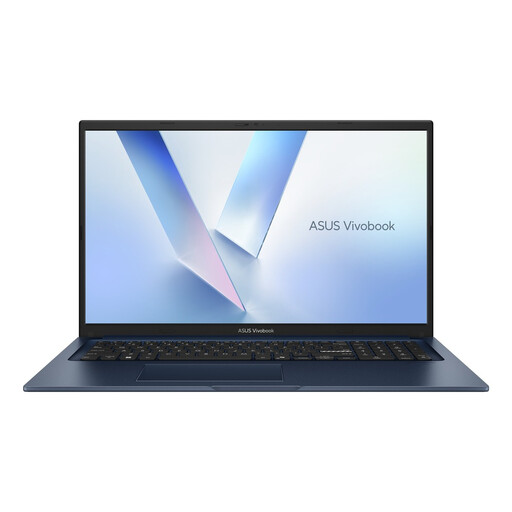 Image unavailable
ASUS Vivobook 17 X1704MA-AU153W
The 17.3-inch screen could be a good fit if you want plenty of room for reading and writing at the table.
Core 5 320, 8 GB RAM, 256 GB SSD and a QWERTY keyboard.
View on Joybuy
 Image unavailable
HP OmniBook Ultra Next Gen AI 16-bk0004nd
The 16-inch screen could be a good fit if you want to view a chapter and your notes across a spacious workspace.
128 GB RAM, 2 TB SSD, 3K OLED touchscreen and Windows 11 Pro.
View on Joybuy
 Image unavailable
MSI Cyborg A15 AI B2HWGKG-248NL
The 15.6-inch Full HD anti-glare screen could be a good fit if you want to view the source text and summary on one laptop.
AMD Ryzen 9 270, 16 GB DDR5, 512 GB SSD and Windows 11 Home.
View on Joybuy
 Image unavailable
MSI Venture 16 AI A2HMG-068NL
The 16-inch screen with a resolution of 1920 × 1200 could be a good fit if you want extra vertical space for documents.
Intel Core Ultra 7 255H, 32 GB DDR5 RAM, 512 GB PCIe 4.0 SSD and Windows 11 Pro.
View on Joybuy
Frequently asked questions
Can I work on my summary on a Chromebook without Wi-Fi?
Yes, as long as you make eligible files available offline in advance. Google Chromebook Help lists Docs files among those you can use offline, but not every app works without a connection.
Do I need a laptop with 16 GB of RAM for word processing?
Not necessarily. The Consumentenbond recommends 8 GB of RAM for light tasks and, where possible, 16 GB if you use several programmes at once. Check your course and app requirements too.
How can I keep the battery in good condition if my laptop often stays on the kitchen table?
Check whether your model has a smart charging feature and how to switch it on. The Consumentenbond recommends using this feature to keep the battery well below 100%. Availability and controls vary by device.
What are my rights when I buy a laptop online?
In the Netherlands, online purchases from a business generally come with a 14-day cooling-off period, according to the Dutch government. You’re also entitled to a product that meets the required standard. If there’s a problem, contact the retailer about your statutory rights. There is no fixed statutory warranty period for every product.


