What should you look for when choosing?
First check which software you’ll need to use. Then compare screen space, portability and the full specification.
| Consideration |
What to look for when buying |
Who is this more relevant to? |
| Reading comfort and workspace |
Compare screen size, resolution, aspect ratio and finish. Think about whether you want to view PDFs and notes at the same time. |
If I’m reading long documents and have notes or browser windows open at the same time, I want to make good use of the available screen space. Around 33% of consumers prioritise reading comfort and workspace. |
| Research software |
Find out which programmes and versions you need to install, then check the operating system, processor and memory against the software requirements. |
If my course requires me to use GIS locally, I want to know in advance whether the laptop can run the required software. Around 25% of consumers prioritise compatibility with the research software they use. |
| Portability and working away from a power socket |
Check the weight of the exact configuration, the screen size, what any battery test figures are based on, and whether a suitable adapter is included. |
If I regularly take my laptop between study spaces, I weigh up a compact size against having enough room to read. Around 25% of consumers prioritise portability and working away from a power socket. |
| Overall specification and upgrade options |
Check the memory, SSD capacity, any upgrade options and the accessories included with the exact variant. |
If I’m choosing a laptop for several years and different study tasks, I want to know what the configuration offers and which accessories I’ll still need. Around 17% of consumers prioritise the total purchase cost. |
Joybuy laptop picks
These laptop picks suit document-focused study and different preferences for screen space and portability. Before buying, check that the configuration you choose is compatible with any required software.
 No image available
Lenovo Yoga 9 16N1X11 83N70021MH, 16-inch 2-in-1, 32 GB RAM, 512 GB SSD, blue, QWERTY
The 16-inch OLED touchscreen gives you plenty of workspace for long documents and side-by-side windows.
The description mentions a 360-degree hinge for use as a laptop or tablet.
Configuration: 32 GB RAM and 512 GB SSD.
View at Joybuy
 No image available
Apple MacBook Air 15-inch M5, 16 GB, 512 GB, Starlight, QWERTY
This Mac configuration could suit document work if the software you need is available on macOS.
Screen: 15.3 inches. Memory: 16 GB. Storage: 512 GB SSD.
The stated weight is 1.51 kg. If you’re required to run ArcGIS Pro locally, Esri describes using a virtual Windows environment on a Mac with an Apple chip.
View at Joybuy
 No image available
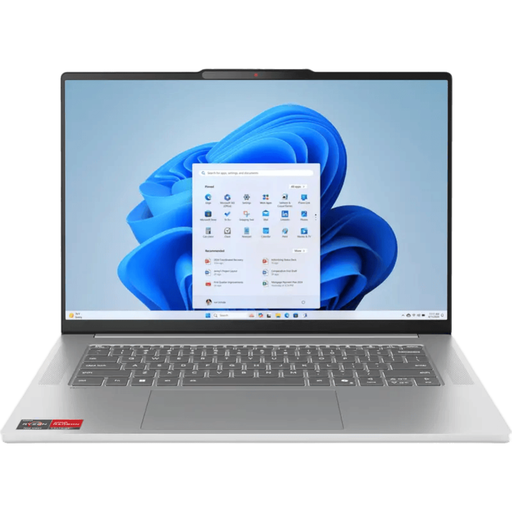
Lenovo IdeaPad Slim 5 NB IPS5 15ARP10 R7, 16 GB, 512 GB, QWERTY
According to the product description, the 15.3-inch screen with a 16:10 aspect ratio gives you extra vertical space for documents and web pages.
The configuration mentioned has an anti-glare IPS screen with a resolution of 1920 × 1200, 16 GB of memory and a 512 GB SSD.
The description says a suitable charger must be purchased separately.
View at Joybuy
 No image available
HP OmniBook X Flip NG AI PC 16-as0050nd D75LQEA#ABH
The 16-inch 16:10 screen gives you plenty of workspace for documents and multiple windows.
The description mentions a touchscreen, a 360-degree hinge, 16 GB of memory and Windows 11 Home.
The stated weight is 1.88 kg, so bear that in mind if you’ll be carrying the laptop around often.
View at Joybuy
 No image available
ASUS Zenbook A14 UX3407QA-QD479W, 14-inch, Snapdragon X, 16 GB, 512 GB, WUXGA OLED
The stated weight of around 0.98 kg may be a factor if you often carry your laptop between study spaces.
The configuration mentioned has a 14-inch 16:10 WUXGA OLED screen, 16 GB of memory and a 512 GB SSD.
A 14-inch screen gives you less room to view documents and notes side by side than a larger screen.
View at Joybuy
Frequently asked questions
Do you need a Windows laptop for research into urban heat?
Not simply because of the research topic. If you need to run ArcGIS Pro locally, check the system requirements for the version you’ve been asked to use: Esri lists supported Windows configurations. First find out which software you’ll actually need to install.
Can you simply install ArcGIS Pro on macOS?
No, not as a native macOS app on a Mac with an Apple chip. Esri describes running it in a virtual Windows environment, subject to its own requirements. Also check whether your course supports this approach.
What should you do after unpacking your laptop?
First check that the adapter is included and suitable. Then update the operating system and install the software required by your course. For ArcGIS Pro, check the requirements for the version you’ll be using in advance. Store research files in line with your course’s guidelines.
Should you buy an extended warranty, and how long do you have to return a laptop bought online?
When you buy as a consumer in the Netherlands, you have statutory rights if a product doesn’t meet what you could reasonably expect from it; a stated manufacturer’s warranty is separate. For a standard online purchase, you generally have a statutory 14-day cooling-off period from delivery, subject to legal exceptions. ACM ConsuWijzer explains the cooling-off period. Compare any additional warranty terms with your existing rights.
Is there a fixed two-year statutory warranty period for laptops in the Netherlands?
No. According to the Dutch Government, there is no fixed statutory warranty period in the Netherlands; what matters is what you could reasonably expect from the product. A manufacturer’s warranty is separate from these statutory rights.


