
Puzzle creator with a dedicated workspace
Want to view the layout and source material side by side, and can use a laptop with a suitable external monitor. Microsoft Support explains how to arrange multiple displays in Windows.


If you usually work in one place, pairing a standard laptop with a suitable external monitor is a straightforward way to view your puzzle page and source material side by side. If you often work on the move and want to take both screens with you, compare laptops with two built-in screens and check the power supply and input devices included with each version. Neither setup replaces checking the exported print file.
Want to view the layout and source material side by side, and can use a laptop with a suitable external monitor. Microsoft Support explains how to arrange multiple displays in Windows.
Want both screens available away from your usual workspace, so compares laptops with two built-in screens and the components supplied with them. ASUS and Lenovo describe models with two screens.
Checks margins, bleed, images and the exported print file as well as the design. Canva Help Center provides points to consider when preparing a design for print.
A good fit if: you mainly check puzzles and lay out pages at a dedicated workspace, with the document on one screen and source material on the other.
Bear in mind: the monitor and possibly a suitable cable or adapter are separate components. Check that the laptop’s video output matches the monitor’s connection.
A good fit if: you want to keep your layout and source material in view at the same time while you’re on the move. ASUS lists two built-in 14-inch screens for the Zenbook DUO UX8407; Lenovo lists two 13.3-inch screens for the Yoga Book 9i Gen 9.
Bear in mind: the keyboard and power supply vary by version. Lenovo lists accessories for the Yoga Book 9i Gen 9; the ASUS version available from the Dutch retailer that was reviewed is sold without a power adapter.
| Point to consider | What should you check? | Who is this important for? |
|---|---|---|
| Two usable screens | Decide whether you mean two screens in total or two additional monitors. If you’re using an external monitor, check that the video output and monitor connection are compatible. | If I want to view my puzzle page and clues at the same time, the screen setup needs to suit my workspace. Around 31% of consumers say having two usable screens is their main purchasing concern. |
| Print layout | Check the system requirements for your chosen software and review the PDF, margins, bleed and images before printing. | If I’m creating a printed booklet, I want the pages and images to be properly prepared after export. Around 25% of consumers prioritise reliable print layouts. |
| Working on the move with two screens | Check whether the keyboard suits the way you work and which power adapter is included with the version you’ve chosen. | If I work in different places, I don’t want to rely on a separate monitor. Around 25% of consumers prioritise having two screens available on the move. |
| Complete workspace | Work out which monitor connection and power supply you’ll need, as well as which software you use. | If I want to put together my complete setup, I want to know which components I’ll need in addition to the laptop. Around 19% of consumers focus mainly on the total purchase cost. |
Your screen setup is only one part of the job: system requirements depend on the software and version you use. For InDesign version 21.3 and later on Windows, Adobe lists 8 GB RAM as the minimum and 16 GB as the recommended amount. These aren’t general requirements for all layout software.
A laptop with one external monitor gives you two screens in total. If you want two additional monitors, check whether the laptop supports the connection setup you need.
First work out the screen setup you want, then check the connections on the laptop and monitor.
An external setup may require a monitor, cable or adapter.
The keyboard and power supply can vary by version. According to ASUS, the ASUS Zenbook DUO UX8407 version reviewed is sold without a power adapter.
Check what’s in the box and what power supply the exact version needs before you choose.
For the ASUS version mentioned, you’ll need to arrange a power adapter separately.
Canva Help Center points out that colours on screen may differ from printed colours, and that parts of a design may be cut off.
Check the exported file, margins, bleed and images before sending your booklet to print.
Design errors may mean you have to print the booklet again.
The Zenbook DUO UX8407 is an option for mobile layout work with two built-in screens.
The Yoga Book 9i Gen 9 is an option if you want to work on the move with two built-in screens.
The MacBook Air with M5 chip is an option if you want to use macOS with the laptop screen and external displays.
The OmniBook 5 series includes conventional laptops and a Flip version to compare for a workspace with an external monitor.
The Dell 14S is a range of conventional 14-inch laptops for everyday work; you’ll need to choose an external monitor separately.
These laptops are options to compare when creating a puzzle booklet. For each version, check that the connections suit your monitor and that the specifications meet the needs of the software you use.
 No image available
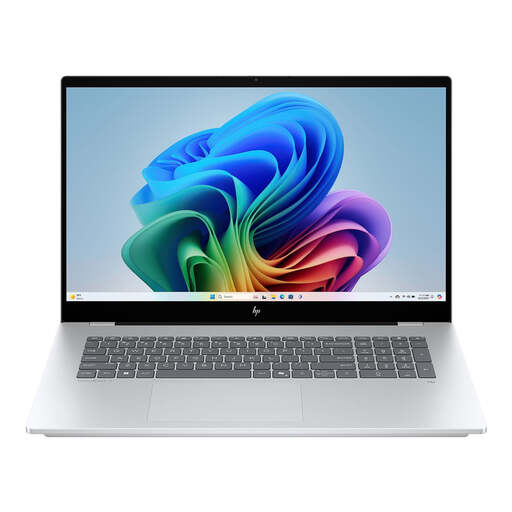
The listed 17.3-inch FHD touchscreen is worth considering if you want to work on a single built-in screen.
Intel Core Ultra 5 226V, 16 GB LPDDR5X, 512 GB SSD and 17.3-inch FHD touchscreen. According to the product description, the power adapter is sold separately.
 No image available
The HDMI and USB-C connections with DisplayPort described are relevant if you want to use this laptop with an external monitor.
Intel Core 7 150U, 16 GB RAM, 512 GB SSD and 14-inch OLED touchscreen. The description states that a compatible USB-C charger of at least 45 W isn’t included.
 No image available
The Thunderbolt 4 port with DisplayPort support described is useful if you want to connect an external screen.
AMD Ryzen AI 7 350, 24 GB RAM, 1 TB SSD and 16-inch touchscreen. According to the description, this model has a 360° hinge.
 No image available
The HDMI connection described is useful if you want to connect an external monitor; check that it’s compatible with your monitor.
15.6-inch Full HD IPS screen, 16 GB DDR4 RAM, 512 GB SSD and AMD 3050e processor.
 No image available
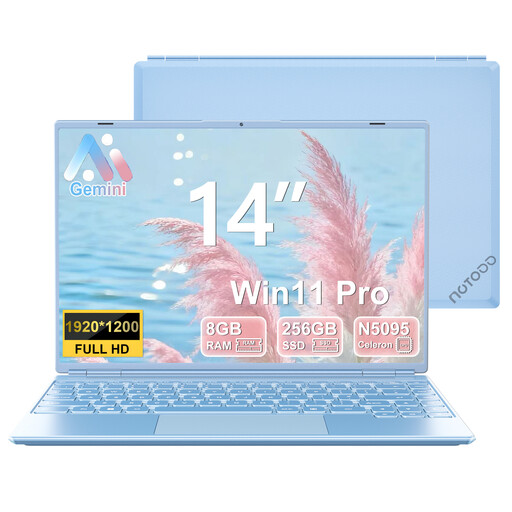
The mini-HDMI port is useful for an external monitor; check that your monitor can connect to it.
14-inch IPS screen with 1920 × 1200 resolution, Intel Celeron N5095, 8 GB RAM and 256 GB SSD.
Connect a compatible monitor and arrange the detected displays in Windows display settings. Microsoft Support explains how to do this; before buying, check that the laptop and monitor connections are compatible.
Not in general. For InDesign version 21.3 and later on Windows, Adobe lists 8 GB RAM as the minimum and recommends 16 GB. Check the system requirements for the software and version you use.
Check the exported file, margins, any bleed and images at the intended print size. Canva Help Center points out that colours on screen may differ from printed colours, and recommends checking your design before printing.
According to ACM ConsuWijzer, online consumer purchases generally come with a statutory 14-day cooling-off period from delivery, subject to exceptions. If a product breaks during normal use sooner than you could reasonably expect, the seller is responsible for providing an appropriate solution under the statutory guarantee. In the Netherlands, there is no fixed period that applies to all laptops.
According to the Dutch Government, you need the creator’s permission to distribute or publish copyright-protected text and images. You can’t distribute a copy made for your own personal use. Check the rights for any material you want to share or publish.
For employees working from home, the Dutch Government describes the employer’s duty of care and the requirement for an ergonomically sound home workspace. This isn’t a general requirement for everyone buying a laptop for personal use.