
Developers with a slow-running local script
You want to investigate where your code spends its processing time while it runs, rather than assuming that a faster laptop will solve the problem.


Choose a laptop that runs your script, runtime and profiler, then match its processor, memory and ports to your day-to-day workload. At a fixed shared desk, dock compatibility and how the computer is shared are important considerations. If you often move between workspaces, portability and the ability to work without a permanent connection matter more. A faster laptop alone won’t tell you why code is slow: you’ll need to measure the script, for example using CPU Usage in the Performance Profiler from Microsoft Learn.
You want to investigate where your code spends its processing time while it runs, rather than assuming that a faster laptop will solve the problem.
Alongside an editor and profiler, you may use containers or other applications, and want to account for the memory needs of your entire workload.
You move between workspaces or connect your laptop to shared equipment. If the computer itself is also used by several people, accounts and user profiles need separate consideration.
First, check that your profiler and runtime work with the operating system. Then match the memory and ports to the applications you use at the same time and the equipment at your desk.
| What to consider | What should you check? | Who is this important for? |
|---|---|---|
| Investigating a CPU bottleneck | Check that the runtime and profiler work with the operating system, then measure the script with a representative workload. | If I want to find out where my script spends processing time, I need to be able to measure it locally. Around 40% of consumers cite diagnosing CPU usage as their main reason for buying. |
| Memory for multitasking | Check memory usage with your usual projects and applications open. If the memory is upgradeable, check the exact laptop configuration. | When I use an editor, profiler and, for example, containers at the same time, the memory needs of the whole setup matter. Around 30% of consumers give simultaneous local workloads the highest priority. |
| Connecting to desk equipment | Compare the laptop’s ports with the dock, monitor, network and power requirements. Also establish whether the workspace alone is shared or the computer itself is too. | If I want to connect my laptop to the equipment already at my desk, I need to know in advance whether the dock and laptop features are compatible. Around 20% of consumers make desk connectivity their top priority. |
| Moving between workspaces | Consider the weight with the power supply and adapters, and whether the screen is comfortable to use for code and profiler displays. | If I often move between workspaces, portability matters more than a fixed desk setup. Around 10% of consumers cite mobility as their main reason for buying. |
A CPU profiler can show where code spends processing time. Without measuring it, you won’t know which section of code or component is causing the problem.
Check that the profiler runs in your intended environment and measure the script with a representative workload.
Ports, memory and keyboard layouts can vary between configurations. Choosing the wrong one may mean you need additional equipment or a different configuration.
Before buying, check the full model number and specifications of the exact configuration you’re considering.
The Dutch government distinguishes between statutory guarantees and manufacturer or additional warranties.
Compare the terms of any additional cover with your statutory consumer rights.
The ThinkPad T14 Gen 6 AMD is an example of a laptop for local development work at a desk with peripherals.
The MacBook Air M5 is worth considering if you’re looking for a compact macOS development environment.
The EliteBook 8 G1i A26ZMEA#ABH is an example of a business Windows configuration.
The Dell Pro 14 PC14250 is a model range to consider if you’re looking for a configurable business Windows laptop.
This selection features Windows laptops for local work at a shared desk. Before buying, check that your profiler, runtime and existing desk equipment will work with the configuration you choose.
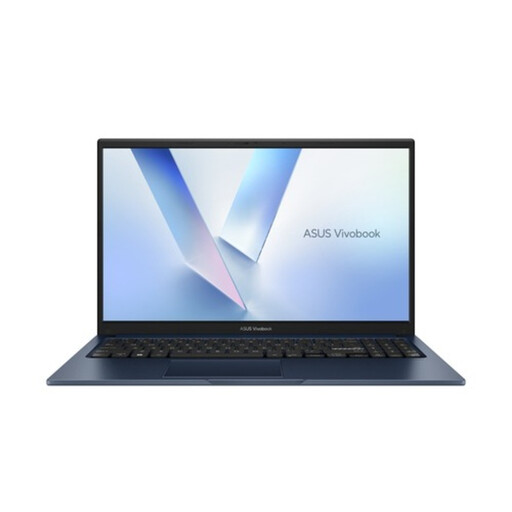 No image available
This Windows laptop may suit local work at a desk; check that your profiler and runtime work with the configuration you choose.
The product title lists 8 GB of RAM and a 256 GB SSD.
 No image available
This configuration may suit you if you use several local applications; check the software requirements of your development environment.
The product information lists Windows 11 Pro, 32 GB of LPDDR5X memory, a 1 TB SSD and USB4. The listed weight is 1.66 kg.
 No image available
This Windows laptop may suit local work at a desk; check that the configuration meets your profiler and runtime requirements.
The product title lists 8 GB of RAM and a 256 GB SSD. The description mentions an anti-glare Full HD screen and a 180° hinge.
 No image available
This configuration may suit you if you use several local applications alongside profiling; match your choice to your own workload.
The product information lists Windows 11 Home, Thunderbolt 4 and HDMI 2.1.
 No image available
This configuration may suit local work with several applications; check that your development software is compatible before buying.
The product information lists Windows 11 Home, a 16-inch 2.8K OLED screen with a 120 Hz refresh rate and Thunderbolt 4 ports.
No. The amount of memory you need depends on your script and what else you’re running at the same time. Lenovo recommends 16 GB as a starting point for many programming tasks and says 32 GB may be more comfortable for uses such as virtual machines. This is the manufacturer’s advice, not a fixed requirement for script profiling.
Distinguish between a shared desk and a shared device. For a Windows computer actually used by several people, Microsoft describes Shared PC settings for accounts and user profiles; discuss the setup and access permissions with your administrator. Sharing a workspace doesn’t automatically mean the computer itself is shared.
No. Check that each laptop and dock supports video, power and the connected devices. Lenovo lists video and USB Power Delivery over USB-C for ThinkPad T14 Gen 6 AMD model 21QJ006MHH, but that doesn’t confirm compatibility with every dock.
According to the Dutch government, when you buy online from a business, you’re often entitled to a 14-day cooling-off period, although there are exceptions. If a product is faulty, the seller is responsible for statutory guarantees; additional cover doesn’t replace those rights. Check the terms of your specific purchase, especially if you’re buying for business purposes.