For a community poster, the screen, the requirements of your design software and the printer’s submission specifications matter more than automatically choosing the most powerful graphics card. Choose a more compact laptop if you travel often; a larger screen gives you more workspace, but takes up more room. For colour-critical print work, check both the colour gamut and colour accuracy.
Who is this guide for?
Printed poster designer
Wants to check colours and details before sending the file to the printer. A wide colour gamut alone doesn’t prove that colours are reproduced accurately; RTINGS.com makes the same distinction in its laptop advice for graphic design.
Designer using several apps
Switches between image editing, layout and other windows. Compare the memory in your chosen configuration with the requirements of the apps you actually use; Adobe recommends 16 GB or more for Photoshop.
Designer presenting work in person
Takes a laptop to a portfolio review and weighs portability against screen space. Also check that the ports on your chosen configuration are compatible with the presentation screen.
What should you consider when choosing?
First, work out what you need to create and assess the poster for print. Then compare the screen space, how you use your design apps and how often you take your laptop with you.
| What to consider |
What should you check? |
Who should prioritise this? |
| Colour and print |
Compare the stated colour gamut with what you need, and check colour accuracy separately. Ask the printer for its submission specifications. |
I want to check colours and small details before sending the file. Around 36% of consumers say colour and print are their main buying concern. |
| Design work and files |
Check the RAM and SSD configuration, and compare them with the requirements of your own apps and files. |
If I use design apps and other windows at the same time, I want to know whether my chosen configuration can handle them. Around 29% of consumers prioritise smooth performance and storing files. |
| Portability and presenting |
Weigh screen size against portability, and check that the ports are compatible with the screen you’ll be presenting on. |
I take my work to reviews and want to present without any surprises when connecting. Around 21% of consumers put portability and presenting among their main buying concerns. |
| Configuration and cost |
Compare the complete configuration with your software’s requirements, and avoid extra graphics hardware if your tasks don’t need it. |
I don’t want to pay for components my poster work doesn’t require. Around 14% of consumers prioritise the configuration they need and the purchase cost. |
Common buying mistakes
-
Assuming a wide colour gamut means accurate colours
A stated colour-space coverage figure doesn’t, on its own, tell you how accurately the screen reproduces colours. RTINGS.com points out that factory calibration matters too.
Check the colour gamut and any available information about colour accuracy separately, and match the settings to the printer’s instructions.
-
Buying a powerful graphics card just for a 2D poster
A dedicated GPU isn’t automatically necessary for poster layout. Its benefits depend on your software and any additional, more demanding tasks you carry out.
First check the requirements of the programmes and projects you actually use.
-
Assuming every configuration in a laptop range is the same
Memory, storage, screen and ports can vary between configurations. Dell, for example, warns that changing options can also affect other specifications.
Before comparing, check the full model designation and the selected screen, memory and storage configuration.
Brands to consider
Apple
The MacBook Air M5 and MacBook Pro M5 Pro/Max are different options. Consider which configuration suits your poster work and how often you take your laptop with you.
- Apple lists 16 GB of unified memory and a P3 display for certain MacBook Air M5 configurations.
- A screen specification alone doesn’t prove colour accuracy for print. Check the chosen screen, memory and storage configuration, along with the ports you need.
Lenovo
The Yoga Pro 9i Gen 11 is a larger Windows laptop for anyone who wants more screen space on the device itself.
- Lenovo Netherlands lists a 16-inch screen, 32 GB of soldered memory and a 1 TB SSD for configuration 83SF003UMH.
- The stated 99% Adobe RGB coverage is a product specification, not an independent accuracy measurement. Also check the size, keyboard and exact configuration.
ASUS
The ProArt P16 is a 16-inch creator range for anyone who also carries out more demanding graphics work alongside poster layout.
- For the P16 configuration reviewed, ASUS lists an OLED screen and a dedicated RTX graphics card.
- A powerful GPU isn’t necessarily needed for two-dimensional poster layout alone. Check what hardware your software and other projects require.
Dell
The XPS 14 is a more compact Windows option. Assess the configuration you’ve selected rather than relying on the model name alone.
- Dell lists 16 GB of memory and a 512 GB SSD for the selected configuration.
- Changing options can also affect other specifications. So check the screen and ports on the final configuration.
Laptops on Joybuy
This selection includes laptops for poster layout and portfolio presentations, from portable 15-inch models to creator configurations with larger screens. Screen claims aren’t independent colour measurements; check the exact configuration, your software’s requirements and the ports you need.
 No image available
ASUS ProArt P16 H7607BA-SE030X 16-inch AI workstation
A 16-inch creator configuration to consider if you also carry out more demanding design work alongside poster layout; check the display separately for colour-critical print work.
According to the product name: 64 GB RAM and a 1 TB SSD.
Joybuy
 No image available
MSI Stealth 16 AI+ B3WF-011NL
A 16-inch configuration to compare if you also have other graphics-intensive tasks alongside poster work; don’t judge colour reproduction by screen coverage alone.
According to the product name: QHD+ OLED screen with 240 Hz, 16 GB DDR5, 1 TB SSD, Intel Core Ultra 9 386H and NVIDIA GeForce RTX 5060.
Joybuy
 No image available
MSI Venture 16 AI A2HMG-068NL
The 16-inch configuration gives you a larger workspace; compare the screen specifications with the requirements of your poster and presentation.
According to the product name: Intel Core Ultra 7 255H, 32 GB DDR5, 512 GB SSD and a 1920 × 1200 screen with 144 Hz.
According to the product information, this configuration doesn’t include a power adapter.
Joybuy
 No image available
Apple MacBook Air 15-inch M5, 16 GB, 512 GB, Starlight (2026)
A 15-inch model to take to a review; check that it works with your design software and any external displays you use.
According to the product name: M5, 16 GB unified memory and a 512 GB SSD.
According to the product description, a USB-C power adapter isn’t included.
Joybuy
 No image available
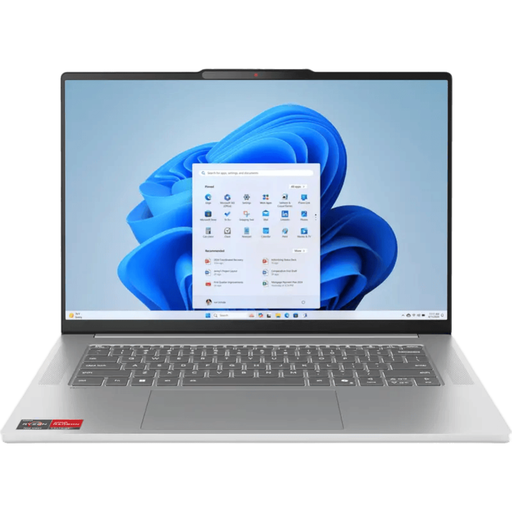
Lenovo IdeaPad Slim 5 NB IPS5 15ARP10 R7, 16 GB, 512 GB
A 15-inch laptop to consider if you want one device for poster work and portfolio reviews. Check that its ports are compatible with the presentation screen.
According to the product name: Ryzen 7, 16 GB memory, 512 GB SSD and Windows 11.
According to the product description, a compatible charger must be purchased separately.
Joybuy
Frequently asked questions
Do I need a dedicated graphics card for a community poster?
Not necessarily. First check the requirements of your design software and any additional 3D, video or other GPU-dependent tasks. For two-dimensional poster layout alone, a dedicated GPU isn’t automatically the top priority.
How do I submit a poster that will be printed to the edge?
Extend the design beyond the final trim size if the printer requires bleed. Ask the printer for the exact bleed, colour settings and PDF submission requirements.
What should I check before connecting my laptop to a screen during a portfolio review?
Check the video output on your chosen configuration and the input on the presentation screen before choosing a cable or adapter. The model name alone doesn’t confirm which ports are available on every configuration.
What rights do I have when buying a laptop online in the Netherlands?
According to ACM ConsuWijzer, for a standard online purchase you generally have up to 14 days from delivery to change your mind, although there are exceptions. The seller must also resolve, free of charge, any issue with a product that doesn’t provide what you could reasonably expect under normal use, under the statutory guarantee. A manufacturer’s warranty doesn’t replace these statutory rights.


