Start with the screen and editing software you use. For skin tones, colour management matters more than simply choosing OLED, and Adobe recommends 16 GB of RAM or more for Photoshop. A compact model is a better fit if you often travel between your room and campus; if you usually work at your desk with lots of photos or layers, compare larger screens and the storage available on the exact configuration.
Who is this choice relevant to?
Student who edits skin tones precisely
You assess colour on your laptop screen and want to know what a suitable monitor profile can do. A stated colour gamut alone doesn’t guarantee accurate display; Adobe explains how a monitor profile helps Photoshop display colours on screen.
Student with lots of RAW photos or layers
You want to match memory and storage to the way you edit, rather than choosing based on the laptop’s appearance alone. Adobe recommends 16 GB of RAM or more for Photoshop; how much storage you need also depends on your photo collection.
Student with a small desk and days on campus
You move between your room and campus, weighing screen space against size, weight and ports. The specifications for the exact configuration can help you make that choice.
What should you look for?
Compact model for travelling
Choose this if: you take your laptop with you often and have limited desk space; compare the screen features of the specific 13- or 14-inch configuration.
Bear in mind: there’s less built-in space for viewing a photo alongside editing panels.
Larger screen for desk use
Choose this if: you mainly work in your room and want plenty of space for photos and tool panels.
Bear in mind: the larger size takes up more space on your desk and when travelling; a stated colour gamut doesn’t replace colour management.
| What to consider |
What should you check? |
Who is this important to? |
| Colour and screen |
Check the screen specifications for the exact configuration and consider how you’ll profile the screen. Don’t assume current colour accuracy based solely on OLED or a stated colour gamut. |
If I assess skin tones on my laptop screen, I want to know how reliable my colour display is; around 29% of consumers put colour and screen quality at the top of their list when buying. |
| Memory and retouching features |
Compare the installed RAM and processor with your software’s requirements. Adobe lists 8 GB of RAM as the minimum for Photoshop and recommends 16 GB or more. |
If you work with lots of layers or features that require specific hardware, check your software’s requirements before buying; around 23% of consumers put suitability for editing at the top of their list. |
| What's included and terms |
Check which power adapter and ports are included with the configuration and whether you’ll need a card reader or adapter. The Dutch government explains that statutory guarantees apply alongside any manufacturer’s warranty, and that you should contact the seller if there’s a problem with a product. |
If I don’t want to overlook any essential accessories or terms, I check them before buying; around 18% of consumers prioritise what’s included and the terms. |
| Size for your room and campus |
Compare the screen size and stated weight of the specific configuration with the space available on your desk and in your bag. |
If you take your laptop with you often and want to keep desk space free, a more compact model could be a better fit; around 18% of consumers prioritise size and portability. |
| Storage and photo management |
Compare the SSD capacity with your own photo files, and plan separately how you’ll store your originals and catalogue. A Lightroom Classic catalogue isn’t the same as a copy of all your original photos. |
If you manage lots of original files, you’ll want to know in advance how much will fit locally and how you’ll manage backups; around 12% of consumers prioritise storage and photo management. |
Things to consider before buying
-
Assuming a wide colour gamut means accurate skin tones
A screen specification doesn’t automatically tell you how accurately colours will appear on your screen. Adobe explains that a monitor profile helps Photoshop display document colours appropriately.
Compare the screen specification for the exact configuration and set up colour management before assessing final colour corrections.
Setting up and checking colour management takes extra time.
-
Assuming every configuration in a model range has the same screen
A screen option listed for a model range won’t necessarily be available on every configuration.
Check the full model number and screen specification of the configuration you’re considering.
-
Assuming the power adapter and ports are included
The included power adapter and available ports can vary by configuration. You may therefore need to buy a compatible charger or card reader separately.
Check what’s in the box and compare the ports with the connections on your camera and external drives.
Brands to compare
Apple
MacBook Air configurations for those who use macOS and want to choose between a more compact size and more built-in screen space.
- Apple Support lists a 15.3-inch screen, 16 GB of memory and a 512 GB SSD for the 15-inch MacBook Air M5.
- A P3 listing doesn’t, by itself, prove current colour accuracy; also check that the ports suit your card reader and external storage.
ASUS
The Vivobook Pro 15 OLED N6506 is a larger Windows configuration worth comparing if a built-in card reader is important to you.
- For the configuration reviewed, ASUS lists a 15.6-inch OLED screen, 16 GB of RAM, a 1 TB SSD and an SD card reader.
- The manufacturer’s specifications aren’t an independent measure of colour display or retouching speed; the stated weight is 1.80 kg.
Lenovo
The Yoga Pro 7 Gen 10 is a compact Windows range for creative work; screen options for the IdeaPad Slim 3 15IRH10 depend on the configuration.
- Lenovo lists an OLED screen for the Yoga Pro 7 range and says OLED may be available as an option for the IdeaPad Slim 3 15IRH10.
- That doesn’t mean every IdeaPad Slim 3 15IRH10 configuration has an OLED screen; check the full model number.
HP
The OmniBook 7 14-fr0672nd is a compact Windows configuration to compare for its screen, memory and ports.
- For this configuration, HP lists a 14-inch OLED screen, 16 GB of RAM, a 1 TB SSD, as well as HDMI and Thunderbolt 4.
- Check that the specific configuration is currently available before basing your choice on it.
Joybuy laptop picks
This selection includes compact laptops for travelling and larger models for retouching at a desk.
 Image unavailable
ASUS ProArt P16 H7607BA-SE030X
The larger screen and listed SD card reader make this a good fit for desk-based retouching with camera files.
16-inch 4K OLED screen, 100% DCI-P3, 64 GB of RAM, 1 TB SSD and SD card reader. The stated colour gamut doesn’t prove current colour accuracy.
Joybuy
 Image unavailable
Apple MacBook Air 13-inch M5, 16 GB, 512 GB, Midnight
Its compact size and stated weight of 1.23 kg make it a good choice if you take your laptop between your room and campus.
13.6-inch Liquid Retina screen, 16 GB of memory and 512 GB SSD. Support for 1 billion colours doesn’t prove current colour accuracy.
Joybuy
 Image unavailable
Apple MacBook Air 15-inch M5, 16 GB, 512 GB, Starlight
The 15.3-inch screen gives you more built-in space for photos and editing panels than a compact model.
P3 screen, 16 GB of memory, 512 GB SSD and two Thunderbolt 4 ports. According to the product details, no power adapter is included; check what you’ll need to charge it.
Joybuy
 Image unavailable
ASUS Zenbook A14 UX3407QA-QD479W, 14-inch
The described configuration weighs around 0.98 kg and has a Dutch QWERTY keyboard, which is worth considering if you take your laptop with you often.
OLED screen, 16 GB of RAM and 512 GB SSD. The stated 100% DCI-P3 coverage isn’t an independent measure of current colour accuracy. According to the product description, a compatible 65 W USB-C Power Delivery charger isn’t included.
Joybuy
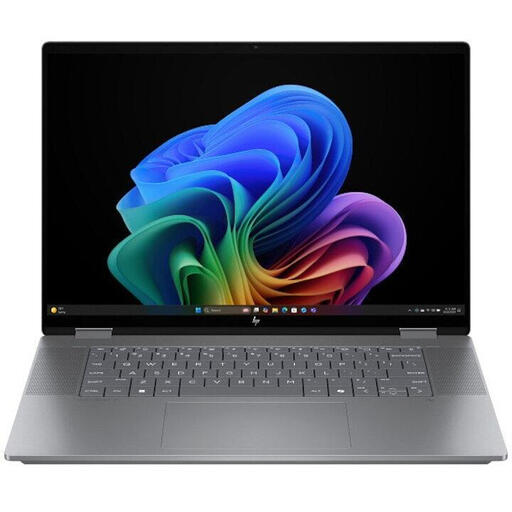 Image unavailable
HP OmniBook X Flip NG AI PC 16-ar0070nd
The 16-inch configuration gives you plenty of screen space, while its listed modes may suit different ways of working at a desk.
3K OLED screen, 24 GB of memory, 1 TB SSD and a 360° hinge. According to the product description, the power adapter must be purchased separately.
Joybuy
Frequently asked questions
Does a laptop for portrait retouching need an OLED screen?
No, not necessarily. Compare the screen features of the exact configuration and use suitable colour management if colour accuracy matters to your work. Adobe explains that a monitor profile affects how Photoshop displays colours on your screen; OLED or P3 alone doesn’t tell you how accurate colours are currently.
How can I make sure my Lightroom Classic catalogue isn’t the only copy of my work?
Store your original photos and catalogue separately. Adobe explains that a catalogue contains, among other things, references to photos and editing information; the catalogue file isn’t the same as all your original photos.
Who should I contact about a fault after buying as a consumer in the Netherlands?
Contact the seller if there’s a problem. According to the Dutch government, statutory guarantees apply alongside any manufacturer’s warranty or extended warranty you’ve purchased, and the seller must provide a solution if there’s a problem with a product.
Can I always return a laptop bought online within 14 days?
No, not in every case. The Dutch government says that a 14-day cooling-off period often applies to distance sales, but there are exceptions. Check whether the rules apply to your purchase.


