
Portfolio reviewer
You mainly compare designs and want to see the details clearly. Think about how much screen space you need; for colour-critical work, Adobe recommends calibrating and profiling the display you use.


Start with a screen that makes it comfortable to compare designs, and choose storage to suit the size of your local files. If you only view portfolios, you don’t necessarily need a powerful creator laptop. If you also edit large image files or use several design programmes, check the requirements of that software and the full configuration. The Consumentenbond recommends 512 GB or more as a guide if you regularly work with large photo or video files; it isn’t a fixed requirement for every portfolio.
You mainly compare designs and want to see the details clearly. Think about how much screen space you need; for colour-critical work, Adobe recommends calibrating and profiling the display you use.
You keep source files, exports and versions on your laptop. Choose storage based on the space your own projects take up, and arrange a separate back-up too. The Dutch Data Protection Authority lists back-ups as a security measure when personal data is processed.
You take portfolios with you and sometimes edit projects yourself. Balance size against the workspace offered by the built-in screen, and check that your design software runs on the configuration you choose. Adobe, for example, publishes specific system requirements for Photoshop.
Start with your main task: a comfortable screen and suitable storage matter when viewing portfolios. If you also edit files, check your software requirements before opting for extra processing power.
| What to consider | What to look for when buying | Who is this important for? |
|---|---|---|
| Screen for reviewing designs | Compare screen size, resolution, finish and the specifications of the exact model. For colour-critical work, decide which screen you’ll profile and use for the final review. | If you compare designs side by side, you’ll want to see the details clearly without carrying around more processing power than you need. Around 31% of consumers give screen quality their highest priority. |
| Local storage and back-up | Check how much space your current projects take up, and allow for new files and programmes. Also set aside a separate location for back-ups. The Consumentenbond recommends 512 GB or more as a guide if you regularly use large photo or video files. | If you keep your source files, exports and versions locally, you’ll want enough space as well as a copy stored away from your laptop. Around 31% of consumers prioritise storage and back-up. |
| Software compatibility | Make a note of the programmes and file formats you use, then compare their current system requirements with the processor, operating system, RAM and GPU in the full configuration. For Photoshop 27.x and later, Adobe lists 8 GB RAM as the minimum and 16 GB or more as the recommendation; this isn’t a general requirement for viewing portfolios. | If you also use design software or edit large files, you’ll want to know whether the laptop suits your workflow. Around 23% of consumers prioritise software compatibility. |
| Portability and connections | Compare the size and ports with your existing monitor, storage device and cables. The 13-inch MacBook Air M5, for example, lists two Thunderbolt 4 ports; check whether your equipment needs an adapter. | If you take your laptop to different review locations, you’ll want a size that suits your needs and the option to connect it to your equipment. Around 15% of consumers give portability their highest priority. |
A screen specification alone doesn’t tell you how colours will look on your display. Adobe describes calibration and profiling as steps for setting up a monitor’s display.
Check which screen you’ll use for the final review, and how you can calibrate and profile it.
Having more laptop storage won’t automatically protect your files against loss or hardware failure. The Dutch Data Protection Authority lists back-ups as a security measure for personal data.
As well as your working copy, plan a separately stored back-up that you can restore.
Simply opening and comparing files doesn’t necessarily call for the same configuration as editing large design files. Check the requirements of the programmes and features you actually use.
Compare the full configuration and box contents of the exact offer. The Dutch ASUS ProArt P16 offer we reviewed doesn’t include the required power adapter.
The MacBook Air suits anyone looking for a compact macOS laptop, while the MacBook Pro is also available in more powerful configurations. Choose based on your programmes and the workspace you need, not just the range name.
The ProArt P16 is a Windows option for anyone who views portfolios and also does more demanding creative work on a larger built-in screen.
The Yoga Pro 9i Gen 10 is a larger Windows laptop for anyone who edits projects as well as viewing them. The exact screen and hardware configuration varies by model.
The EliteBook X Flip G2i is an option if you want to use Windows, a 14-inch convertible and touch controls to show portfolios.
These laptops are suited to viewing portfolios and storing local project files, with models for anyone who also needs a larger screen or wants to do creative work.
 No image available
The 16-inch screen gives you built-in space to view portfolios and store projects locally.
WUXGA OLED screen; Snapdragon X processor; 16 GB LPDDR5X; 512 GB SSD; Windows 11 Home.
 No image available
This 16-inch model is designed for anyone who views portfolios and also does creative work on their laptop.
16-inch 4K OLED touchscreen; 128 GB RAM; 1 TB SSD; Windows 11 Pro; QWERTY keyboard.
 No image available
This 16-inch model has an anti-glare screen and storage for local project files.
1920 × 1200 screen; 32 GB DDR5 RAM; 512 GB PCIe 4.0 SSD; Intel Core Ultra 7 255H; Intel Arc Graphics; Windows 11 Pro. The product description states that the power adapter isn’t included.
 No image available
According to the product description, this 15.3-inch model combines a spacious built-in screen with a weight of 1.23 kg.
Liquid Retina display; M5; 16 GB memory; 512 GB SSD; two Thunderbolt 4 ports. The power adapter isn’t included; the product description specifies a USB-C adapter of at least 35 W.
 No image available
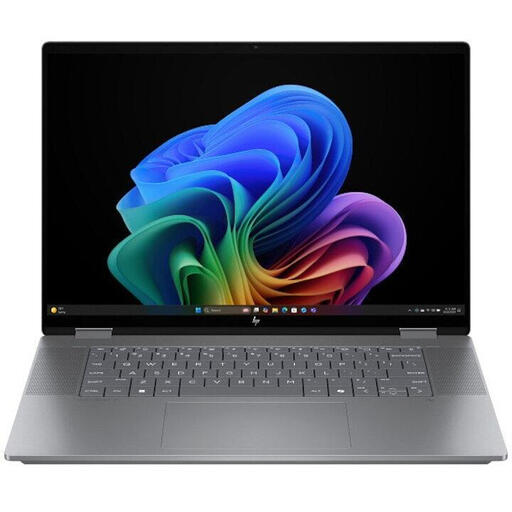
This convertible has a touchscreen and several modes for viewing or presenting portfolios.
16-inch 3K OLED touchscreen; 24 GB memory; 1 TB SSD.
First, check how much space your source files, exports and versions take up, and allow for new projects and programmes. The Consumentenbond recommends 512 GB or more as a guide if you regularly work with large photo or video files; it isn’t a fixed requirement for every portfolio. Arrange a separate back-up too.
For colour-critical work, Adobe recommends calibrating and profiling the screen you use. A stated wide colour gamut doesn’t, on its own, confirm how accurately your screen displays colours.
Not necessarily. First consider what you do with the files and check the requirements of the software or features you use. Adobe outlines GPU requirements for Photoshop; these aren’t general requirements for viewing portfolios.
Not every design file contains personal data. If your organisation does process personal data, the Dutch Data Protection Authority says you must determine appropriate security measures based on the risks. The regulator gives back-ups and encryption as examples; these aren’t standard laptop specifications for every buyer.
For applicable consumer purchases made at a distance, the Dutch government generally allows a 14-day cooling-off period. Check the terms of your purchase; the stated distance-selling rules don’t apply to an online purchase from a private individual.