If you mainly review existing portfolios and discuss them at the same time, focus first on screen space, suitable colour reproduction and a practical audio setup; you don’t automatically need a powerful GPU. If you edit colour-critical designs, large files or 3D projects yourself, also check the calibration, memory and graphics performance of the exact configuration. When people are talking in the background, your microphone and meeting app settings may matter more than a general claim about noise cancellation.
Who is this buying guide for?
Portfolio reviewers
You look at existing work and discuss the details. Screen space and colour reproduction suited to your work may matter more than maximum graphics performance. The Consumers’ Association and RTINGS highlight memory and colour reproduction as factors to consider when choosing a laptop for design work.
Meeting hosts in shared spaces
You discuss portfolios online while other people are talking in the room. Check whether your meeting app offers voice isolation and which microphone and app settings you need to use it. Microsoft Support and Zoom Support explain their apps’ audio isolation features.
Mobile designers
You review work in different locations or edit it yourself. The balance between portability, screen space and a more demanding creative workflow will help you choose the right configuration.
What should you look for when buying?
Start by asking whether you’ll mainly be reviewing existing designs, holding conversations somewhere with background noise or creating demanding design files yourself. Then compare the exact screen configuration and check the microphone and software settings you need.
| What to consider |
What to look for when buying |
Who is this important for? |
| Reviewing portfolios |
Check the exact panel configuration, resolution and screen reflections. Match the colour space to your work, and ask about calibration or measurements if you need to assess colour critically. |
If I want to assess details and colours accurately, I look for a screen suited to my projects. For around 40% of consumers, viewing quality is the top buying priority. |
| Being heard clearly |
Check the microphone and the settings available in your meeting app. Test voice isolation with people talking in the background and see whether a headset microphone would be more practical. |
In a shared space, I want to be able to speak without people constantly asking me to repeat myself. Clear speech during conversations is the top priority for around 30% of consumers. |
| Discussing work on the move |
Compare the size and weight of the exact configuration and check what power supply is included. Assess battery life based on usage similar to your own work. |
If I often travel between locations, portability matters more than a large screen. Mobility is the main consideration for around 20% of consumers. |
| Editing large files |
Check which software and files you use, then compare the memory, storage, GPU and upgrade options for the full model number. |
Anyone creating large design files or 3D projects has different requirements from someone who only views portfolios. Intensive design work is the top priority for around 10% of consumers. |
Things to consider when choosing
-
Assuming a wide colour gamut means accurate colours
A screen that displays a wide colour gamut doesn’t automatically reproduce colours accurately. This distinction matters particularly when you’re reviewing designs critically.
Check which colour space your work requires and look for calibration data or measurements for the exact screen configuration.
If your work requires accurate colour reproduction, you may need a separate calibration solution.
-
Assuming noise cancellation will always filter out other voices
Standard noise cancellation and voice isolation aren’t the same thing. The meeting app, microphone you choose and available settings can all affect what other participants hear.
Test the microphone and app settings with people talking in the background before an important meeting.
A headset microphone may call for a different audio setup from the built-in microphone.
-
Assuming every configuration in a product range has the same specifications
Screens, memory and graphics components can vary between configurations in the same laptop range. The product range name alone doesn’t mean the specifications are identical.
Compare the full model number with the specifications for the configuration you’re considering.
-
Confusing the manufacturer’s warranty with your statutory rights
According to the Government of the Netherlands, there is no fixed statutory warranty period in the Netherlands. Your statutory rights if a product doesn’t meet reasonable expectations are separate from any additional manufacturer’s warranty.
Read the terms of any additional warranty contract and contact the retailer if something is wrong with the product.
Relevant brands for different laptop needs
Apple
The MacBook Air M5 is available in a more compact 13.6-inch configuration and a larger 15-inch size.
- For the 13-inch configuration, Apple lists 16 GB of base memory, 512 GB of base storage, a P3 display and two Thunderbolt 4 ports.
- The stated battery life is based on specific manufacturer tests. Check the ports and configuration of the 15-inch model separately.
HP
The 16-inch OmniBook 5 range includes configurations with different screens and memory capacities.
- The range available in the Netherlands includes both 2K OLED configurations and other 2K configurations.
- Check the model number, screen and box contents; a USB-C adapter is recommended separately for some configurations.
Lenovo
The Yoga Pro 9i Gen 11 Aura Edition 83SF003UMH is a 16-inch creator configuration with a dedicated GPU.
- For this configuration, Lenovo lists 32 GB of soldered memory, a 1 TB SSD, an RTX 5060 and a glossy Tandem OLED touchscreen with stated coverage of three colour spaces.
- The stated colour space coverage isn’t an independent calibration measurement. The memory is soldered and the screen has a glossy finish.
ASUS
The ProArt P16 H7606 range is designed for anyone considering a 16-inch creator laptop with OLED and dedicated NVIDIA graphics.
- The H7606 configurations offer OLED and dedicated graphics options for creative workflows.
- The processor, GPU, screen and storage vary by configuration. A claim about colour accuracy is no substitute for measurements of the exact model.
Joybuy products for portfolios and design work
These product picks focus on larger screens and configurations with graphics capabilities for viewing portfolios and creating your own designs. If colour accuracy is critical, check the calibration of the exact screen; colour space coverage alone doesn’t prove colour accuracy.
 No image available
ASUS ROG Zephyrus G16 GU605CM-QR026W
This 16-inch OLED configuration is designed for anyone who wants to view portfolios on a spacious screen and do graphics work too.
The stated resolution is 2560 × 1600, and the specifications list 100% DCI-P3 coverage, 16 GB of memory, an RTX 5060 and a 1 TB SSD. Colour space coverage on its own doesn’t prove accurate factory calibration.
The product description says the charger must be purchased separately.
View at Joybuy
 No image available
ASUS ROG Strix G16 G614FR-S5252W
This 16-inch configuration gives you room to view portfolios and meeting windows side by side, with a dedicated GPU for your own graphics work.
The specifications list an IPS screen with an anti-glare finish, a resolution of 2560 × 1600, 16 GB of memory, an RTX 5070 Ti and a 1 TB SSD. The stated 100% DCI-P3 coverage doesn’t prove accurate calibration.
According to the product description, the charger must be purchased separately.
View at Joybuy
 No image available
MSI Stealth 16 AI+ B3WF-011NL
This 16-inch OLED configuration is aimed at anyone who wants to view portfolios on a spacious screen and work on colour-sensitive designs too.
The stated screen resolution is 2560 × 1600; the specifications list 100% DCI-P3 coverage, 16 GB of memory, an RTX 5060 and a 1 TB SSD. The stated coverage isn’t a calibration measurement.
The stated weight is approximately 1.99 kg.
View at Joybuy
 No image available
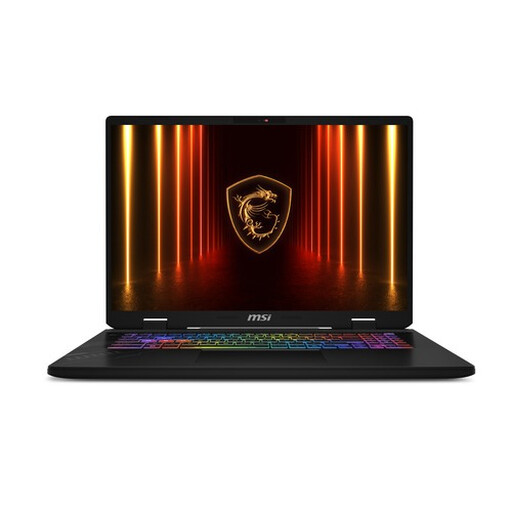
MSI Crosshair 17 HX AI D2XWFKG-071NL
The 17-inch screen gives you plenty of room to view portfolios. The dedicated GPU and memory are relevant if you also create graphics work yourself.
The stated resolution is 2560 × 1600. The specifications list 32 GB of memory, an RTX 5060 and a 1 TB SSD; the stated 100% DCI-P3 coverage doesn’t prove accurate calibration.
The stated weight is 2.8 kg, and the product description lists a 720p webcam.
View at Joybuy
 No image available
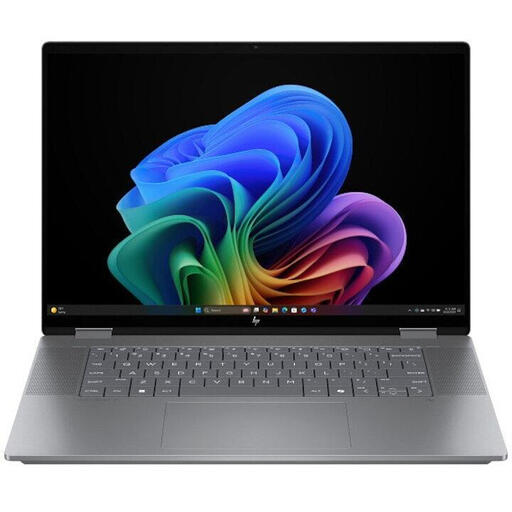
HP OmniBook X Flip NG AI PC 16-ar0070nd
This 16-inch OLED configuration gives you a large screen for portfolios and colour-sensitive design work.
The stated resolution is 2880 × 1800. The specifications list 100% DCI-P3 coverage, 24 GB of memory and a 1 TB SSD. Colour space coverage on its own doesn’t prove accurate factory calibration.
The screen is described as glossy; the stated weight is 1.89 kg.
View at Joybuy
Frequently asked questions
Do I need a dedicated graphics card to view portfolios?
Not necessarily. RTINGS highlights a dedicated GPU as a potential requirement mainly for complex 3D design, so first work out whether you’ll only be viewing portfolios or creating projects like these yourself.
What should I adjust if people are talking behind me during a portfolio discussion?
Check which microphone is selected in your meeting app and whether it offers voice isolation. Microsoft Support explains voice isolation in Teams, while Zoom Support outlines audio isolation and the related microphone requirements. Test the settings in your own space.
Is a P3 screen enough for colour-critical review?
No. A wide colour gamut on its own doesn’t prove accurate colour reproduction. RTINGS highlights the importance of factory calibration; also check which colour space your project requires and ask for data on the exact screen configuration.
Can I freely share or record portfolios showing identifiable people or confidential information?
It depends on the images, the people involved, your organisation and how the information is processed. The Dutch Data Protection Authority advises organisations to communicate securely and notes that processing personal data requires a legal basis under the GDPR. Check the relevant policies before sharing or recording.
What are my rights if a product is faulty or I buy it online?
According to the Government of the Netherlands, there is no fixed statutory warranty period in the Netherlands. If a product is faulty and doesn’t meet what you could reasonably expect, contact the retailer. For online purchases from a business, you usually have a 14-day cooling-off period. Check the terms and exceptions that apply to your purchase.


