
Comparing maps and sources side by side
You want to view historical maps, digitised texts and your own notes at the same time. The Kadaster’s Topotijdreis and Delpher offer material suited to this kind of source research.


Start with a screen that’s easy to read if you want to view historical maps, digitised texts and notes side by side. Then choose a size that suits both the shared table and your bag. Before opting for ChromeOS or macOS, check that your course software runs on it. The stated battery life doesn’t guarantee how long it will last during your work.
You want to view historical maps, digitised texts and your own notes at the same time. The Kadaster’s Topotijdreis and Delpher offer material suited to this kind of source research.
You take your laptop with you and work at a shared table. Size, connections and usable battery life are therefore important factors to consider.
You may need course-specific or mapping software, so it’s worth checking which operating system it requires first. Utrecht University points out that some software is only available for Windows.
Start with the software required by your course. Then choose a screen size that gives you enough room to work without becoming awkward at the table or on the move. Finally, compare extra features with what you’ll actually use.
| What to consider | What should you check? | Who should give this more weight? |
|---|---|---|
| Readability and screen space | Compare the screen size, resolution, aspect ratio and finish of the exact model. Think about how many windows you want to view side by side while keeping them easy to read. | If I want to view maps and digitised texts at the same time, readability comes first. This is the main priority for around 33% of consumers. |
| Software compatibility | Find out which applications and versions you need, then check whether they work with Windows, macOS or ChromeOS. | If my course requires specific mapping or desktop software, I want to know the operating system requirements in advance. Compatibility is the main priority for around 25% of consumers. |
| Portability and battery use | Check the weight of the exact model and what charging equipment is included. Compare battery life only with the usage conditions in mind. | If I often change study locations and don’t always have access to a socket, portability matters more. It’s the most important factor for around 25% of consumers. |
| Features and extra essentials | Compare the exact memory and storage configuration, and check whether a charger or any essential accessories are included. | I don’t want to pay for features or accessories I won’t use. Unnecessary extras are the main concern for around 17% of consumers. |
Screen, memory and operating system can vary within the same laptop range. The model you buy may therefore differ from the specifications you based your choice on.
Before you buy, compare the full model number and the specifications of the exact model.
The fact that websites and certain apps work doesn’t mean a required desktop programme will be available. The official QGIS installation guide lists Windows and macOS, but not a standard ChromeOS installation.
First, find out which applications and versions your course requires, then check which operating systems they support.
A folding screen doesn’t tell you whether a pen is supported or included. HP states that the charger for the OmniBook 5 Flip 14-fp0600ndx is sold separately.
Check what’s in the box for the exact listing and, if you need one, whether a pen is compatible. For the HP model mentioned, you’ll also need to check how to arrange a charger.
You may need to arrange a charger separately for this HP model. Also check whether the listing includes a pen if you need one.
A commercial warranty period doesn’t automatically end your statutory rights if a product doesn’t do what you could reasonably expect under normal use. ACM ConsuWijzer emphasises that the statutory guarantee doesn’t have a fixed term of exactly two years.
Keep your proof of purchase and contact the seller if there’s a problem. The circumstances of the fault matter.
The Vivobook 14 M1407 is a compact Windows range worth comparing for source research at a shared table.
The IdeaPad Slim 3 15IRH10 is a Windows option to consider if screen space matters to you.
The OmniBook 5 Flip 14 is worth considering if you want a convertible Windows screen for viewing or annotating material.
The Chromebook Plus 514 CB514-6HT is a ChromeOS option for work that can be done using compatible websites and apps.
A MacBook may suit you if the study programmes you need run on macOS and the configuration you choose meets your needs.
This selection of Joybuy products includes larger laptops for source research at a table, with Windows and macOS models.
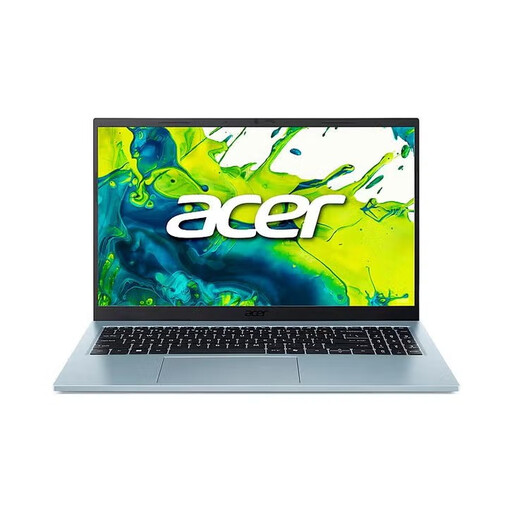 No image available
A good option if you want more screen space at the table and use Windows software.
This model has a matte 15.6-inch FHD IPS screen and Windows 11 Home. The listed configuration includes a Core 5 120U, 16GB of memory and 512GB of SSD storage.
 No image available
A 15-inch model to consider if you need room to work with maps and sources.
The description lists a 15-inch touchscreen with a resolution of 2496 × 1664 pixels. The configuration includes 16GB of memory and 512GB of storage.
 No image available
A good option if your study programmes run on macOS and you want a larger screen.
This model has a 15.3-inch Liquid Retina screen and macOS, with 16GB of memory and 512GB of storage. The adapter isn’t included; the description states that a USB-C adapter of at least 35 W is required.
 No image available
A good option if you use Windows study software and want more screen space at the table.
This model has a 15.3-inch WUXGA IPS screen with a 16:10 aspect ratio and anti-glare finish, plus Windows 11 Home. The configuration lists 16GB of memory and 512GB of SSD storage. The USB-C adapter isn’t included and must be bought separately.
 No image available
A good option if a large screen for maps and texts matters more than a compact size at the shared table.
The description lists a 16-inch WUXGA screen with an anti-glare finish and Windows 11 Home. The configuration includes 16GB of memory and 512GB of storage. The 16-inch size takes up more table space than a smaller model.
Not just to use Topotijdreis and Delpher. If your course also requires GIS or other locally installed software, check the application’s requirements and consider the work you plan to do. Using a browser alone doesn’t mean you need a particular level of performance.
Don’t count on a standard installation on ChromeOS. The official QGIS installation guide lists Windows and macOS, among other options, but not ChromeOS. Check which way of working your course allows.
Check that the apps you need are available and look up the update end date for the exact model. Google says that some Chromebook models require you to sign up for extended updates during the final years of support. This doesn’t automatically apply to every model.
Check what’s included and who the seller is. According to ACM ConsuWijzer, the seller is responsible if a product doesn’t do what you could reasonably expect under normal use. The statutory guarantee has no fixed term of exactly two years.
For distance purchases from a business, you’ll often have a 14-day cooling-off period. The Dutch government lists exceptions and distinguishes between buying from a business and buying online from a private individual. Check which rules apply to your specific purchase.