
Creator who edits locally
You edit the recording on the laptop itself and want to keep the editable project and source files organised. Look at the internal storage available for your current project, not just the space for exports.


For simple voice editing, Audacity does not specify any particular CPU or GPU requirements for its Windows version, so a dedicated graphics card is not a proven necessity for this task. Focus on a model with enough internal SSD storage for your current project and source files, and ports that suit your equipment. Then decide whether you’d prefer a compact laptop for taking on the go or more screen space and built-in ports. Finally, check the software, plug-ins, keyboard layout and supplied charger for the exact model.
You edit the recording on the laptop itself and want to keep the editable project and source files organised. Look at the internal storage available for your current project, not just the space for exports.
You want to connect recording equipment and possibly headphones. Check the plugs on your equipment against the ports on the exact laptop model.
You take your laptop with you to work on your text and recording in different places. Weigh up its size and power options against the screen space and connections you need.
For editing a spoken-word poetry recording locally, the main things to consider are storage for your current project, suitable connections, portability and software compatibility.
| What to consider | What should you look for? | Who is this important for? |
|---|---|---|
| Local project storage | Check the internal SSD capacity. Audacity advises against storing active projects on external drives, USB sticks or network storage. | If I want to keep source files and the editable project on my laptop, I look for enough space for my current edit. Around 36% of consumers give local project storage top priority. |
| Connections | Check the plugs on your microphone, audio interface and headphones against the ports on the exact model; you may need an adapter. | If you want to connect your own recording equipment directly, focus on the available ports. Around 29% of consumers put connectivity first. |
| Portability and workspace | Check the screen size and weight of the model you’re considering. Treat the stated battery life as a figure measured under the manufacturer’s test conditions, not as a guide to editing time. | If I want to edit in different places, I look for a size I can carry around without giving up more workspace than necessary. Around 21% of consumers make working on the move their main priority. |
| Software and overall package | Check the operating system, processor architecture and any plug-ins you need. Also check whether the charger is included with the exact model. | If you want to avoid unnecessary laptop or accessory costs, make sure the software and add-ons you need will work. Around 14% of consumers prioritise this combination of cost and software compatibility. |
An exported audio file and a project file serve different purposes. Audacity explains that the project retains editing information that isn’t included in the version you listen to.
Keep the project and export a separate listening copy. You should also make a backup of the project.
If you only keep an export, making a content change later may mean editing the recording again from scratch.
Ports vary between models: the MacBook Air we looked at has two Thunderbolt 4 ports with USB-C, while the HP OmniBook model we looked at also lists USB-A.
Before ordering, check your equipment’s connectors and software compatibility against the exact laptop model.
HP says the recommended USB-C charger for the OmniBook model we looked at is sold separately. Audacity also says that plug-ins are not supported on its Windows ARM version.
Check what comes with the model you’ve chosen and make sure any essential plug-ins work with its operating system and processor architecture.
The 13-inch MacBook Air with M5 we looked at is a compact macOS option if your editing software works on it.
The OmniBook 5 14-hm0640ndx we looked at is a Windows model with built-in USB-A, USB-C and HDMI.
The Yoga Slim 7 Gen 10 configuration 83JYCTO1WWNL2 we looked at is a Windows option with 16 GB of memory and a 1 TB SSD.
These Joybuy picks include compact Windows and macOS laptops, as well as models with different screen sizes, internal SSD capacities and connections for editing voice recordings locally.
 No image available
Suited to anyone who wants to edit locally and needs USB-A, USB-C and HDMI connections.
The product description lists 16 GB of RAM, a 512 GB SSD, a 13.3-inch screen and a weight of 1.46 kg.
 No image available
The 16-inch model is suited to anyone who wants more screen space while editing and needs connections for peripherals.
The product description lists Windows 11 Home, 8 GB of memory, a 512 GB SSD, USB-A, USB-C, HDMI and a combined headphone/microphone socket. According to the product description, the charger is not included.
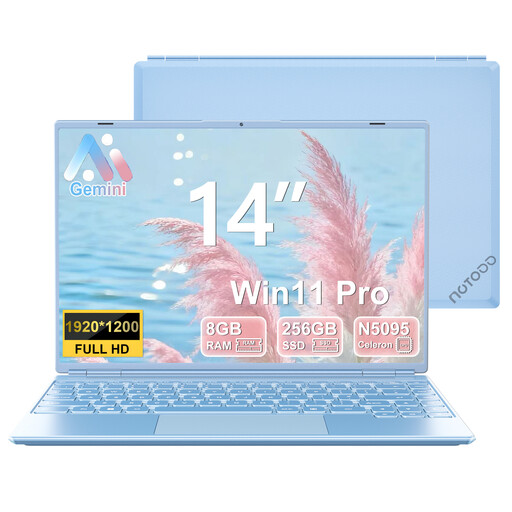 No image available
Worth considering if you’re looking for a 14-inch laptop with internal SSD storage for local files.
The title lists 8 GB of RAM and a 256 GB SSD; the product description names Windows 11. The title also lists Mini-HDMI.
 No image available
Suited to anyone looking for a compact macOS laptop with more internal storage; check first that your editing software and plug-ins work on macOS.
The title lists 24 GB of memory and 1 TB of storage. The product description lists an SSD, two Thunderbolt 4 ports and a weight of 1.23 kg. This model is Midnight with a QWERTY keyboard.
 No image available
A compact macOS option for anyone who wants to edit locally and can use the software they need on macOS.
The title lists 16 GB of memory and 512 GB of storage. The product description lists an SSD, two Thunderbolt 4 ports and a weight of 1.23 kg. This model is Midnight with a QWERTY keyboard.
Audacity advises against storing active projects on USB sticks, external drives or network storage, because recording and editing require fast, uninterrupted access to storage. Keep your active project on your laptop and make backup copies too.
Audacity does not specify any particular CPU or GPU requirements for its Windows version, so a dedicated graphics card is not a proven necessity for the audio task described here. Do check the requirements of any other software, effects and plug-ins you plan to use.
Audacity says its desktop software is free; additional cloud services may incur a separate charge. According to the Dutch Government, there is no fixed statutory warranty period in the Netherlands: what you can expect from a product depends on factors including the product itself. A manufacturer’s or separately purchased warranty does not replace your statutory rights; if there’s a fault, contact the seller.
That depends on the rights to the material you use. The Dutch Government distinguishes between making a copy for personal use and distributing or publishing material; you may need the creator’s permission to use copyright-protected work. Having a file stored locally on your laptop does not, in itself, give you the right to publish it.