What should you look for when choosing?
Start with how you work: do you mainly view photos online, store lots of files locally or regularly connect your laptop to equipment at a shared desk? Pl@ntNet describes submitting photos for identification; Consumentenbond suggests 512 GB of storage or more as a guide if you have lots of large files. Arboportaal also outlines a specific requirement for employees who spend more than 2 hours a day working with screens: they must be able to use a laptop with a separate screen or keyboard.
| What to consider |
What should you check? |
Who is this important for? |
| Comparing photos and species characteristics |
Compare the screen size, resolution and anti-glare finish of the exact model; also check whether an external screen is available. |
If I want to assess plant photos and possible species information side by side, I need a screen where both are easy to read. Around 36% of consumers give this comparison top priority. |
| Connecting to a shared desk |
Compare the laptop’s ports, video output and charging options with the available monitor or dock. |
I want to connect my laptop to the monitor and peripherals already at the desk. Around 29% of consumers prioritise this workstation connection. |
| Photo archive and multiple programmes |
Check the installed memory and SSD capacity; also see whether the memory can be upgraded. |
If I regularly store lots of photos locally and keep several windows open, I pay attention to memory and storage space. Around 21% of consumers say this is their main buying concern. |
| Matching capacity to the task |
Compare your tasks with the configuration; don’t choose an additional graphics card solely because of an AI label for web-based identification. |
For mainly web-based use and limited local storage, I first work out how much capacity I need, rather than choosing components whose benefits for this task aren’t clear. Around 14% of consumers make this a top priority. |
Brands to consider
The features listed apply to the specific models or product ranges below; they aren’t an assessment of the entire brand.
Acer
Acer’s Aspire specifications include examples of models with different screen sizes and connections.
- Acer lists 16 GB of memory, a 512 GB SSD and HDMI for the Aspire 5 A515-58M-77FX.
- For the Aspire 16 AI A16-61M-R1B1, Acer lists a 16-inch IPS screen, 16 GB of memory and a 512 GB SSD.
- These specifications apply to the models listed and aren’t based on an independent performance test.
Lenovo
The ThinkPad E14 Gen 7 is a 14-inch example to consider if you’re comparing more compact business laptops.
- Lenovo lists 16 GB of memory and a 512 GB SSD for configuration 21SXCTO1WWNL5.
- When viewing an offer, check the keyboard, screen configuration and warranty details again; this is a configurable product.
HP
HP describes its ProBook range as designed for work and teams, with a choice of screens and cameras.
- HP’s series page describes security and management features at series level.
- Ports, screens and configurations vary across ProBook models, so check the details of the specific model.
Joybuy laptops for photos and shared desks
This Joybuy selection focuses on laptops with 16 GB of memory and a 512 GB SSD, with a range of screen sizes and connections to compare for your workstation.
 No image available
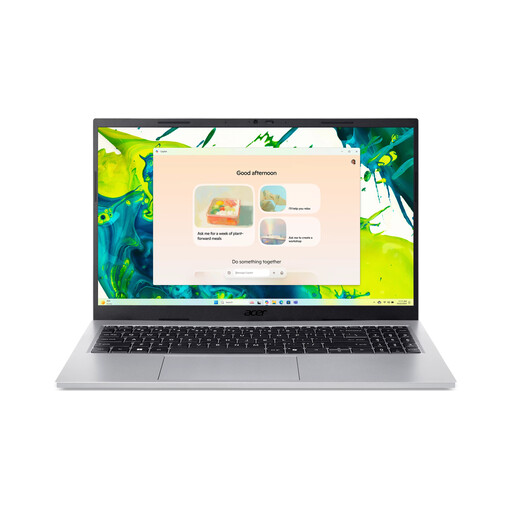
Acer Aspire Go 15 AG15-72P-56BJ, 15,6 inch, AZERTY
The matt 15,6-inch Full HD IPS screen and HDMI are useful if you view photos at a desk and want to connect an external screen.
Intel Core 5 120U; 16 GB RAM; 512 GB SSD; Wi-Fi 6; Windows 11 Home; AZERTY keyboard.
Power adapter not included.
View on Joybuy
 No image available
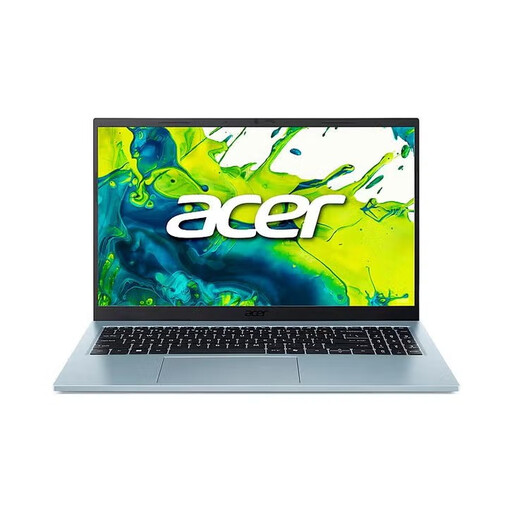
Acer Aspire Go 15 AG15-72P-58MP, 15,6 inch, QWERTY
The matt 15,6-inch Full HD IPS screen is worth considering if you want to view plant photos at a desk.
Intel Core 5 120U; 16 GB RAM; 512 GB SSD; USB-A, USB-C and HDMI; QWERTY keyboard.
View on Joybuy
 No image available
ASUS Zenbook A16, 16 inch, WUXGA
The matt 16-inch IPS screen is useful if you want to view photos on a larger screen at a desk.
16 GB RAM; 512 GB SSD; WUXGA resolution; Windows 11 Home.
View on Joybuy
 No image available
ASUS Zenbook A14 UX3407QA-QD479W, 14 inch
The 14-inch WUXGA OLED screen is a more compact option for viewing photos and species information side by side.
Snapdragon X; 16 GB RAM; 512 GB SSD; HDMI 2.1; two USB4 ports with DisplayPort output; Dutch QWERTY keyboard; approx. 0,98 kg.
A compatible 65 W USB-C Power Delivery charger is required and not included.
View on Joybuy
 No image available
Lenovo IdeaPad Slim 5 15ARP10, 15,3 inch, QWERTY
The anti-glare 15,3-inch WUXGA IPS screen is useful if you view plant photos at a desk.
AMD Ryzen 5 7535HS; 16 GB RAM; 512 GB SSD; QWERTY keyboard.
View on Joybuy
Frequently asked questions
Do I need a dedicated graphics card to identify plants using Pl@ntNet?
The web-based process described doesn’t require a dedicated graphics card. You submit photos and assess identification suggestions, so don’t choose a graphics card solely for this task.
How should I use identification suggestions for my plant photos?
Treat a suggestion as something to check, not as a confirmed identification. Pl@ntNet recommends using sharp, well-lit images of several parts of the plant and comparing the photos with the species information.
What workstation requirement applies to employees who work on a laptop for long periods?
Arboportaal states that employees who spend more than 2 hours a day working with screens must be able to use the screen and keyboard separately. In this situation, an employee using a laptop must be able to use a separate screen or keyboard; this isn’t a general product specification for every buyer.
Does a one- or two-year manufacturer’s warranty mark the limit of my rights?
No. For a consumer purchase in the Netherlands, statutory rights apply alongside any manufacturer’s warranty, with no fixed statutory time limit. If a product doesn’t perform as you could reasonably expect under normal use, the retailer is your point of contact; a manufacturer’s warranty doesn’t replace this right.


