
Photo reviewer beside a bright window
You regularly sort photos of vegetation in a fixed, bright workspace and want to inspect details without reflections constantly getting in the way.


Start by checking the screen finish and the position of the window: a high brightness rating alone doesn’t prove that reflections will disappear. Then compare the colour gamut, screen space and ports for your camera files. A stated colour gamut or brightness level is not, by itself, a measurement of colour accuracy or how easy the screen is to read in your workspace.
You regularly sort photos of vegetation in a fixed, bright workspace and want to inspect details without reflections constantly getting in the way.
You compare tones and details across photos and want to assess screen specifications without assuming that a stated colour gamut means measured colour accuracy.
You take your laptop with you and transfer camera files, so weight, a card reader or ports, and storage space all factor into your choice.
When: If your workspace by the window is difficult to move, check the finish of the exact screen configuration you’re considering.
Trade-off: A matte or low-reflection finish can reduce mirror-like reflections, but it doesn’t guarantee that the screen will be easy to read in every lighting condition. RTINGS.com explains this difference for matte screen coatings.
When: If you can turn the laptop away from the window and want more room to view photos, compare the screen sizes and ports on the exact models.
Trade-off: Apple lists 500 nits and P3 colour display for the MacBook Air range, but the specifications consulted don’t confirm an anti-reflective treatment for this window-side setup.
| What to consider | What should you check? | Who should give this more weight? |
|---|---|---|
| Visibility beside the window | Check the screen finish on the exact configuration and, if possible, assess the screen in similar lighting. Check whether a brightness figure applies to standard viewing or HDR. | If I select photos in a fixed spot beside a bright window, I want reflections not to obscure details. For around 36% of consumers, reducing interference from the window is the top priority. |
| Colour and space for comparing photos | Compare screen size and stated colour space. If you need to assess colour accurately, look for measurements of the exact screen variant. | When I want to compare tones and fine details side by side, colour gamut and workspace matter to me. For around 29% of consumers, colour assessment is the top priority. |
| Working with large photo files | Choose RAM and SSD storage to suit your software and the files you keep locally. The Consumentenbond recommends 16 GB RAM and 512 GB storage as benchmarks for creative use. | If I keep lots of photos locally or edit them alongside other programmes, I want to choose RAM and storage to suit. Around 21% of consumers prioritise files and performance. |
| Taking it with you and importing photos | Check the weight, your camera’s memory card type and the ports on the exact configuration to see whether you’ll need a card reader or adapter. | When I import photos in different locations, I want to be able to take the laptop and a practical connection for my camera files with me. For around 14% of consumers, portability and importing are the top priorities. |
For the ProArt PZ13 reviewed, ASUS lists 500 nits as peak HDR brightness. That figure alone doesn’t tell you how bright standard photos will look beside your window.
Only compare brightness figures when they’re stated on the same SDR or HDR basis, and check the screen finish too.
According to RTINGS.com, matte coatings can reduce mirror-like reflections, but diffuse light can still affect visibility.
Take the direction of the window into account and, if possible, assess the exact screen variant in similar lighting.
The Dutch government states that there is no fixed statutory warranty period in the Netherlands. A manufacturer’s warranty is not the same as your statutory rights if a product is faulty.
Check the terms of any additional warranty separately, and contact the retailer if there’s a fault.
The ProArt PZ13 HT5306QA is a compact Windows option to consider if you’re looking for a clearly stated low-reflection screen and a card reader.
The ThinkPad T14s Gen 7 configuration 21YUCTO1WWNL1 is an option to compare, with a stated anti-glare 14-inch screen.
The MacBook Air M5 range includes 13- and 15-inch options, letting you weigh portability against screen space.
This selection focuses on laptops whose product descriptions mention an anti-glare, low-reflection or anti-reflective screen. Check the exact configuration, and bear in mind that this wording doesn’t guarantee visibility in the specific light from your window.
 No image available
The product description mentions an anti-glare 15.6-inch screen for anyone who wants to view photos on a larger built-in display. Check how the screen performs in your workspace.
Listed configuration: Intel Core i5-13420H, 16 GB DDR5 and 512 GB SSD. The panel is described as TN, anti-glare, Full HD and 250 nits.
 No image available
The product description mentions an anti-glare 14-inch IPS-level screen. Its more compact size is worth considering if you want to take the laptop with you as well as view photos on it.
Listed configuration: Intel Core 7 150U, 16 GB DDR4 and 512 GB SSD. The description mentions a MicroSD card reader and USB-C with DisplayPort.
 No image available
The product description mentions a 16-inch anti-reflective screen, making this an option if you want to weigh screen space against the stated weight of around 1.9 kg.
Listed configuration: Intel Core Ultra 7 255H, 32 GB DDR5, 512 GB SSD and a screen resolution of 1920 × 1200 at 144 Hz. According to the product description, this configuration is supplied without a power adapter, which must be purchased separately.
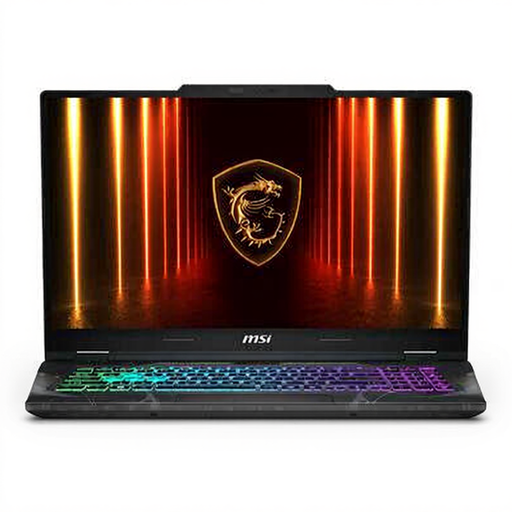 No image available
The product description mentions an anti-glare 17.3-inch IPS screen, making this an option if you want to view photos on a large built-in display.
Listed configuration: Intel Core 7 240H, 16 GB DDR5 and 512 GB SSD. The screen is listed as Full HD, 144 Hz and 250 cd/m². According to the product description, the power adapter must be purchased separately.
 No image available
The product description mentions an anti-glare 15.6-inch IPS screen and a MicroSD card reader for viewing photos and importing files.
Listed configuration: Intel Core 7 150U, 16 GB RAM and 512 GB SSD.
That figure alone doesn’t give you the full picture. Reflections and brightness both affect what you can see, so also check whether the figure applies to standard viewing or only to peak HDR brightness.
Compare your camera’s card type with the card reader on the exact laptop configuration. The ASUS ProArt PZ13 HT5306QA reviewed lists an SD Express 7.0 card reader. If it isn’t compatible with your card, you could consider a suitable external card reader or adapter.
Work out how many files you want to keep locally and which programmes you use. The Consumentenbond recommends 512 GB or more as a benchmark if you regularly work with large photo or video files, and discusses external and online storage for other files.
For many distance sales to consumers in the Netherlands, you have a 14-day cooling-off period, although exceptions may apply. Your statutory rights for a faulty product are separate from the cooling-off period. The Dutch government states that there is no fixed statutory warranty period in the Netherlands and that you should contact the retailer to resolve the issue.