
Photo book creator at a desk
You arrange lots of photos and text across pages and want to see the layout clearly. Compare the screen size and the exact display specification: Lenovo lists these features for each configuration.


Start with the photo book editor: if you’re only creating books online, you won’t necessarily need a powerful laptop, but the requirements of your chosen offline editor will matter. Then decide between a larger built-in screen for page layouts and a more compact device that’s easy to put away after use. For larger projects, RAM and available SSD space are also important.
You arrange lots of photos and text across pages and want to see the layout clearly. Compare the screen size and the exact display specification: Lenovo lists these features for each configuration.
You want to create larger or more detailed projects on the laptop itself. The requirements of your chosen editor determine which operating system you need, as well as how much RAM and available SSD space. Albelli and Storio Group publish requirements for their Windows desktop editor.
You regularly put your laptop away or connect it to shared equipment. Size and ports are worth considering, although a smaller built-in screen gives you less room for your page layout. Apple and Lenovo publish specifications for the models mentioned here.
Choose your provider and editor first, then compare screen space, required specifications and the connections you’ll need at your shared desk.
| What to consider | What should you check? | Who is this important for? |
|---|---|---|
| Screen space for page layouts | Compare the screen size and resolution of the exact model. If you use an external monitor, check that you have the right connection too. Don’t judge print quality by the laptop display alone. | If I want to see photos and text together on a page, I prioritise the built-in screen. Around 36% of consumers say screen space is their top buying priority. |
| Editor compatibility | Check the requirements of your chosen editor and its operating system. For its Windows desktop editor, Albelli lists a minimum of 8 GB RAM and 10 GB of available SSD space, among other requirements. These requirements don’t automatically apply to other editors. | If I want to use a particular offline editor, I first check that it works on my laptop and meets its requirements. Around 29% of consumers prioritise editor compatibility and performance. |
| A desk you share or need to clear | Measure the available space and check the ports on the exact model, along with the connections required for your monitor and other equipment. Apple lists two Thunderbolt 4 ports on the MacBook Air reviewed here. | If I want to put my laptop away after working or connect it to shared equipment, size and ports matter. Around 21% of consumers give workspace flexibility top priority. |
| Space for photos and projects | When checking storage, allow for your own photo files and projects. The 10 GB of available SSD space listed by Albelli is a requirement for its Windows desktop editor, not for an entire photo library. | If I store photos and ongoing projects locally, I want to have enough space left over after installing the editor. Around 14% of consumers prioritise local file storage. |
Online editors and offline desktop software can have different requirements and features. For example, Albelli describes its desktop editor as the version with more advanced creative features.
Choose your provider and editor first, then check the system requirements and features you need.
The Lenovo IdeaPad range includes different screen configurations. Features of one configuration don’t automatically apply to another.
Check the full model code and the display specifications of the model you’re considering.
The Dutch government states that there is no fixed statutory warranty period in the Netherlands, and that the retailer is your point of contact if a product is faulty.
Check exactly what any additional warranty covers, and keep your statutory rights separate from the manufacturer’s warranty.
A compact macOS option if your chosen editor works on Mac and you regularly move your laptop away from the desk.
The IdeaPad Slim 5 Gen 10 model reviewed here, with article number 83J3004VMH, is a Windows laptop with a larger built-in screen for page layouts.
The Vivobook S 14 OLED S5406 series is a compact Windows option if you want to compare specific display configurations.
This selection includes Windows laptops with 15.3- or 16-inch screens, for anyone who wants to lay out photo book pages on the built-in display. Check the display technology, connections and configuration for each model.
 Image unavailable
Worth a look if you want to lay out pages on a larger built-in screen.
15.3-inch IPS display with 1920 × 1200 pixels, 16 GB memory, 512 GB SSD and Windows 11. The power adapter isn’t included and must be purchased separately.
 Image unavailable
An option to compare if you’re specifically looking for an OLED model with a higher screen resolution.
The listed display has a resolution of 2560 × 1600 pixels. The configuration includes 16 GB memory, a 512 GB SSD and a GeForce RTX 5060.
 Image unavailable
A larger-screen option to compare if you want to use one laptop for page layouts and local project files.
The description lists a 16-inch OLED display with 2560 × 1600 pixels, 32 GB memory and a 1 TB SSD.
 Image unavailable
A 16-inch model to consider if you’re looking for an OLED display and space for local project files.
The listed configuration has an OLED display with 2880 × 1800 pixels, 32 GB memory, a 1 TB SSD, Thunderbolt 4 and HDMI 2.1.
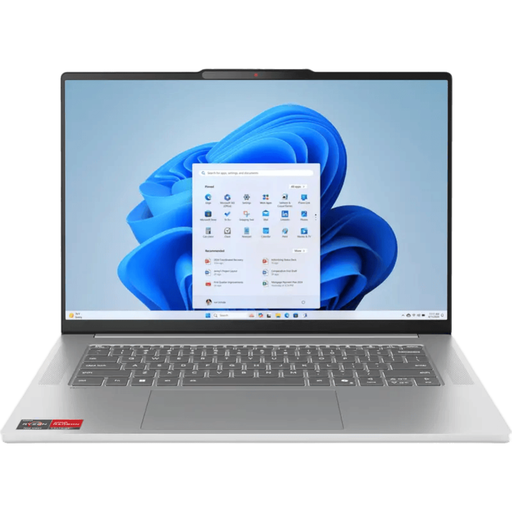 Image unavailable
Consider this model if you want to lay out pages on a built-in 15.3-inch screen.
The listed configuration has an IPS display with 1920 × 1200 pixels, 16 GB memory, a 512 GB SSD, and USB-C and HDMI connections. A compatible power adapter must be purchased separately.
It depends on the editor. Albelli says its offline editing software doesn’t work on a Chromebook, but it also offers an online editor. Check whether the online version has the features you need for your photo book.
No, this doesn’t automatically apply to every provider or way of working. Albelli lists 8 GB as the minimum for its Windows desktop editor and strongly recommends 16 GB for large projects or high-resolution photo books. If you use a different editor, follow its own system requirements.
Lock your screen when you step away, and use separate accounts if several people have access to the same computer. The Dutch Data Protection Authority lists restricted access and accounts linked to individual users as examples of security measures. What’s appropriate depends on your situation.
According to the Dutch government, you’re entitled to a product that works properly, and there’s no fixed statutory warranty period in the Netherlands. If a product is faulty, the retailer is your point of contact. For online purchases from a business, you’ll often have a 14-day cooling-off period. Check the terms of your specific purchase.