
Photographers working beside a bright window
You want to stitch and review photos without reflections getting in the way. Lenovo and ASUS list anti-glare screen options for specific configurations, so check the exact panel variant.


Start by checking how easy the screen is to read in your window-side setup: a high HDR peak brightness doesn’t tell you how well you’ll be able to assess a full-screen photo. Then choose enough memory and free SSD space for your software and panoramas. For Photoshop, Adobe recommends 16 GB or more of RAM and 100 GB of free disk space, but these recommendations don’t apply to every laptop or photo-editing programme.
You want to stitch and review photos without reflections getting in the way. Lenovo and ASUS list anti-glare screen options for specific configurations, so check the exact panel variant.
You work with lots of image data or large files and layers. Adobe explains that Photoshop uses a scratch disk when its allocated memory runs out. That makes RAM and free storage important factors to compare alongside screen quality.
You work in different places and need to balance screen space with portability and connectivity. Apple lists a 15.3-inch screen for the MacBook Air 15-inch M4. Also consider how you’ll connect camera cards and other equipment.
First compare the screen finish in the lighting conditions you work in, then match the memory, storage, screen space and ports to the way you edit photos.
| What to consider | What to look for | Who is this most relevant to? |
|---|---|---|
| Reading the screen beside a window | Compare the finish and typical screen brightness of the exact configuration. Don’t use HDR peak brightness as a measure of reflections during everyday use. | I want to assess my panorama beside a window without reflections obscuring the image. Screen readability is the top buying concern for around 33% of consumers. |
| Editing large panoramas | Check the software requirements, installed RAM and free SSD space. For the Photoshop version reviewed, Adobe recommends 16 GB or more of RAM and 100 GB of free disk space. | When editing large panoramas with lots of image data, I want enough memory and working space. Processing capacity is the top buying concern for around 27% of consumers. |
| Assessing colour and detail | Compare colour coverage and resolution for the exact panel variant. Also check whether automatic colour or brightness adjustments could affect your assessment. | I want to assess colours and fine details, not just stitch files together. Colour and detail are the top priority for around 20% of consumers. |
| Portability and workspace | Balance screen size and weight against the workspace you need without a second monitor. Check whether you can connect an external screen at your usual workstation. | When I work in different places, I want to take my laptop with me without giving up too much screen space. Portability is the top buying concern for around 13% of consumers. |
| Storage and importing photos | Distinguish between total and free SSD capacity. Check whether the exact configuration has a card reader and which ports are available. | I want to store my original photos and transfer files from my camera easily. Storage and importing are the top buying concern for around 7% of consumers. |
A quoted HDR peak brightness doesn’t tell you on its own how much reflection you’ll see while editing photos as usual. ASUS lists different panel finishes and distinguishes between brightness ratings.
Compare the exact panel variant and, if possible, assess the screen in similar lighting and in your usual working position.
Manufacturers offer different screen and memory configurations within the same model range. A specification for one configuration won’t necessarily apply to another.
Before buying, compare the full model number with the specifications, paying particular attention to the screen finish, RAM and storage.
Original photos, exports and temporary editing files all take up storage space. Adobe explains that Photoshop can use a scratch disk when its allocated memory runs out.
Allow for the space your own photos and temporary files will need. Also check the ports and any options for expanding the storage.
The MacBook Air 15-inch M4 is a portable laptop with a larger IPS screen, suited to anyone looking for more built-in workspace.
The ThinkPad P1 Gen 8 is worth comparing if you use Windows and are looking for an explicitly listed anti-glare screen option.
The Zenbook S 14 and ProArt P16 offer different laptop options: a more compact screen size and a creator range with several configurations.
The EliteBook Ultra G1i is a business-focused, portable option to compare if portability and connectivity matter to you.
This Joybuy selection includes laptops whose product information highlights working in light from a window, as well as models with a range of screen sizes, memory and storage. Check the specifications of the exact configuration you’re considering.
 No image available
An option to compare if a large built-in screen and an anti-glare finish are important to you.
18.4-inch WUXGA screen with 100% sRGB and 300 nits; the product information lists an anti-reflective finish.
16 GB memory and 512 GB SSD.
The product information states that an AC adapter isn’t included.
 No image available
A model to compare if you’re prioritising plenty of memory and internal storage.
16-inch screen, 128 GB RAM and 1 TB SSD, according to the product title.
The product title lists Windows 11 Pro and a QWERTY keyboard.
 No image available
A more compact option to compare if you want to work on the move and import photos via a MicroSD card.
14-inch Full HD IPS screen with an anti-reflective finish; the product information lists a weight of 1.40 kg.
16 GB DDR4 memory and 512 GB SSD.
The product information lists a MicroSD card reader.
 No image available
An option to compare if you’re looking for a 16-inch screen, more memory and an anti-reflective finish.
1920 × 1200 screen resolution with 144 Hz; the product information lists an anti-reflective finish.
32 GB DDR5 memory and 512 GB SSD; the listed weight is approximately 1.9 kg.
The product information states that this configuration is supplied without a power adapter.
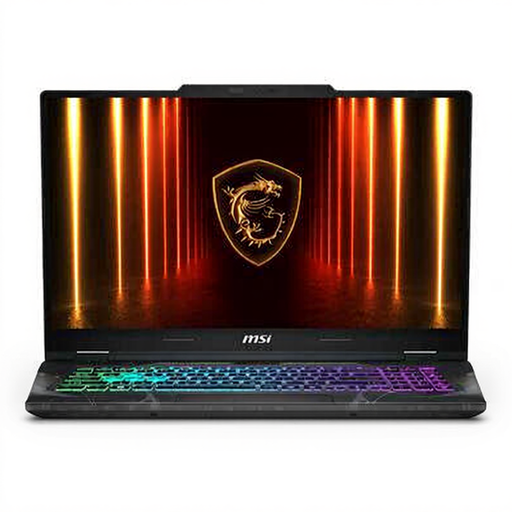 No image available
An option to compare if a large screen and an anti-reflective finish matter to you; bear the listed weight in mind too.
17.3-inch Full HD screen; the product information lists an anti-reflective finish and a weight of 2.4 kg.
16 GB DDR5 memory and 512 GB SSD.
The product information states that the charger must be purchased separately.
Yes. Adobe explains how to merge standard-exposure photos into a panorama, and bracketed exposures into an HDR panorama. Also check the system requirements for the version you use.
Not as a general rule. Adobe sets out graphics compatibility and recommended GPU memory for each platform and use case, so compare the requirements for your version of Photoshop, operating system and displays.
Original photos, exports and temporary editing files all share the available storage. For the Photoshop version reviewed, Adobe recommends 100 GB of free disk space and explains that Photoshop can use a scratch disk when its allocated memory runs out. So check the free space, not just the total SSD capacity.
Check whether the laptop automatically adjusts brightness or contrast, and compare photos in lighting conditions that are as consistent as possible. Microsoft explains that some Windows 11 PCs can adjust brightness and contrast to suit the content on screen; the setting varies by device.
According to ACM ConsuWijzer, ordinary online consumer purchases generally come with a statutory 14-day cooling-off period from delivery, with some exceptions. Before using the laptop, check the applicable conditions for trying it out and returning it.