
Developer using NVDA
You want to code with NVDA and navigate your festival pages using a keyboard and screen reader on Windows. NV Access describes NVDA as a screen reader for Windows.


Start by choosing the operating system that works with your screen reader: NVDA is designed for Windows, while VoiceOver is built into macOS. Then compare how your editor works, whether you can connect a braille display, screen space and portability. Choosing a laptop doesn’t replace testing the visitor journey with the relevant assistive technology.
You want to code with NVDA and navigate your festival pages using a keyboard and screen reader on Windows. NV Access describes NVDA as a screen reader for Windows.
You work on a Mac with VoiceOver and want to check how the site works with that screen reader as you build it. Apple describes VoiceOver as the screen reader built into macOS.
You’re building programme, booking or ticket pages and want to assess how they work for yourself, as well as running automated checks. The W3C Web Accessibility Initiative notes that some checks require manual evaluation.
Choose this route if: you use NVDA yourself or want to test the site specifically with NVDA and a Windows browser. NV Access describes NVDA support for browsers including Firefox and Chrome, as well as many braille displays.
Keep in mind: check the exact Windows configuration, your keyboard layout and whether you can connect your braille display. Testing on Windows won’t automatically tell you how the site works with VoiceOver on a Mac.
Choose this route if: you use VoiceOver in macOS yourself or want to test that combination directly. Apple describes how to use it with a keyboard or braille display.
Keep in mind: NVDA is designed for Windows and isn’t the built-in screen reader for macOS. Check that your development software, peripherals and any separate Windows test environment suit the way you work.
| Consideration | What should you check? | Who is this important to? |
|---|---|---|
| Your screen reader | Decide whether you mainly use NVDA on Windows or VoiceOver on macOS, then try your editor and browser with that combination. | If I use my own screen reader every day, I want to be able to use the same combination for development. Around 36% of consumers prioritise screen reader compatibility. |
| Keyboard and braille | Try the editor and screen reader commands you use most; check the keyboard layout and the connection or port required for your braille display. | If I often work without a mouse or connect a braille display, I want to know whether it suits the way I usually work. Around 29% of consumers prioritise keyboard use or braille. |
| Space for development work | Compare the screen size and resolution, memory, storage and ports for the exact configuration. | If I use my editor, browser and festival files side by side, I want enough screen space for the way I work. Around 21% of consumers prioritise space for development work. |
| Portability and what’s included | For the configuration you’ve chosen, check the size, weight, included power adapter and ports. Treat the stated battery life as the manufacturer’s estimate, not a guarantee of how long it will last for you. | If I travel between my workspace and a festival venue, I weigh portability against screen space and what comes with the laptop. Around 14% of consumers prioritise portability and the full purchase. |
NVDA is for Windows, while VoiceOver is built into macOS. Choosing the other operating system could mean it doesn’t suit the way you work every day.
Start with the screen reader you use, then try your editor, browser and any braille display on the platform you’re considering.
The Dell configuration described doesn’t include a charger. Check what’s included with the specific offer you’re considering, too.
Check the contents of that exact offer and find out what charging wattage you need before deciding what else to buy.
You may need to buy a suitable power adapter separately.
According to the W3C Web Accessibility Initiative, some accessibility checks can’t be automated. So an automated check won’t show you how every part of the visitor journey works.
Go through the relevant pages yourself using a keyboard and screen reader, including booking or payment steps if the site has them.
The ThinkPad T14 Gen 6 (Intel) is a Windows product range worth considering if you’re looking for a 14-inch laptop for NVDA.
The MacBook Air with M5 is worth considering if VoiceOver in macOS is your main working environment. Apple lists 13- and 15-inch models.
The Dell Pro 14 PC14250 is a compact business Windows laptop to compare with other configurations.
The 16-inch HP ProBook 4 G1i is a Windows option worth considering if a larger screen suits the way you work.
These Windows laptops are worth comparing if you use NVDA. For each model, check that the specifications and ports suit your editor, browser and any braille display you use.
 Image unavailable
A Windows laptop to consider if you use NVDA. Check that your development software and peripherals work with the exact model.
16-inch screen, 16 GB of memory, 1 TB SSD and Thunderbolt 4. The product name also lists Ultra 9-285H and RTX 5060.
 Image unavailable
A 14-inch Windows laptop to compare if you use NVDA. Check that the listed configuration works with your software and peripherals.
8 GB of memory, 512 GB SSD and a 14-inch IPS screen with a resolution of 1920 × 1200 pixels. The description lists Windows 11 Home, two USB-C ports and two USB-A ports; the product name lists Intel Core 3 304.
 Image unavailable
A Windows model to compare if a larger screen and Dutch QWERTY keyboard suit the way you work.
16-inch WUXGA screen, 16 GB DDR5 memory and 1 TB SSD. The description lists a weight of around 1.95 kg and Windows 11 Home; the product name lists Core 7 240H and RTX 5070 8 GB.
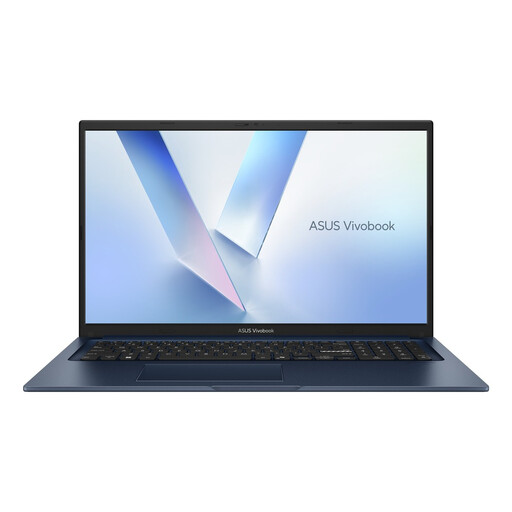 Image unavailable
A Windows laptop to compare if you want a 17.3-inch screen and a QWERTY keyboard for your workspace.
8 GB of memory and 256 GB SSD. The description lists Windows 11 Home and a 17.3-inch Full HD screen; the product name lists Core 5 320.
 Image unavailable
A Windows laptop to compare if you need the listed memory and storage configuration for your work files.
32 GB of memory, 1 TB SSD and a 16-inch WQXGA screen. The description lists Windows 11 Home; the product name lists Core Ultra 9 and RTX 5070 Ti.
No. NV Access describes NVDA as a screen reader for Windows; VoiceOver is the built-in screen reader on a Mac. If NVDA is central to the way you work, start with a suitable Windows environment.
VS Code documents a screen reader mode and keyboard navigation. Using your own screen reader, try the features and extensions you need for the festival website too. Editor support doesn’t automatically mean every extension will work in the same way.
No. The W3C Web Accessibility Initiative says some accessibility checks can’t be automated and require manual evaluation. So go through the relevant pages and any booking or payment steps yourself, using a keyboard and screen reader.
It depends on the service and the provider. The Authority for Consumers and Markets (ACM) gives online ticket platforms as an example of e-commerce services and explains that accessibility requirements apply when the provider employs 10 or more people or has an annual turnover of more than € 2 million. Check whether visitors can enter into an agreement online and whether the provider meets these conditions; don’t assume every informational festival page is automatically subject to the same requirements.
No. ACM ConsuWijzer distinguishes between a manufacturer’s or seller’s warranty and the legal guarantee: with normal use, a product should last as long as you can reasonably expect it to. That isn’t simply the same as a fixed two-year period.