
Student who needs specific GIS software
First, check which programme and version your course requires. QGIS documents installation options for Windows and macOS; Esri lists Windows 11 as a supported operating system for ArcGIS Pro 3.7.


Start with the software your course requires: QGIS is available for Windows and macOS, while Esri lists Windows 11 as a supported operating system for ArcGIS Pro 3.7. Then compare the memory and storage configuration with your own project files, and weigh screen space against how often you’ll carry your laptop with you.
First, check which programme and version your course requires. QGIS documents installation options for Windows and macOS; Esri lists Windows 11 as a supported operating system for ArcGIS Pro 3.7.
If you save project files and source layers locally, check how much SSD space is available and how your project files link to their layers. QGIS documentation covers issues such as broken file paths.
If you move between lectures and a regular workspace, you can weigh screen space against size and weight. Acer lists a 17.3-inch screen and a weight of approximately 2.09 kg for the Aspire 17 A17-51M-53T4.
| What to consider | What should you check? | Who is this most relevant to? |
|---|---|---|
| GIS software compatibility | Check the required programme name and version. Compare the operating system on the exact laptop model with the installation and system requirements. | If I need to run a specified GIS programme locally, I want to know whether my course requires QGIS or ArcGIS Pro before I choose. Around 36% of consumers prioritise software compatibility. |
| Space for local files | Check how much space your project, source layers and output files take up, and how much SSD space will be left for them. Also check that the project files and linked layers can be moved together successfully. | When I save map layers and results on my laptop, I want to avoid missing files or running out of storage too quickly. Around 29% of consumers prioritise space for local files and processing. |
| Maps and layers on screen | Compare the screen size and resolution of the exact model. Consider whether you want to view your map and layers at the same time, and whether you use an external monitor. | If I want to see the map, legend and layers side by side while I work, screen space matters more to me. Around 21% of consumers prioritise readability and space for working with maps. |
| Carrying it between study locations | Check the listed weight, screen size, ports and what’s included with the exact model. Don’t treat the stated battery life as a guaranteed runtime while processing maps. | If you often carry your laptop between lectures and another workspace, you’ll want to weigh its size and weight against the screen space you need. Around 14% of consumers prioritise portability. |
A general student laptop ranking won’t tell you whether a specific model is suitable for your local software. QGIS installation information covers Windows and macOS; Esri lists supported Windows systems for ArcGIS Pro 3.7.
Before buying, check which software and version you need, then compare the operating system on the exact laptop with the relevant documentation.
A QGIS project may refer to separate map layers. If those references no longer work after you move the files, layers may be missing when you open the project.
Move the project along with the source layers it uses, then check that the project can still open them.
Allow extra time to find missing map layers or restore broken links.
Products in the same laptop range can differ in screen size, storage and other specifications. The product range alone won’t tell you which configuration you’ll get.
Compare the full model number and configuration of the exact version before placing your order.
The Aspire 17 A17-51M-53T4 is a Windows laptop with a large built-in screen.
A MacBook could be a good fit if your course allows macOS software and you use QGIS.
The ThinkBook 16 G8 IAL is a range worth comparing if you’re looking for a larger screen.
The OmniBook 5 range includes 16-inch Windows models with different configurations.
These laptops are suited to local GIS work and project files: Windows models for a Windows setup, and a MacBook for using QGIS if macOS is right for your course.
 No image available
A Windows laptop worth comparing if you’re looking for a 14-inch screen and local storage for study projects.
The listed version has Windows 11 Home, a 14-inch Full HD screen, 16 GB DDR4 memory and a 512 GB SSD.
 No image available
This Windows model is worth comparing if you value a 16-inch screen for working with maps.
The listed configuration has Windows 11 Pro, 32 GB DDR5 memory, a 512 GB SSD and a 1920 × 1200 screen with a 144 Hz refresh rate. The product description states that the power adapter isn’t included.
 No image available
Consider this MacBook if your course software runs on macOS; QGIS has an installation option for macOS.
The listed version has a 15.3-inch screen, 16 GB of memory and a 512 GB SSD. For direct installation of ArcGIS Pro 3.7, Esri lists supported Windows systems. The product description states that a power adapter isn’t included.
 No image available
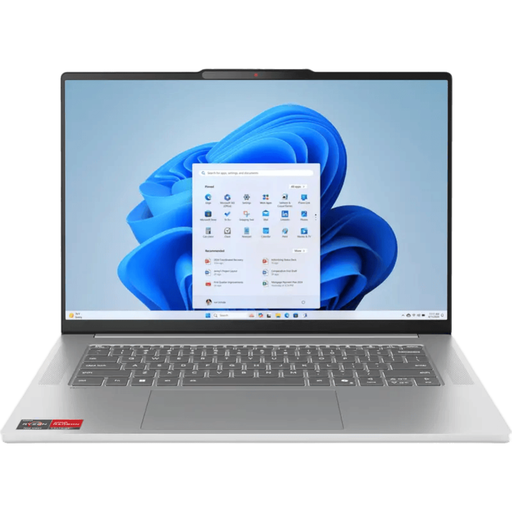
A Windows model worth comparing for local QGIS work or for a Windows setup that meets your course requirements.
The listed configuration has Windows 11 Home, a 15.3-inch IPS screen, 16 GB of memory and a 512 GB SSD. The product description states that the power adapter must be purchased separately.
 No image available
This Windows laptop is worth comparing if you’re looking for a 15.6-inch screen and storage for local files.
The listed version has Windows 11 Home, a 15.6-inch Full HD IPS screen, 16 GB of memory and a 512 GB SSD.
That doesn’t follow from the description of your study project alone. For ArcGIS Pro 3.7, Esri distinguishes between minimum and recommended hardware and lists GPU requirements for certain visualisation workflows. Don’t automatically apply these recommendations to every QGIS project.
A QGIS project may refer to separate data files. When moving the project and its layers, check the saved file paths and restore any broken links if needed.
For a standard online consumer purchase, you usually have a legal cooling-off period of up to 14 days after delivery; check whether an exception applies. If the laptop is faulty, contact the seller about your statutory rights to a repair or replacement.
Don’t simply put an old laptop in your general waste. The Dutch government states that when you buy a similar new appliance, the retailer must take the old one back.