
Guide writer making lots of revisions
You want to be able to restore chapters after you or a co-author has made changes. So start by choosing how you’ll store and edit your files.


Start by choosing your document service and checking how to restore previous versions. For Word version history, you need to save files to OneDrive or SharePoint, while Google Docs requires editing permissions to view previous versions. A Chromebook could suit browser-based writing; if you need MuseScore Studio as a desktop programme, first check whether your operating system is supported. Then compare screen size, portability and the exact model configuration.
You want to be able to restore chapters after you or a co-author has made changes. So start by choosing how you’ll store and edit your files.
If you add your own musical notation examples, check that the notation software you need works with the laptop’s operating system.
You may want to prepare documents while travelling and without an internet connection. To use Google Docs offline, you need to set up access in advance.
Suitable for: browser-based writing, provided the files and school services you need work on ChromeOS.
Bear in mind: the MuseScore Studio downloads we checked list Windows, macOS and Linux, but not ChromeOS. So first check whether you need desktop notation software.
Suitable for: anyone who uses Word or wants to install MuseScore Studio as a desktop programme.
Bear in mind: Word version history depends on saving files to OneDrive or SharePoint; the laptop itself won’t automatically keep document versions.
Suitable for: anyone who wants to use macOS and can run the word-processing software and any notation software they need on it.
Bear in mind: MuseScore Studio lists a Mac download; Word version history still requires you to save files to OneDrive or SharePoint.
| What to consider | What should you check? | Who is this important for? |
|---|---|---|
| Version history | Decide whether you’ll use Google Docs or Word, then test how to restore a previous version using a sample document. Microsoft lists OneDrive or SharePoint storage as a requirement for Word version history; Google Docs requires editing permissions to view previous versions. | If you want to restore chapters after changes, check your storage and access permissions first. Around 33% of consumers prioritise version recovery. |
| Music notation software | Check which operating systems are supported by the notation or school software you actually need. MuseScore lists downloads for Windows, macOS and Linux. | If you create your own musical examples, you’ll want to know in advance whether the software you need will run on your laptop. Around 25% of consumers prioritise software compatibility. |
| Screen workspace | Compare the screen size and resolution of the exact configuration with your document layout; manufacturer specifications alone don’t tell you how comfortable it will be to read. | If you want to view text and musical examples side by side, screen space matters more than having the smallest size. Around 17% of consumers choose mainly based on how clearly they can view their documents. |
| Portability and working offline | Check the weight and stated battery information for the exact model. Make Google documents available offline in advance and test them before you leave. | If you write at different teaching locations, you’ll want to be able to open your document without an internet connection. Around 17% of consumers prioritise mobile and offline working. |
| Software and components | Check whether you need an active subscription for the Microsoft 365 features you plan to use, and which accessories are included with your chosen configuration. | If you want to know in advance what you’ll need for your complete writing setup, check software access and included components. Around 8% of consumers look at this first. |
Version history depends on the document service, storage location and access permissions, not just the laptop’s performance.
Before you start writing in earnest, create a sample document, make a change and test how to restore a previous version.
The MuseScore Studio downloads we checked list Windows, macOS and Linux, but no ChromeOS desktop version.
First decide whether you need a desktop notation programme, then check that it can be installed on your chosen operating system.
A manufacturer may offer different configurations within the same laptop range. The features of one configuration won’t automatically apply to another.
Compare the full model number, operating system, screen and memory configuration on the product page for the specific model you’re considering.
The Vivobook 14 M1407 range includes compact Windows configurations for document work. Compare the full model code before choosing a configuration.
The IdeaPad Slim 3i Gen 10 configuration 83K100S7MH offers a larger screen area for document work.
The Chromebook Plus 514 CB514-6HT-32PZ is a ChromeOS configuration designed for browser-based work.
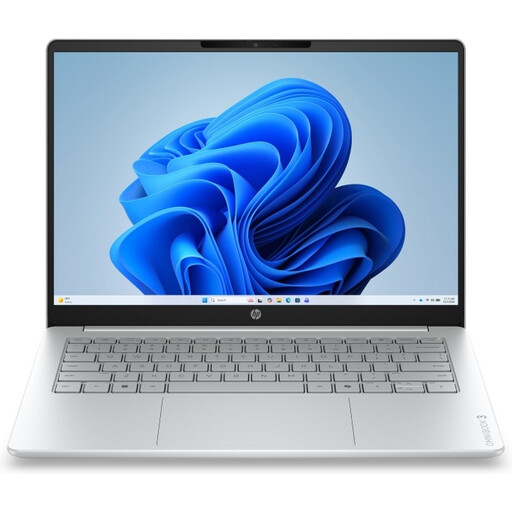
The OmniBook 5 range includes different Windows formats, including a 14-inch laptop and a 14-inch Flip.
These Joybuy picks focus on Windows laptops for writing and revising documents, with a range of screen sizes and configurations.
 No image available
A Windows configuration for document work; Word version history requires you to save files to OneDrive or SharePoint.
14-inch screen with 1920 × 1200 pixels; 8 GB of memory; 512 GB SSD; Intel Core 3 304; Windows 11 Home.
 No image available
A 14-inch Windows laptop for working on documents while travelling; check which accessories are included with this configuration before you buy.
14-inch screen with 1920 × 1200 pixels; 8 GB of memory; 512 GB SSD; AMD Ryzen 5 7520U; Windows 11 Home. Charger not included.
 No image available
The 17.3-inch configuration gives you a larger physical screen for editing documents, but bear in mind its bigger size.
17.3-inch Full HD IPS screen; 8 GB of memory; 512 GB SSD; AMD Ryzen 5; Windows 11 Home. Mains adapter not included.
 No image available
A 16-inch Windows laptop for anyone who wants more screen space when editing their guide.
16-inch WUXGA OLED screen; Snapdragon X processor; 16 GB LPDDR5X memory; 512 GB SSD; Windows 11 Home.
 No image available
A laptop with a 15.6-inch screen for working on documents; check that its operating system suits your writing needs and software choices.
15.6-inch Full HD IPS screen; 16 GB DDR4 memory; 512 GB SSD; 3050E processor.
No. Version history depends on the document service and how you save your files. Microsoft lists OneDrive or SharePoint as a requirement for version control in Word; in Google Docs, you need editing permissions to view previous versions.
Set up offline access for Google Docs while you’re still connected to the internet, and make the relevant file available offline if needed. Before you leave, test that you can open the right document.
It could work if you mainly use a browser and the files and services you need run on ChromeOS. If you need MuseScore Studio as a desktop programme, check compatibility first: the download page we consulted lists Windows, macOS and Linux, but not ChromeOS.
Check the full model number and specifications of the exact configuration, not just the product range name. Compare screen size, resolution, memory, operating system and the accessories included with that configuration.
That depends on the information and your agreements with the school. According to the Dutch Data Protection Authority, the data controller remains responsible for personal data processed through digital tools, even when processing is outsourced. So make sure the use of pupil information complies with the specific circumstances and your school’s arrangements.