What should you look for when choosing?
Start with your everyday workspace and the programmes you use at the same time. Then compare screen space, portability and compatibility with your existing software.
| What to consider |
What should you check? |
Who is this important for? |
| Capacity for development work |
List your editor, browsers and any local tools, then compare the demands they place on the exact configuration’s memory and storage. Apple lists configurations with 16 GB of memory and a 512 GB SSD for the MacBook Air with M5, among other options. These are product specifications, not general requirements for this task. |
If I use my editor, browser and project tools at the same time, I want a configuration that suits my workload. Around 36% of consumers put capacity for simultaneous development work first. |
| Screen space |
Compare screen size and resolution, and check whether the model supports the external display you want to use. ASUS lists several configurations in the Vivobook 16 range; Apple also offers a MacBook Air with a 13.6-inch screen. |
If I want to view code and page previews side by side, I consider both the screen space and my workspace layout. Around 29% of consumers put screen space first. |
| Working in different locations |
Compare size, weight and the ports you need. A smaller built-in screen may offer less room for side-by-side windows. Also check whether you have a suitable external display and the right cables at other workspaces. |
If I move between locations, I weigh portability against the screen space I need when I’m on the go. Around 21% of consumers give portability top priority. |
| Software and service |
Check that your required software is supported, and find out what additional service comes with the exact configuration. Dell describes ProSupport Plus as an additional service; don’t assume it’s included without checking the offer’s terms. |
If my existing tools or service arrangements are important, I want to compare them before buying. Around 14% of consumers put platform and service first. |
Laptops at Joybuy
This Joybuy selection includes laptops for local web development and viewing responsive pages, with both compact and larger screens.
 No image available
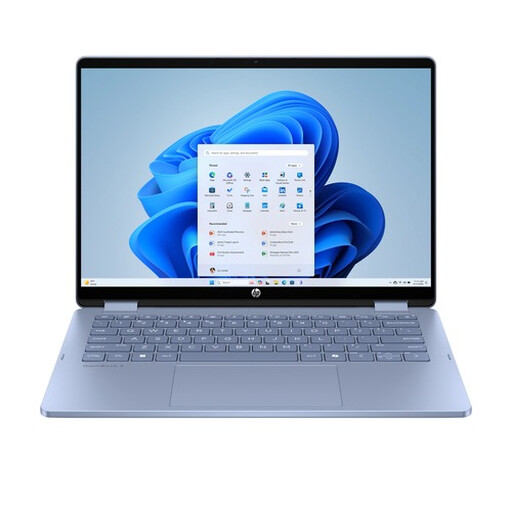
HP OmniBook 5 Flip 14-fp0075nd C5VM5EA#ABH
An option to compare if you want to combine local development work with viewing web pages.
14-inch touchscreen, 1920 × 1200, 360-degree hinge, 16 GB RAM and 512 GB SSD. Weighs around 1.62 kg. Charger not included; according to the product description, a compatible USB-C Power Delivery charger of at least 45 W is required.
View at Joybuy
 No image available
HP OmniBook 5 Flip 14-fp0251ndx 2-in-1
Worth comparing if you want to work with local project files and view web pages on the built-in screen.
14-inch touchscreen, 1920 × 1200, 360-degree hinge, 8 GB RAM and 512 GB SSD. Weighs around 1.60 kg. Charger not included; according to the product description, a compatible USB-C Power Delivery charger rated at 45–100 W is required.
View at Joybuy
 No image available
ASUS V16 FX3607VP-RP061W
A 16-inch option to consider if you want to compare code and page previews on a larger built-in screen.
16-inch WUXGA screen with 1920 × 1200 resolution and a 16:10 aspect ratio, 16 GB RAM and 1 TB SSD. The description lists HDMI and USB-C display output, and a weight of around 1.95 kg.
View at Joybuy
 No image available
Microsoft Surface Laptop 7 15-inch Snapdragon X Elite
Worth comparing if you want to combine project work with a larger screen for pages and previews.
15-inch touchscreen with 2496 × 1664 resolution, 16 GB RAM, 512 GB SSD and Windows 11 Pro. The product description lists USB4 connectivity and a weight of 1.66 kg.
View at Joybuy
 No image available
Acer Nitro 18 AI AN18-61-R25V
Worth comparing if you want plenty of built-in screen space to view code and page previews side by side.
18-inch WQXGA screen with 2560 × 1600 resolution and a 16:10 aspect ratio, 16 GB RAM and 1 TB SSD. The description lists Wi-Fi 6E and Gigabit Ethernet.
View at Joybuy
Frequently asked questions
Do I need a separate laptop to test the mobile museum website?
No, you can approximate mobile screen sizes on your laptop using Chrome DevTools. Google describes this view as an approximation, so test important pages on a real mobile device too.
Can I rely solely on Visual Studio Code’s minimum memory requirement for this work?
No, Microsoft’s recommendation applies to Visual Studio Code itself and doesn’t describe the memory used by browsers and other project tools running at the same time. Assess your full workload before choosing a configuration.
Who can help if a laptop I buy as a consumer in the Netherlands develops a fault?
According to the Government of the Netherlands, the seller must provide a solution if a product has a problem, under the statutory guarantee. Any manufacturer’s guarantee or additional service is separate.
Does every Dutch museum collection website have to comply with the government’s digital accessibility rules?
Not simply because it’s a museum website. According to DigiToegankelijk, the Digital Accessibility Decree for Government applies to public bodies, including certain bodies governed by public law. Check whether the specific organisation responsible for the website is covered by the rules.
What should I check if I want to connect a laptop to an external display?
Before buying, check the display support and ports on the exact configuration, as well as the cable or adapter your display needs. Apple specifies support for up to two external displays for the MacBook Air with M5; this feature doesn’t automatically apply to other models.


