Start with the catalogue software you actually use, and test the scripts and diacritical marks in your collection in that software. For OCLC Connexion client 3.X, OCLC lists 64-bit Windows 10 from version 1803 onwards and Windows 11; a MacBook is only suitable if your own cataloguing workflow and peripherals work with macOS. Then weigh up screen space, ports and the size of your image files.
Who is this guide for?
Cataloguer working with multiple scripts
If you enter titles and names in different scripts, it’s best to test sample records in your own catalogue system. OCLC Support describes support for non-Latin scripts in Record Manager, but also notes that some Unicode characters can trigger validation errors.
Administrator of an existing cataloguing workflow
If your collection or institution already uses cataloguing software, check the system requirements and access needed first. OCLC Support lists specific Windows requirements for Connexion client 3.X.
Book describer who also manages images
If you also store or view book photos as well as records, you can choose the storage you need based on the number and type of files. Consumentenbond distinguishes between everyday office work and working with large photo or video files.
What should you consider when choosing?
Check your software and character input first. Then choose a screen, ports and storage to suit your workspace and any image files you have.
| Consideration |
What should you check? |
Who is this important for? |
| Script input and metadata |
Test real sample records with the required scripts and diacritical marks in your own software; check the output too. |
If I enter names and titles in multiple scripts, I want to know whether my catalogue software handles the characters correctly. Around 36% of consumers cite script input as their main buying concern. |
| Catalogue software |
Check the exact software version, supported operating system and access required; check the ports needed for any peripherals. |
I want to continue using my existing cataloguing workflow without ending up with an unsupported system. Around 29% of consumers give software compatibility top priority. |
| Workspace and storage |
Check the size of your own image files and decide whether they need to be stored locally; then compare the screen size and storage of the specific configuration. |
If I view or store book images locally alongside records, I want to manage my files and windows comfortably. Around 21% of consumers prioritise image files and workspace. |
| Moving between workspaces |
Compare the dimensions, screen size, charging options and ports with the places where you work and the devices you use. |
When I move between the collection and my workspace, the laptop needs to suit those locations and my peripherals. Around 14% of consumers cite portability as their main buying concern. |
Common buying mistakes
-
Assuming Unicode support guarantees every character will work
OCLC Support says that Record Manager supports non-Latin input, but some Unicode characters can trigger validation errors.
Before choosing an operating system, test sample records containing the scripts and special characters in your collection in the application you plan to use.
Correcting records or adjusting your input workflow can take extra time.
-
Choosing a Mac for a workflow that requires Connexion client 3.X
OCLC Support lists Windows versions as supported for Connexion client 3.X. So don’t assume this client will work with macOS.
Check the requirements for the exact software version, and consider a Mac only if your own catalogue software and peripherals are compatible with it.
You may need a different workstation or an adapted cataloguing workflow if the system you choose isn’t compatible.
-
Choosing storage without accounting for book photos
The storage you need depends on the number and type of files you keep.
Measure a representative selection of image files and decide which ones need to remain available locally.
Extra storage and managing restorable backups may need to be part of your workflow.
-
Confusing the manufacturer’s warranty with your legal rights
For a consumer purchase, your legal rights are separate from any warranty offered by the manufacturer. ACM ConsuWijzer explains that your statutory rights depend on what you could reasonably expect from the product when using it normally.
Keep your purchase and configuration details. For a business purchase, check the applicable contract terms separately.
Relevant brands to consider
Lenovo
The ThinkPad T14 Gen 6 (Intel) is a 14-inch business Windows laptop range to compare if you’re looking for a Windows workstation and a choice of configurations.
- Lenovo lists connectivity and customer-replaceable parts for this range.
- Check the ports and replaceable parts on the exact configuration, as these can vary.
Dell
The Dell Pro 14 PC14250 is a configurable business Windows laptop to assess against the requirements of your catalogue software.
- For one listed configuration, Dell specifies a 14-inch 16:10 screen and Windows 11 Pro.
- Check which configuration and any service terms apply to the model you’re considering.
Apple
According to Apple, the MacBook Air with M5 chip is available in 13- and 15-inch models for cataloguing workflows that are compatible with macOS.
- Apple lists 16 GB of memory and 512 GB of storage for the relevant base models.
- Apple lists two Thunderbolt 4 ports; check that your existing peripherals can connect to them. Don’t assume the Windows Connexion client is supported on macOS.
HP
The Dutch EliteBook 8 G1a 14 configuration is a business Windows laptop to consider for working with multiple windows or local files.
- For the configuration described, HP lists Windows 11 Pro, 32 GB RAM, a 1 TB SSD and a 14-inch screen with a resolution of 1920 × 1200 pixels.
- These are specifications for that configuration, not minimum requirements for cataloguing or features of every EliteBook model.
Laptop options at Joybuy
These laptops are options for cataloguing and document work. Where Windows is explicitly listed as the operating system, that may be relevant for Connexion. Check the requirements of your specific software and configuration before buying.
 No image available
HP OmniBook 3 16-by0058ndx, 16-inch
This Windows model may suit a cataloguing workflow that requires Windows; check your software’s system requirements and your institution’s access arrangements.
AMD Ryzen 5 7520U, 8 GB RAM, 512 GB SSD, 1920 × 1200-pixel IPS screen and Windows 11 Home. The USB-C charger is not included, and the onboard memory cannot be upgraded.
View at Joybuy
 No image available
HP OmniBook 5 Flip 14-fp0250ndx, 2-in-1
This Windows model may suit a Windows-based cataloguing workflow; check the requirements for the exact software version before choosing.
Intel Core 5 120U, 8 GB RAM, 512 GB SSD, 14-inch touchscreen with a resolution of 1920 × 1200 pixels and Windows 11 Home. The listed weight is approximately 1,60 kg. The USB-C charger is not included, and the onboard memory cannot be upgraded.
View at Joybuy
 No image available
HP OmniBook 3 14-hy0058ndx, 14-inch
The listed Windows 11 Home configuration may be relevant for Windows catalogue software; check the exact system requirements and access arrangements.
AMD Ryzen 5 7520U, 8 GB RAM, 512 GB SSD and a 14-inch IPS screen with a resolution of 1920 × 1200 pixels. The listed weight is approximately 1,42 kg. The laptop is supplied without a charger, and the onboard memory cannot be upgraded.
View at Joybuy
 No image available
Microsoft Surface Laptop 7, 13,8-inch
The listed Windows 11 Pro configuration may suit a Windows cataloguing workflow; check the programme requirements for your institution.
Snapdragon X Elite, 16 GB RAM, 512 GB SSD and a touchscreen with a resolution of 2304 × 1536 pixels. The listed weight is 1,34 kg.
View at Joybuy
 No image available
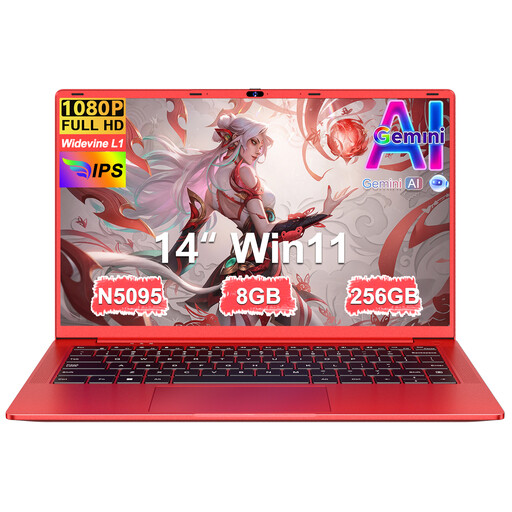
Ruzava 14-inch laptop, 8 GB RAM, 256 GB SSD
The 14-inch screen may suit viewing records and documents; before buying, check that the operating system is compatible with your catalogue software.
N5095 processor, FHD IPS screen, 8 GB RAM and 256 GB SSD. The product information lists expansion via a TF card, a weight of 1,39 kg and a 180° hinge.
View at Joybuy
Frequently asked questions
Can every laptop handle non-Latin catalogue records?
That depends on the application you use and the characters in your records. OCLC Support describes non-Latin input and Unicode support in Record Manager, but warns that some Unicode characters can trigger validation errors. So test your own sample records.
Is a Mac suitable for OCLC Connexion client 3.X?
OCLC Support lists Windows as a supported platform for Connexion client 3.X, including 64-bit Windows 10 from version 1803 onwards and Windows 11. If you use other cataloguing software, check its macOS requirements separately.
Do I always need 1 TB of storage for a catalogue with photos?
No. Work out how much space you need based on the number and type of files you keep. Consumentenbond distinguishes between everyday office work and working with large photo or video files; compare your own files with the configuration you’re considering.
How do I get started with entering and storing catalogue data?
Test the scripts, diacritical marks and export function using a few sample records in the application you use. If you’re working for an institution, also agree where records and any photos will be stored, and how backups can be restored.
What are the rules on the cooling-off period and warranties in the Netherlands?
For an online consumer purchase, ACM ConsuWijzer says you generally have up to 14 days after delivery to change your mind, although exceptions apply. You may also have statutory rights if a product used normally does not meet what you could reasonably expect from it; these rights are not the same as a manufacturer’s warranty. For a business purchase, check the applicable contract terms.


