
Producer working on a multi-layered mix
You work with multiple tracks or plug-ins and want to check and export your project before the presentation, without any audio interruptions.


Start by checking that your mixing software, plug-ins and audio equipment are compatible. Then consider how much space your projects need and which connections you’ll need for your presentation. A compact MacBook Air may suit you if your software and equipment work with macOS; a Windows laptop with the right built-in ports may be more convenient if you already have peripherals. More RAM may be useful for larger projects, but on its own it doesn’t guarantee stable mixing performance.
You work with multiple tracks or plug-ins and want to check and export your project before the presentation, without any audio interruptions.
Your choice depends on the software, drivers and connections for the audio interface or controller you already use.
You work in different locations and want to be able to open and connect your audio file and presentation when you arrive.
Choose this option if: your mixing software, plug-ins and interface support macOS, and you take your laptop with you often. Apple lists 16 GB of memory, 512 GB of storage and two Thunderbolt 4 ports for the 13-inch MacBook Air mentioned here.
Bear in mind: you may need adapters to connect equipment with USB-A or a presentation screen. Apple’s battery-life figures are based on manufacturer tests, not a mixing session.
Choose this option if: your existing equipment uses USB-A or you want to connect a screen via HDMI. Lenovo lists these ports for the IdeaPad Slim 5 15ARP10, model 83J3007JMH.
Bear in mind: Lenovo says the memory in this model is soldered and cannot be upgraded, and lists the model as discontinued. Also check whether a power supply is included.
Choose this option if: your project has lots of tracks or plug-ins and you’re specifically looking for more RAM. The ASUS Zenbook 14 OLED UX3405CA-QL535W mentioned here is a specific configuration, so check the full model code.
Bear in mind: more memory doesn’t guarantee low audio latency. Processor load, buffer settings and drivers all matter too.
| What to consider | What should you check? | Who should consider this? |
|---|---|---|
| Stable mixing | Compare your software and project requirements with the exact configuration. Test your interface and buffer settings with a representative project; Ableton explains the trade-off between buffer size, latency and processing power. | If you use several tracks or plug-ins while mixing, you’ll want to avoid audio dropouts without relying on processor specifications alone. Around 33% of consumers put stable mixing first. |
| Software and equipment | Check that your software version, plug-ins, interface and drivers work with the operating system and processor architecture of the exact laptop. Serato says its software is not compatible with ARM-based Windows computers. | If you already use specific mixing software and an audio interface, you’ll want to know that they’ll continue to work together with the necessary drivers. Around 27% of consumers make compatibility their top priority. |
| Taking it with you and presenting | Compare the size, weight, power supply and screen connection with the venue. Open your export and presentation on the equipment you’ll be using there beforehand. | If you travel between your workplace and clients, you’ll want to take your laptop and finished mix with you easily and open them at your destination. Around 20% of consumers prioritise portability and presenting. |
| Ports and project files | Count your USB devices and required screen connections, and check how much storage space is available. Ableton notes that a set may refer to audio files without copying them; collect project files separately. | If you use an interface, controller and presentation screen at the same time, you’ll want to connect your equipment and transfer your project files. Around 20% of consumers prioritise ports and file storage. |
A smaller buffer can reduce latency, but it requires more processing power and may cause audio dropouts if your project puts the system under heavy load. Ableton explains this trade-off for Live.
Test your preferred buffer setting with your own interface and a representative project before making a decision based solely on processor specifications.
A port, operating system, processor architecture and available driver are separate compatibility requirements. Serato says its software is not compatible with ARM-based Windows computers.
Check the exact laptop configuration alongside your software, driver, interface and presentation screen. Also check whether any adapters and the right power supply are included.
Ableton explains that a saved Live Set may contain references to the files used without copying the files themselves. Collect All and Save doesn’t copy plug-ins either.
Collect the files you’ve used, keep the complete project folder and check the audio export your client will hear separately.
Lenovo lists no power adapter for the IdeaPad Slim 5 15ARP10, model 83J3007JMH. A manufacturer’s warranty is also not the same as the statutory guarantee for a consumer purchase in the Netherlands.
Check with the seller what’s included in the box and which power supply is suitable for the exact model. Consider any additional warranty service alongside your statutory rights.
You may need to buy a power adapter separately for this Lenovo model.
The MacBook Air is a compact macOS option if your software and equipment work with macOS.
The IdeaPad Slim 5 15ARP10 is a Windows option to consider if built-in connections for your equipment are important.
The Zenbook 14 OLED is a Windows range with various configurations; ASUS uses several model codes within the range.
This selection includes laptops with a range of memory and storage configurations. Before buying, check that your mixing software, audio equipment and presentation screen work with the exact model.
 No image available
Worth considering if you’re looking for a laptop with a 13.3-inch screen and the listed memory and storage configuration; these specifications alone don’t guarantee stable audio performance.
AMD Ryzen AI 5 processor, 16 GB RAM, 512 GB SSD and a weight of 1.46 kg.
 No image available
This configuration is worth comparing if you’re looking for 32 GB of memory and 1 TB of storage; the specifications alone don’t tell you how your mixing software will perform.
Intel Core i7-14700HX, RTX 5070, 32 GB RAM, 1 TB storage and a 16-inch screen. The product name specifies a UK RGB keyboard.
 No image available
Carefully check that your software and interface are compatible before considering this model: it’s listed with a Snapdragon X processor.
16-inch WUXGA OLED screen, 16 GB LPDDR5X, 512 GB SSD and Windows 11 Home. Serato says its software is not compatible with ARM-based Windows computers.
 No image available
Consider this model if you want to compare built-in connections for peripherals and a presentation screen; also check that your software and interface will work with it.
3050E processor, 16 GB DDR4, 512 GB SSD and a 15.6-inch screen. The product information lists USB, USB-C and HDMI.
 No image available
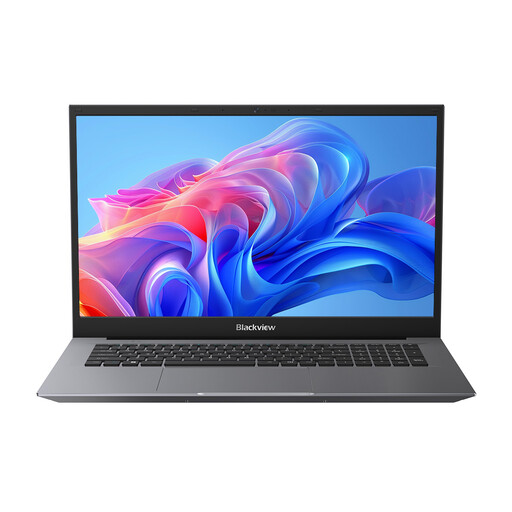
A larger screen may be useful if you want to work on your mix and presentation on one laptop; consider how its size compares with what you want to carry when travelling.
Intel Pentium Silver N6000, 16 GB DDR4, 512 GB SSD and an 18.5-inch screen. The product information lists USB-A and HDMI.
For Ableton Live, Ableton lists 8 GB as the minimum and 16 GB or more as recommended. What you need depends on your software, tracks and plug-ins; the minimum isn’t a guarantee that a large project will run well.
Test your audio interface’s buffer setting with a representative project. Ableton says a smaller buffer reduces latency but requires more processing power, which can cause audio dropouts.
Use Collect All and Save to gather the audio files you’ve used, and keep the complete project folder. Install any required plug-ins separately on another computer, and also create an audio export and check it beforehand.
For an online consumer purchase, you generally have a cooling-off period of up to 14 days after delivery, subject to statutory exceptions. ACM ConsuWijzer also explains that the statutory guarantee applies if a product doesn’t meet what you could reasonably expect from it under normal use. Check whether you’re actually buying as a consumer if you’re purchasing on behalf of a business.
Not necessarily. The Dutch government says you need permission from the creator to use copyright-protected music. The rights needed for your presentation and any further distribution depend on the material and how you use it.