
Browser-based flashcard maker
You mainly make digital or printable flashcards in a browser and want to know whether a basic laptop will do the job. The Canva Help Centre publishes the requirements for use in supported browsers.


A Chromebook may be enough for making flashcards in a supported browser; choose Windows or macOS if your course requires specific desktop software. Canva distinguishes between browser use and desktop apps, while Adobe publishes system requirements for Photoshop on desktop. Then compare screen space, printing options and portability: you don’t automatically need a more powerful laptop for simple flashcards.
You mainly make digital or printable flashcards in a browser and want to know whether a basic laptop will do the job. The Canva Help Centre publishes the requirements for use in supported browsers.
You need to use specific desktop software for your course as well as making flashcards. Check the software’s system requirements before choosing an operating system and configuration; Adobe, for example, publishes system requirements for Photoshop on desktop.
You want to check the layout on screen and make flashcards using a printer or a printable PDF. The Canva Help Centre points out that not all home printers support features such as bleed or crop marks.
Choosing between a Chromebook, Windows and macOS largely depends on the apps you need. Start with the software requirements, then decide which screen and printing workflow will suit you.
A good fit if: you make flashcards in a browser supported by the model you choose and don’t need a desktop app designed specifically for Windows or macOS.
Bear in mind: check the browser requirements for your apps and the update schedule for the specific Chromebook model.
A good fit if: your course or workflow requires Windows desktop software.
Bear in mind: compare the full model number and configuration, as specifications can vary within the same range.
A good fit if: the study and design software you need supports macOS and you’ll also use the laptop for other coursework.
Bear in mind: compare the ports and configuration with what you actually need. The stated battery life isn’t a guarantee of how long it will last for you.
| What to consider | What to look for | Who is this most relevant to? |
|---|---|---|
| Software compatibility | Make a note of the design app you need, then check the operating system and published system requirements for the exact configuration. | If I need specific apps for my course, I want to make sure they’ll work on the laptop. Software compatibility is the top priority for around 36% of consumers asking this question. |
| Screen and print layout | Compare screen size and resolution. Also check that your printer can handle the paper size and print margins you want. | If you want to check the text and card layout on screen before printing your flashcards, screen space and the printing workflow are especially important. Around 29% of consumers asking this question prioritise layout and printing options. |
| Total cost | Compare a configuration that meets your app requirements and check whether you’ll also need a charger, adapter, printer or paper. | If I’m only making flashcards, I don’t want to pay for features I won’t use, while still taking into account what I need to print them. Around 21% of consumers asking this question prioritise total cost. |
| Portability and working offline | Compare the weight and ports of the configuration, and check in advance whether your app makes the designs you need available offline. | Consumers who want to work away from their room mainly need a laptop that’s easy to carry and clear information about offline use. This is the top priority for around 14% of consumers asking this question. |
Browser use and desktop apps don’t necessarily have the same requirements. An app required for your course may determine which operating system you need.
First check exactly which apps you’ll have to use, then compare their system requirements with the configuration you’re considering.
If essential software doesn’t work on the laptop you choose, you may need to buy another suitable laptop.
Canva says that not all home printers support features such as full bleed or crop marks.
Check the paper size and printer settings, and print a test copy first.
Test prints use extra paper and ink.
The operating system, memory and storage can vary between configurations. For example, Lenovo lists different configurations of the IdeaPad Slim 3 14AMN8 with soldered, non-upgradable memory.
Compare the full model number and configuration of the laptop you want to order.
The update schedule can vary between Chromebook models. Google Chromebook Help lets you check when the final ChromeOS update is scheduled for the specific device.
Check the schedule if you plan to keep using the laptop for a long time.
HP offers Chromebook configurations for browser-based work, among other options.
The IdeaPad Slim 3 14AMN8 is a Windows laptop range with several configurations.
ASUS offers Vivobook laptops and Chromebook models. The software you need will determine which range is right for you.
The Chromebook Plus 514 range is a Chromebook option for browser-based work.
The MacBook Air range is worth considering if macOS works with your study apps and you’ll also use the laptop for other work.
This selection includes Windows laptops and a MacBook for anyone weighing up software compatibility and screen space when making flashcards.
 Image unavailable
A Windows configuration for making flashcards and studying with Windows software, with a 16-inch screen offering room for text and layouts.
16-inch IPS screen, 1920 × 1200 and 16:10; Windows 11 Home; AMD Ryzen 5 7520U; 8 GB RAM; 512 GB SSD.
The charger isn’t included and must be purchased separately.
 Image unavailable
A more compact Windows configuration for flashcards and documents, if your course requires Windows software.
14-inch IPS screen, 1920 × 1200 and 16:10; Windows 11 Home; AMD Ryzen 5 7520U; 8 GB RAM; 512 GB SSD; approx. 1.42 kg.
The charger isn’t included and must be purchased separately.
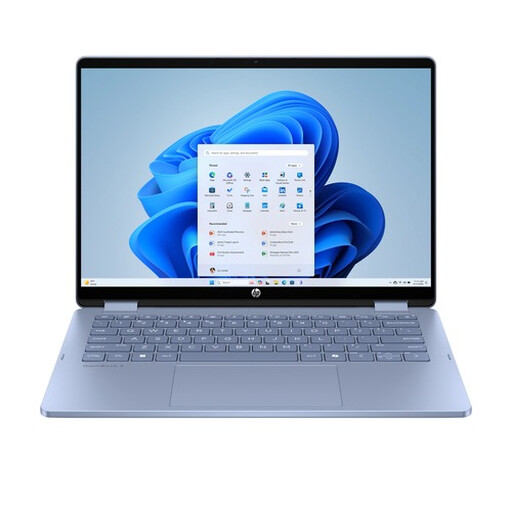 Image unavailable
A Windows 2-in-1 for anyone who wants to view or use flashcards on a touchscreen.
14-inch touchscreen, 1920 × 1200; 360-degree hinge with tablet mode; Windows 11 Home; Intel Core 5 120U; 8 GB RAM; 512 GB SSD.
A compatible USB-C charger and stylus aren’t included.
 Image unavailable
A Windows configuration with a 16-inch screen for anyone who wants extra room for text and flashcard layouts.
16-inch OLED screen, WUXGA 1920 × 1200 and 16:10; Windows 11 Home; Snapdragon X; 16 GB LPDDR5X; 512 GB SSD; 1.70 kg.
Check that the specific configuration supports the study and design software you need.
 Image unavailable
A MacBook option if your study and design software supports macOS and you also want to use the screen space for other coursework.
15.3-inch Liquid Retina display; M5 chip; 16 GB memory; 512 GB storage; approx. 1.6 kg; QWERTY keyboard.
A USB-C power adapter of at least 35 W isn’t included.
Yes. Canva publishes requirements for use in supported browsers. Check that the browser on the Chromebook you choose meets them; don’t assume you can use the Windows or Mac desktop app on ChromeOS.
According to its own guide, Canva lets you edit existing designs offline on supported devices if you’ve made them available online in advance. You can’t create new designs offline, so test this workflow before relying on it.
A printable PDF gives you a way to access your computer’s printing options. Set the page size and check whether your printer supports the margins or crop marks you want; Canva says that not all home printers support these features.
According to ACM ConsuWijzer, online purchases generally come with a statutory cooling-off period of up to 14 days after delivery. You’re also covered by the statutory guarantee if a product doesn’t meet what you could reasonably expect under normal use. This doesn’t simply mean every laptop is covered for a fixed two-year period.