
Writer who works for long stretches
You mainly write chapters, notes and source references, and want a comfortable typing and reading experience without paying for unnecessarily powerful hardware for light office tasks.


Start with a laptop that’s comfortable for long writing sessions and lets you refer to your manuscript and sources side by side. Then choose a size and operating system that suit your workspace and software. Both Windows and macOS can back up files to an external drive, but check the ports and how much storage you’ll need. For a practical offline back-up, you’ll still need an external drive that you store separately and use to test your recovery process.
You mainly write chapters, notes and source references, and want a comfortable typing and reading experience without paying for unnecessarily powerful hardware for light office tasks.
Alongside text, you manage scans and photos, and want to know which storage, ports and external back-up are right for those files.
You work both at home and elsewhere, weighing portability and battery life against the screen space you need to view multiple documents.
| What to consider | What should you check? | Who is this important for? |
|---|---|---|
| Typing comfort and reading space | Try the keyboard layout and key feel; compare screen size and readability. | If I write for long periods and want to view my manuscript and sources side by side, I look at the keyboard and workspace. Around 29% of consumers prioritise typing comfort. |
| Recoverable offline back-up | Check the drive connection and whether the back-up software includes the right folders; test the recovery process. | I want a separate copy that I can restore, even if the laptop itself fails. Around 29% of consumers give top priority to a recoverable offline back-up. |
| Storage for scans and photos | Estimate the size of your source collection and check the storage and ports on the configuration you choose. | If I keep scans and photos locally, I want enough space and a suitable connection for my drive. Around 24% of consumers prioritise storage and connectivity for source files. |
| Portability and workspace | Compare the size and weight of the configuration; look at battery figures only alongside the activity used in the test. | If I often work away from home, I weigh portability against the space I need to compare documents. Around 18% of consumers prioritise working on the move over other considerations. |
Consumentenbond recommends a 14-inch Full HD IPS screen, 8 GB RAM and 256 GB of storage as a guide for basic office software, not as a mandatory minimum. More storage may be useful if your collection of scans is growing; decide based on your own files.
On Windows, File History can back up folders to an external drive; check that folders outside the default libraries have been added. On a Mac, Time Machine can save documents and photos to an external drive. After using it, store your back-up drive separately from your laptop and test whether you can restore an earlier version of your manuscript.
A copy on the same laptop won’t protect your files if the laptop is lost or damaged.
Make a copy on an external drive, store it separately and test whether you can restore an earlier version of your manuscript.
If you lose both the laptop and your only copy, you could lose your manuscript too.
Having space for scans on your laptop doesn’t, by itself, give you a separate back-up. The drive you choose must also be physically connectable to your laptop.
Check the ports on the exact configuration and compare them with your external drive; you may need a suitable cable or adapter.
You may also need a separate drive and, depending on the ports, a cable or adapter to make an external copy.
Apple lists different maximum battery life figures for video streaming and wireless internet use on the MacBook Air M5. These figures don’t measure your particular mix of writing and looking up sources.
Compare battery figures alongside the activity used in the test, and bear in mind how you work, especially if you’re often away from a mains socket.
A model name can cover configurations with different features. For example, Notebookcheck.nl listed an anti-glare screen on one configuration in its Q1 2026 ranking, while a Vivobook S16 configuration is available with an OLED screen.
Before choosing, check the full model and configuration name, and compare the current product specifications.
Notebookcheck.nl included the ThinkPad L14 G5, ThinkPad E14 G6 and IdeaPad Slim 5 in a historical ranking of office laptops.
Notebookcheck.nl included the ExpertBook PM3406 in the same historical ranking. The Vivobook S16 is a separate product line with its own configurations.
A MacBook Air running macOS is one option if you want to use Time Machine with an external drive.
You can compare HP configurations by screen size and specifications, including models with 16 GB RAM and a 512 GB SSD.
The Dell 14S is a configurable 14-inch Windows laptop to include in your comparison.
These laptops are options for writing and referring to sources while using an external back-up drive, on both Windows and macOS. Check that the drive connection and software suit the way you work.
 No image available
A Windows laptop to consider if you want to use the File History external back-up feature.
14-inch 1920 × 1200 OLED touchscreen, 16 GB of memory, 512 GB SSD and backlit QWERTY keyboard. It weighs 1,62 kg. USB-C charger not included.
 No image available
A Windows option with a 16-inch screen for viewing documents and source files side by side.
16-inch WUXGA OLED screen, Snapdragon X processor, 16 GB LPDDR5X memory and 512 GB SSD. It weighs 1,70 kg.
 No image available
A 14-inch Windows laptop that’s easy to take with you and use with an external drive.
Full HD anti-glare screen, Intel Core 7 150U, 16 GB DDR4 memory and 512 GB SSD. It has USB-A and USB-C ports and a backlit keyboard, and weighs 1,40 kg.
 No image available
A macOS option if you want to use Time Machine with an external drive; also check that your writing and source software works on macOS.
15,3-inch screen, 16 GB of memory and 512 GB SSD. This configuration has two Thunderbolt 4 ports with USB-C and no USB-A port; you’ll need a suitable adapter or another cable for a USB-A drive.
 No image available
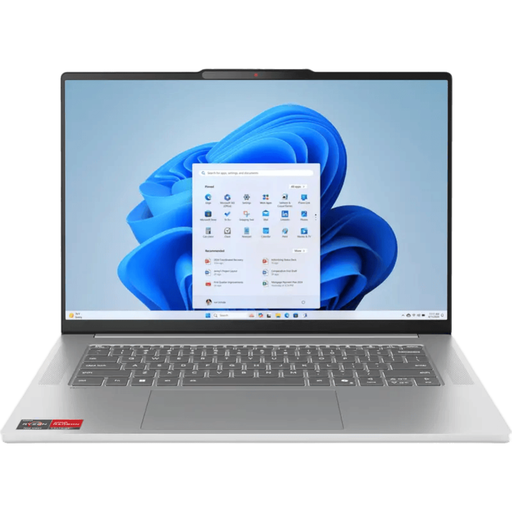
A Windows option with a larger screen for viewing documents and local source files.
15,3-inch IPS screen with a resolution of 1920 × 1200, 16 GB of memory and 512 GB SSD. The laptop has USB-C and a backlit keyboard, and weighs 1,49 kg. The charger must be bought separately.
On Windows, for example, use File History with an external drive and check that the folders containing your manuscript and sources are included. On a Mac, Time Machine can back up to a connected external drive. Store the drive separately afterwards and test that you can restore a file; an untested copy doesn’t guarantee that you’ll be able to recover your files.
Apple recommends an external drive with at least twice the storage capacity of your Mac. This is Apple’s recommendation for Time Machine, not a general minimum capacity for every back-up method.
An extended warranty isn’t a requirement for your statutory guarantee. ACM ConsuWijzer notes that the statutory guarantee applies alongside any guarantee from the retailer or manufacturer. The right solution depends, among other things, on the fault and the circumstances.
Not without checking the applicable privacy rules. The Dutch Data Protection Authority states that, in most cases, you need permission to publish other people’s personal data online. It also describes a limited exception for use that is exclusively personal or domestic. Whether a particular publication is permitted depends on the information and how you publish it.
According to the European Commission, notebooks are covered by the current EU ecodesign rules for computers. The EU also explains that electrical and electronic equipment may be subject to CE marking rules; a CE statement on a product page is not, by itself, an independent product assessment.