Start by matching your laptop to the databases, containers and development tools you use at the same time. Check the installed memory and storage rather than relying on a general speed claim. An upgradeable Windows or Linux laptop offers different options from a Mac with Apple Silicon: before choosing a Mac, check that your required software and container images support arm64, or whether you’ll need a different image or emulation. For each model, compare the exact configuration with your shared monitor, dock and power supply. If you handle personal data, factor appropriate security measures into your choice too.
Who is this buying guide for?
Developer running several local services
If you run a database alongside containers and a development environment, check how much memory is available for these simultaneous tasks and whether it can be upgraded. The PostgreSQL Global Development Group explains how PostgreSQL uses memory, including for shared buffers.
Shared workspace user
If you regularly connect a monitor and peripherals, compare the ports and charging options on the specific laptop configuration with the dock and power supply you have available.
Working with personal data locally
If you handle personal data on a laptop that you take with you, choose security measures that suit the processing involved and the associated risks. The Dutch Data Protection Authority stresses that organisations must protect personal data properly.
What should you look for when buying?
Start with the tasks you run at the same time, then check that the laptop works with your shared desk setup. Factor in storage, software compatibility and data protection too.
| What to consider |
What should you check? |
Who is this important for? |
| Memory for simultaneous tasks |
List the databases, containers and development tools you run at the same time. Check the installed RAM and whether it can be upgraded in the configuration you’re considering. |
If I use several local services and development tools at the same time, I want to know how much memory my configuration has and whether I can upgrade it. Around 33% of consumers say this simultaneous workload is their main concern when buying. |
| Connections for a shared desk |
Compare the ports and charging options on the exact laptop configuration with the inputs and features of your monitor and dock. |
If I regularly connect my laptop to the same monitor and dock, I want to know in advance whether the specific configuration will work with them. Around 27% of consumers prioritise connecting to a shared desk setup. |
| Storage for local data |
Work out how much space your datasets and other files need. Check the SSD capacity and arrange a separate backup that you can restore. |
If I store local datasets on my laptop, I want enough space for my files and a separate recovery option. Around 20% of consumers name storage for local data as their main concern when buying. |
| Security and software compatibility |
Check which security measures are appropriate for your data and working environment. Also compare the architecture of any required container images and tools with the platform you choose. |
If my work depends on specific container images or I handle personal data, I want to check software compatibility and the security requirements in advance. Around 20% of consumers say these requirements are their main concern when buying. |
Common pitfalls
-
Assuming a model range’s maximum RAM is included in every configuration
A model range may offer upgrade options, but the laptop you choose might not come with the maximum amount of memory installed.
Check the full product configuration, installed memory and upgrade conditions.
-
Assuming every USB-C port fully supports your shared desk setup
The ports, display output and charging options on the specific laptop need to match your monitor and dock’s requirements.
Before you choose, compare your monitor and dock specifications with those of the exact laptop configuration.
You may need a different dock, adapter or separate power supply if the connections aren’t compatible.
-
Choosing an arm64 laptop without checking your required database images
Docker Docs distinguishes between arm64 and amd64 images. An image for one architecture won’t automatically run natively on the other.
Check the architecture of all required images and tools in advance. Some applications may need a different image or emulation.
Finding another image or using emulation can involve extra work.
-
Confusing local storage with data protection
An SSD alone won’t prevent data loss or automatically ensure that personal data is properly protected.
Plan backups that you can restore, and assess security measures in light of the data and associated risks. The PostgreSQL Global Development Group describes backup methods for PostgreSQL; the Dutch Data Protection Authority reminds organisations of their responsibility to protect personal data properly.
Brands worth considering
Lenovo
The ThinkPad T14 Gen 6 (AMD) is worth looking into if memory upgrades and documented connections are important to you.
- Lenovo PSREF lists two SO-DIMM slots for this model, support for up to 64 GB DDR5, and connections including Thunderbolt 4, HDMI and Ethernet.
- Check the memory option and connections on the specific UK configuration; model specifications don’t tell you how much memory a particular configuration comes with.
Framework
The Framework Laptop 13 with AMD Ryzen AI 300 Series is an option if you value replaceable parts and the freedom to choose your own expansion cards.
- Framework lists replaceable storage and memory, a choice of Expansion Cards and support for up to 96 GB DDR5 for this generation.
- These are manufacturer specifications. Check your chosen components and ports, and make sure they’re compatible with your shared desk setup.
HP
The HP EliteBook 8 G1a 14 is a business-focused Windows option; configuration AD3T2ET#ABH is one specific example.
- HP Store Netherlands lists Windows 11 Pro, 32 GB RAM, a 1 TB SSD and three years of collection and return service for that configuration.
- The Dutch product page we checked listed this configuration as unavailable. This doesn’t tell you whether other configurations or retailers have it in stock.
Apple
A 14-inch MacBook Pro with M5 Pro is a macOS option if your required development software and database images work on Apple Silicon.
- Apple documents memory, storage and Thunderbolt connection configurations; check the specifications of the configuration you’re considering.
- Docker Docs notes that a linux/amd64 container won’t automatically run on an arm64 host without emulation. Check the architecture of any required images; model specifications aren’t a database benchmark.
Laptop options at Joybuy
Each of the Joybuy laptops below is listed with 32 GB of memory and a 1 TB SSD. Compare these configurations with your workload, and check separately that the connections work with your shared monitor and dock.
 Image unavailable
Microsoft Surface Laptop 7, 15-inch, Snapdragon X Elite, 32 GB, 1 TB
Compare the listed memory and storage with the databases and development tools you run at the same time. Also check the connection required by your shared dock.
Configuration: 32 GB of memory and a 1 TB SSD.
View at Joybuy
 Image unavailable
MSI Stealth 16 AI+ B3WF-011NL, 32 GB DDR5, 1 TB SSD
Compare the listed memory and storage with the databases and development tools you run at the same time. Also check the connection required by your shared dock.
Configuration: 32 GB DDR5 and a 1 TB SSD.
View at Joybuy
 Image unavailable
MSI Prestige 16 AI+ C3MG-236NL, 32 GB LPDDR5x, 1 TB SSD
Compare the listed memory and storage with the databases and development tools you run at the same time. Also check the connection required by your shared dock.
Configuration: 32 GB LPDDR5x and a 1 TB SSD.
View at Joybuy
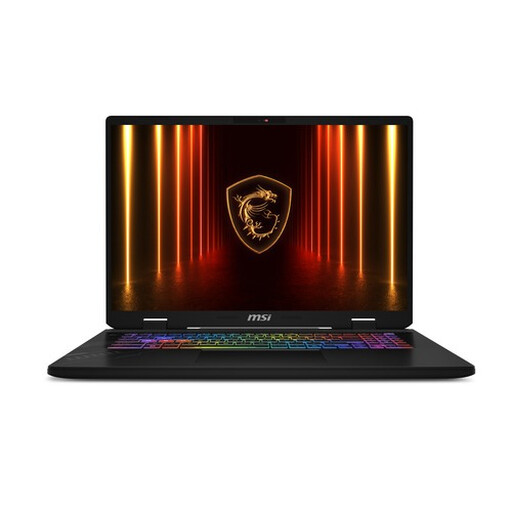 Image unavailable
MSI Crosshair 17 HX AI D2XWFKG-071NL, 32 GB DDR5, 1 TB SSD
Compare the listed memory and storage with the databases and development tools you run at the same time. Also check the connection required by your shared dock.
Configuration: 32 GB DDR5 and a 1 TB SSD.
View at Joybuy
Frequently asked questions
How much RAM do I need for a local database?
There’s no universal amount of RAM required for every local database and dataset. Work out which databases, containers and programmes you use at the same time, then compare that workload with the installed and upgradeable memory.
How can I prevent local database files from being lost?
Make regular backups and check that you can restore them. The PostgreSQL Global Development Group describes SQL dumps and other backup methods; a larger SSD isn’t a backup in itself.
What extra equipment or licences should I check?
Check that you have a dock, adapters and a power supply, and whether your chosen software requires a licence. Docker Docs states that a paid Desktop licence is required for professional use in larger organisations, government bodies and commercial use beyond the limits of the free version. For consumer purchases in the Netherlands, statutory guarantee rights also apply to what you can reasonably expect from the product. There isn’t one fixed duration for every laptop, according to ACM ConsuWijzer.
Can I store personal data in a local database on my laptop?
That depends on the data, how it’s processed and the security measures that apply; there’s no blanket permission for every dataset and laptop. The Dutch Data Protection Authority says that organisations must protect personal data properly. So work out what data you’re processing and which measures and internal rules apply to your situation.


