
Student who needs specific course software
You want to work on your notes in your hotel room and use your course’s software or file formats. So first check which operating system your course requires.


First, check that your course’s required software and file formats work with the laptop’s operating system. A Chromebook could suit you if the apps you need work on ChromeOS and you make your files available offline in advance; choose Windows or macOS only if your course requires it. Treat the stated battery life as a manufacturer’s estimate, not a guarantee of how long the laptop will last in your hotel room.
You want to work on your notes in your hotel room and use your course’s software or file formats. So first check which operating system your course requires.
You regularly take your laptop with you and want to be able to type, read and perhaps make video calls at a temporary desk. Compare the size, weight, keyboard and ports of each configuration.
You want to be able to open prepared documents and notes if your connection drops, and to connect securely when you need to use public hotel Wi-Fi.
A good fit if: your course requires Windows software, or you want to manage your files locally in a Windows environment.
Bear in mind: keyboard layouts and upgrade options vary by configuration; check the full model specifications.
A good fit if: the apps you need work on ChromeOS and you make your lecture files available offline in advance.
Bear in mind: Google warns that some apps won’t work offline; also check the update schedule for the specific model.
A good fit if: your course’s required software works on macOS and you want a laptop for typing and reading.
Bear in mind: check the ports and features of the configuration you choose; the stated maximum battery life isn’t a measure of how long it will last in your situation.
| What to consider | What to look for | Who should pay particular attention? |
|---|---|---|
| Software and files | Check your course’s required operating system, apps and file formats. | If I need to use specific software, I want to know in advance that it will work on my laptop; around 33% of consumers put software compatibility first. |
| Portability and typing | Compare the screen size, weight and keyboard layout of the exact configuration. | If I often take my laptop between classes and the hotel, I want a practical balance of portability and typing comfort; around 27% of consumers give this their highest priority. |
| Offline access | Make the files you need available offline in advance and test that they open without Wi-Fi. | If the hotel connection drops, I still want to be able to open my notes; around 20% of consumers give offline access their highest priority. |
| Long-term use | Compare the memory, storage, update support and what’s included with the configuration you choose. | If I’m looking for a laptop that suits my studies, I want to weigh up the cost and usability together; around 20% of consumers put this consideration first. |
A portable laptop won’t help if it can’t run software required by your course. Product specifications won’t tell you which software your course needs.
Find out the software and file requirements, then check them against the exact model before choosing between Windows, ChromeOS and macOS.
Google says that files must be made available offline in advance, and that some apps won’t work without a connection.
Make the documents you need available offline in advance, then test that you can open them without Wi-Fi.
Apple and Acer publish maximum battery life figures for specific models. These figures don’t measure how long the battery will last with your settings and workload.
Read the conditions attached to the figure and check what charging options you’ll need.
An extended warranty and your rights if a product is faulty aren’t the same thing. The end date for automatic updates varies between Chromebooks.
For a Chromebook, check the update schedule for the specific model. If you’re considering extra cover, compare its terms and cost with what it offers.
The IdeaPad Slim 3 is a Windows range worth considering if you want to compare compact models for typing and working with files locally.
The Chromebook Plus 514 is a ChromeOS option if you’ve checked in advance that the apps you need and your offline workflow are supported.
The 13-inch MacBook Air is a macOS option if your course software works on that operating system; compare configurations individually.
The OmniBook Flip range is worth considering if you’d like a 2-in-1 as well as a traditional typing experience.
Dell 14 laptops come in configurable versions for comparing ports, memory and keyboard layouts.
These Joybuy picks are Windows laptops for anyone who wants to work on lecture notes using a Windows system. Before buying, check that your course’s required software works with the configuration you choose.
 No image available
A Windows laptop option for working on your notes; check that your course’s required software works with this exact configuration.
A compatible USB-C charger and stylus aren’t included.
 No image available
A Windows option if you’d like a larger screen for working on your notes. Check that the size suits the space where you’ll use the laptop.
 No image available
For documents and online meetings on a Windows laptop; check that the listed configuration suits your course software.
AMD Ryzen 5 7520U, 8 GB RAM, 512 GB SSD and Windows 11 Home. Charger not included.
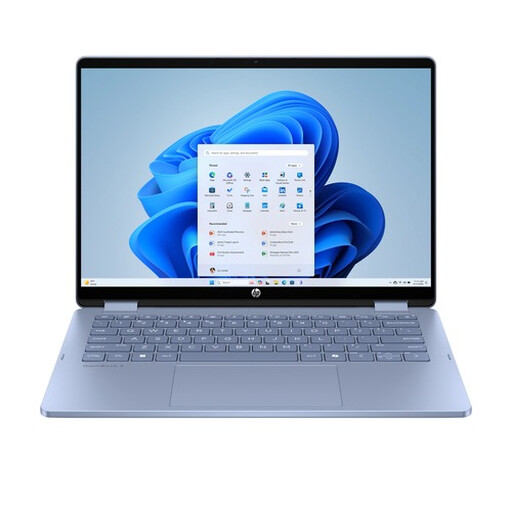 No image available
A Windows 2-in-1 option if you’d like to switch between typing and using the screen. Check that this way of working suits your software and note-taking style.
Intel Core 5 120U, 8 GB RAM, 512 GB SSD and 14-inch touchscreen. A compatible USB-C charger and stylus aren’t included.
 No image available
A Windows laptop option if you’d like a larger screen for viewing and working on your notes.
16-inch WUXGA OLED screen, Snapdragon X processor, 16 GB LPDDR5X memory and 512 GB SSD.
Yes, if you’ve made the files available offline in advance and they work without a connection. Google explains how to set up Drive files for offline use on a Chromebook and warns that some apps won’t work without a connection. Test your documents before you leave.
Veilig Internetten advises using a VPN or mobile data via a hotspot on public Wi-Fi. This is security advice, not a legal requirement or a guarantee that a connection is risk-free.
The Consumentenbond advises against leaving your laptop plugged in all the time, recommends avoiding deep discharges and suggests considering smart charging if your device has this feature. Check how it works on your model.
According to the Dutch government, when you buy at a distance you usually have a 14-day cooling-off period. You’re also entitled to a product that works properly; if it’s faulty, contact the seller to find a solution. The Dutch government states that there is no fixed statutory two-year warranty period for every product in the Netherlands.