What should you look for when choosing?
When choosing a laptop for taking lecture notes at the kitchen table, reading comfort, purchase cost, course software or portability could be the deciding factors. The Consumers’ Association discusses specifications for light study work, while Radboud University emphasises that your device should suit your course.
| What to consider |
What to check before buying |
Best suited to |
| Comfortable typing and reading |
Check the keyboard layout and screen size; compare the screen finish of the exact model. |
If I type lots of notes and read resources alongside my document, I want a keyboard and screen that suit those tasks. Around 36% of consumers say typing comfort and readability are their top priorities when buying. |
| A suitable price |
Compare the memory and storage of the exact model with the programmes and files you use. |
If I mainly use documents, websites and basic office software, I don’t want to pay for specifications my studies don’t require. Around 29% of consumers put purchase cost first. |
| Course software |
Check which operating system, programmes or exam software you need; then confirm the exact model supports them. |
If my course requires specific programmes, I need to know they’ll work on my laptop before choosing an operating system. Around 21% of consumers say software compatibility is their top priority when buying. |
| Using it on the go |
Compare screen size and ports; check the conditions under which the manufacturer quotes battery life. |
If I also take my laptop with me, I want to weigh its size and quoted battery life against how I’ll use it away from home. Around 14% of consumers put portability first. |
Joybuy laptops for note-taking and studying
This selection includes Windows laptops for typed notes and study work, a 2-in-1 for anyone who’d also like to use it as a tablet, and a MacBook Air for those whose course is suited to macOS. Check the software requirements, keyboard layout and included charger for each model.
 Image unavailable
HP OmniBook 3 14-hy0058ndx, AMD Ryzen 5 7520U, 8 GB RAM, 512 GB SSD
A 14-inch option for typed notes and light study work; check that your course software works with Windows 11 Home.
Windows 11 Home. Charger not included.
Joybuy
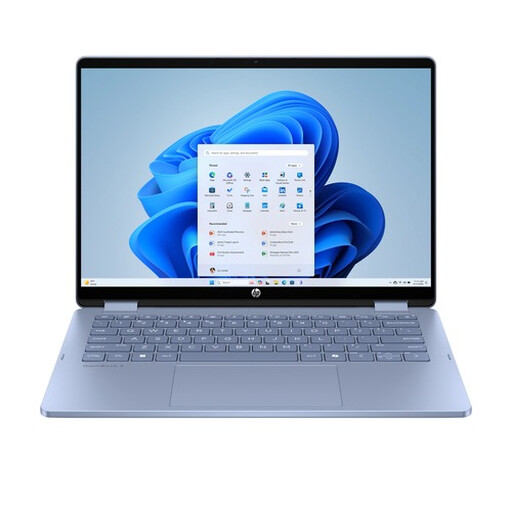 Image unavailable
HP OmniBook 5 Flip 14-fp0251ndx, Intel Core 5 120U, 8 GB RAM, 512 GB SSD
This 2-in-1 has a touchscreen; its tablet mode is especially useful if you want to work in ways other than typing.
14-inch touchscreen and Windows 11 Home. USB-C charger not included; a compatible USB-C Power Delivery charger is required.
Joybuy
 Image unavailable
Apple MacBook Air 15-inch M5, 16 GB, 512 GB, Starlight, QWERTY (2026)
An option if you’re looking for a MacBook Air with a 15-inch screen; check first that your course software is compatible with the model you choose.
Power adapter not included; a USB-C adapter of at least 35 W is required.
Joybuy
 Image unavailable
ASUS Zenbook A14 UX3407QA-QD479W, Snapdragon X, 16 GB RAM, 512 GB SSD
For anyone who wants to view notes and documents on a 14-inch screen and prefers a backlit Dutch QWERTY keyboard.
WUXGA OLED screen, Windows 11 Home and 16 GB RAM. The 65 W USB-C Power Delivery charger is not included.
Joybuy
 Image unavailable
Lenovo IdeaPad Slim 3 14AHP10 R7, 16G, 512G, 11H, QWERTY keyboard
An option for typed notes and study work; check that the operating system and software requirements of your course are compatible with this model.
The product name lists 16G, 512G and a QWERTY keyboard.
Joybuy
Frequently asked questions
Is 8 GB of RAM enough if I mainly take notes?
For light use, such as browsing the internet and running basic office software, the Consumers’ Association recommends 8 GB as a guide. If you use several programmes at once, the same source says 16 GB is a better option; also check your course requirements.
Do I need a touchscreen or 2-in-1 for typed notes?
No, not just for typed notes. A standard laptop is a sensible place to start; if you’d also like to write with a pen, check pen support and the accessories included with the exact model.
What should I check before choosing a Chromebook?
First check that the study apps you need work on ChromeOS, then look up the automatic update end date for the specific model. Google starts the support period when the platform is released, not on the date you buy it.
What can I do if my laptop unexpectedly develops a fault during normal use?
Contact the retailer if the laptop doesn’t meet what you could reasonably expect. According to ACM ConsuWijzer, the retailer must provide a free solution if a product breaks during normal use sooner than you could reasonably expect; there is no general fixed two-year end date for the legal guarantee.
Can I try a laptop bought online at home and return it?
For online consumer purchases, you generally have a statutory 14-day cooling-off period after delivery. ACM ConsuWijzer explains the conditions and exceptions for unpacking and trying out a product; check these before doing more than you need to assess it.


