Who is this choice relevant to?

Beginner Python programmer

Wants to install Python and an editor on their laptop, then practise at home with files, a terminal and a browser open side by side. Visual Studio Code and Microsoft explain that using Python in VS Code also requires a Python interpreter and the Python extension.

Someone with a dedicated home workspace

Expects to spend longer learning sessions at the same desk and wants to set up the screen and controls comfortably. Arboportaal offers advice on setting up a laptop workspace; employees are also subject to specific requirements for display screen work.

Beginner who mainly learns in a browser

Mostly follows online notebook lessons and wants to know when a Chromebook is enough and when local development may be limited. Google Colab runs Python in the browser, but its available computing resources are not guaranteed or unlimited.

What should you look for when choosing?

Windows laptop

Best for: Installing Python locally and working with a desktop editor and terminal.

Consider: Compare memory, storage and upgrade options for each configuration; a larger screen is less convenient to carry around.

MacBook

Best for: Programming locally on macOS, provided the configuration you choose suits your plans.

Consider: Check the configuration and make sure your screen and peripherals can connect to the available ports.

Chromebook

Best for: Lessons where you mainly use Python in a browser environment such as Colab.

Consider: Linux needs to be available for local development; this option may be blocked on school- or work-managed devices.

What to consider What should you check? Who is this important for?
Local Python environment Check the operating system, whether you can install a Python interpreter and what setup your course requires. If I want to complete tasks using local files and a terminal, my laptop needs to be able to run the required software. Around 36% of consumers make local development their top purchase priority.
Home desk Check the screen, keyboard layout and connections for an external screen, keyboard and mouse. For longer sessions, I want to position my screen and controls comfortably, without assuming that the laptop alone will be enough. Around 29% of consumers prioritise desk comfort.
Browser-based lessons Check whether the lessons work in a browser notebook, whether you have internet access and whether later tasks require local software. If I want to start with browser-based lessons, I want to know whether I can use Python without installing it locally. Around 21% of consumers prioritise browser-based learning with low start-up costs.
Future projects Match the memory, SSD capacity and any upgrade options to the programmes and files you expect to use. If I expect to work on local data or notebook projects later, I want room for those tasks without choosing heavy-duty specifications that every beginner needs. Around 14% of consumers prioritise flexibility for future projects.

Common pitfalls

  • Choosing a Chromebook when your course requires local software

    Using Python in a browser and installing it locally are different ways of working. Linux may also be unavailable on a Chromebook, for example if the device is managed by a school or employer.

    Check your course tasks and whether Linux is available on the specific Chromebook before deciding.

    If local software turns out to be necessary, you may need a different laptop or development setup.

  • Assuming the laptop is a complete home workspace

    To set up a laptop workspace properly, you may need separate input devices and possibly a screen or stand.

    See what you already have and check that the configuration you choose works with your screen and peripherals. If you are an employee, check workplace regulations separately.

    A separate keyboard, mouse, stand or screen may require extra space and purchases.

  • Comparing a deal by product family alone

    Memory, storage, colour and generation can vary between configurations. Studenten Wegwijzer lists two different model codes for the Acer in position 1; that position is not a ranking of Python performance either.

    Compare the full model code and the specifications of the specific offer, not just the product family or its ranking.

Brands to consider

Lenovo

The IdeaPad Slim 3 is a Windows range worth comparing when looking at specific configurations for local Python use. Lenovo Netherlands lists Windows 11 Home, 16 GB of soldered memory, a 512 GB SSD and a 15.6-inch anti-glare screen for model 82XQ00SHMH.

  • The configuration listed gives you specific details to compare for memory, storage and screen.
  • The memory in model 82XQ00SHMH is soldered. Check the keyboard layout and connections on the configuration you are considering.

Apple

A MacBook Air offers a macOS option for anyone wanting to learn Python locally. On its Dutch specifications page, Apple lists memory, storage and port options for the M5 configurations shown; these details do not automatically apply to an older M4 configuration.

  • You can check the configuration and external display connection for each version.
  • Compare the generation and configuration of the specific model; the specifications listed do not prove that it is better for Python beginners.

ASUS

ASUS offers both Vivobook laptops and Chromebooks, which are different options to consider. Studenten Wegwijzer lists the Chromebook CM1402FM2A-EC0215 with 4 GB of memory.

  • The product ranges let you compare a Windows option with a browser-focused Chromebook option.
  • For the specific Chromebook, check whether Linux is available and whether any device administrators restrict this feature.

HP

HP Netherlands lists, among others, OmniBook and ProBook configurations with 16 GB of memory. Compare specific models based on the features you need for your workspace and software.

  • The HP OmniBook 5 Flip 14-fp0605ndx product listing specifies 16 GB of RAM and a 512 GB SSD.
  • Screens, storage and included or separately available adapters vary between product listings.

Joybuy products for learning Python locally

These Windows laptops are suitable for practising Python locally, with specifications that help you choose the right screen, memory and storage for your home desk.

Lenovo IdeaPad Slim 3 15AHP10, Ryzen 7 8840HS, 16 GB, 512 GB SSD, QWERTY

Lenovo IdeaPad Slim 3 15AHP10, Ryzen 7 8840HS

A Windows laptop for practising Python locally and using an editor, browser and files side by side.

Windows 11 Home, 16 GB of memory, a 512 GB SSD and a 15.3-inch screen. The keyboard is QWERTY; the charger is not included.

Joybuy

Lenovo IdeaPad Slim 3 14AHP10, Ryzen 7 8840HS, 16 GB, 1 TB SSD, QWERTY

Lenovo IdeaPad Slim 3 14AHP10, Ryzen 7 8840HS

A Windows configuration for local Python use, ideal for comparing if you need room for programmes and files.

14-inch screen, 16 GB of DDR5 memory and a 1 TB SSD. The keyboard is QWERTY.

Joybuy
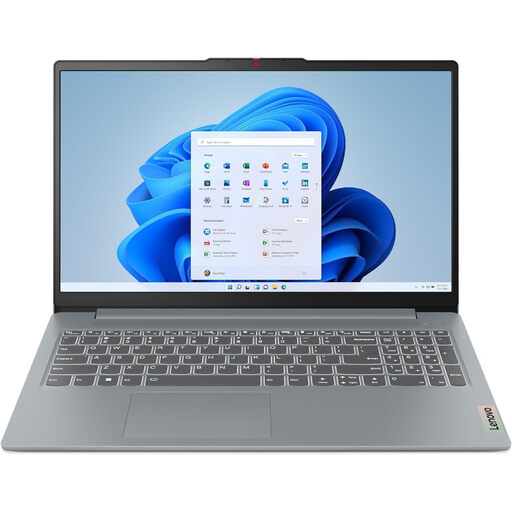
Lenovo IdeaPad Slim 3 15AHP10, Ryzen 7 8840HS, 16 GB DDR5, 512 GB SSD, QWERTY

Lenovo IdeaPad Slim 3 15AHP10, Ryzen 7 8840HS

A Windows laptop for local practice, with a 15.3-inch screen suited to a dedicated home workspace.

16 GB of DDR5 memory, a 512 GB SSD and a screen with WUXGA resolution. The keyboard is QWERTY.

Joybuy

Acer Nitro 18 AI AN18-61-R25V, Ryzen AI 7 350, 16 GB DDR5, 1 TB SSD

Acer Nitro 18 AI AN18-61-R25V

A Windows configuration with a large built-in screen to consider for use at a dedicated desk.

AMD Ryzen AI 7 350, 16 GB of DDR5 memory, a 1 TB SSD and an 18-inch WQXGA screen. The keyboard is QWERTY.

Joybuy

Lenovo V15 G5 IRL, Intel Core i5-13420H, 16 GB DDR5, 512 GB SSD

Lenovo V15 G5 IRL, Intel Core i5-13420H

A Windows laptop to compare for practising Python locally and working with multiple windows.

16 GB of DDR5 memory, a 512 GB SSD and a 15.6-inch anti-glare Full HD screen. The configuration lists Windows 11 Pro.

Joybuy

Frequently asked questions

Does Python need to be installed on the laptop already?

No, you can install Python yourself if you want to work locally. To use Python in VS Code, you need VS Code, a Python interpreter and the Python extension. Check which installation instructions are right for your operating system and course.

Can I get started on a Chromebook without installing Python locally?

Yes, if you can follow lessons in a browser environment such as Google Colab. If you later want to use Linux tools locally, check whether Linux is available on the specific Chromebook; this option may be missing on school- or work-managed devices. Google Colab states that its available computing resources are not guaranteed or unlimited.

Do I need a separate screen or keyboard for a home desk?

Not everyone needs the same workspace, but Arboportaal recommends using a separate keyboard and mouse with a laptop, and optionally adding an external screen or stand. For employees who spend more than two hours a day doing display screen work, Arboportaal outlines additional workplace requirements. These requirements for employees do not automatically apply to someone learning Python in their own time.

What if a laptop bought online is unsuitable for my lessons or breaks down too soon?

For an online purchase made as a consumer, you generally have a statutory 14-day cooling-off period after delivery; check which exceptions and conditions apply. This is separate from the legal guarantee: ACM ConsuWijzer explains that, under the applicable conditions, the seller must put right a product that does not perform as you could reasonably expect under normal use.
