What should you consider when choosing?
First, work out how much storage you need and check your software requirements. Then compare the hardware and size with the way you edit your lessons and where you work.
| What to consider |
What to look for |
Who is this important for? |
| File storage |
Work out how much space your originals, working copies and exports will take up together. Check the SSD capacity and ports for external storage. |
If I store large source files and create extra project files while editing, I want enough room without having to keep moving files around. Around 36% of consumers prioritise storage for source and working files. |
| Editing capacity |
Compare your software’s current requirements with the processor, memory and graphics hardware in the exact configuration. |
For complex video or effects, I want to know whether my software uses the graphics hardware; a different configuration may suit text or audio editing. Around 29% of consumers prioritise the capacity needed for the editing itself. |
| Size and workspace |
Balance screen space against portability, and check that the ports will work with your external drives and monitor. |
If I work in several locations, I want a laptop I can carry around, but with enough room for my windows too. Around 21% of consumers prioritise working on the go. |
| Software and devices |
Check that your software and file formats work with the operating system, and that you can connect your existing devices. |
If I want to continue working on projects with my current software and devices, the laptop needs to be compatible with them. Around 14% of consumers make workflow compatibility their top priority. |
Laptops at Joybuy
These Joybuy laptops come in a range of configurations, so you can compare storage, screen size and hardware for lesson materials and editing. Check the specifications and included accessories for the exact configuration.
 No image available
ASUS ROG Strix G18 G814PM-S9012W
Worth comparing if you’re looking for a large screen and graphics hardware to run your editing software.
RTX 5060, 16 GB of memory and a 1 TB SSD.
18-inch WQXGA screen. The charger must be purchased separately.
View at Joybuy
 No image available
ASUS ProArt P16 H7607BA-SE030X
Worth comparing if plenty of memory and a high-resolution screen are important to you.
64 GB of memory and a 1 TB SSD.
16-inch 4K OLED touchscreen with a 16:10 aspect ratio. The charger is not included.
View at Joybuy
 No image available
HP OmniBook Ultra Next Gen AI 16-bk0002nd
Worth comparing if you’re looking for plenty of storage and a spacious screen for projects and multiple windows.
64 GB of memory and a 2 TB SSD.
16-inch 3K OLED touchscreen with a 120 Hz refresh rate.
View at Joybuy
 No image available
Lenovo Yoga Pro 9 15N1X11 83SR0030MH
Worth comparing if you want to combine plenty of memory and internal storage with an OLED screen.
64 GB of memory and a 2 TB SSD.
15.3-inch OLED touchscreen with a resolution of 2560 × 1600.
View at Joybuy
 No image available
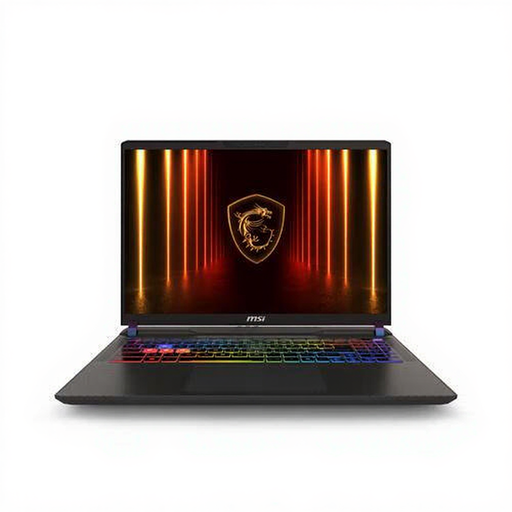
MSI Vector A16 HX A8WIG-025NL
Worth comparing if graphics hardware and the option to upgrade the memory are relevant to your workflow.
RTX 5080, 16 GB of memory and a 1 TB SSD. According to the product description, the memory can be upgraded to 96 GB.
16-inch Quad HD+ screen with a resolution of 2560 × 1600.
View at Joybuy
Frequently asked questions
Do I always need a dedicated graphics card for my language lesson?
No, not just because you’re editing a language lesson. First work out whether you’ll mainly be editing text and audio or complex video with effects. Then compare your software’s current requirements with the laptop you’re considering. The graphics specifications of one configuration aren’t a general minimum requirement.
How should I allow for large source files?
As well as the originals, include project files, working copies and exports in your storage calculations. If you use Premiere, its ingest workflow may copy or transcode files and create working copies in a location you choose. Check how other software handles source files.
What if the laptop I bought online isn’t suitable or breaks down early?
According to ACM ConsuWijzer, when you buy online as a consumer you generally have 14 days from delivery to change your mind, although there are exceptions you should check. Your statutory rights are separate from any manufacturer’s warranty. If a fault appears unexpectedly early, contact the seller; what you could reasonably expect from the product will be taken into account.
Can I use images of pupils in teaching materials without permission?
No, don’t assume you can use these images freely. The Dutch Data Protection Authority highlights the need for consent and good security when a school creates and publishes images. Check what applies to your lesson project; choosing a laptop doesn’t give you permission to use images.


