
Creator working with lots of lesson versions
You regularly update scripts and clips, and want to be able to find earlier edits. Keep editable project files and make separate backups alongside your choice of laptop.


Start with the requirements of your audio software and the size of your sessions. Then compare memory, storage and connections with what you actually use. If you often change project versions, editable project files and separate backups are just as important as extra processing power. If you also record speech, check your audio interface, its driver and whether fan noise could affect your recording setup.
You regularly update scripts and clips, and want to be able to find earlier edits. Keep editable project files and make separate backups alongside your choice of laptop.
You record speech again while creating a lesson track. Pay attention to your audio interface’s connection and settings, as well as noise in your recording space.
You often move your work between locations, so you need to balance a compact device against having enough screen space and connections for external equipment.
Start with your DAW’s requirements and the size of your sessions. Then compare memory, storage and connections, and decide how much screen space and portability you need.
| Consideration | What to look for when buying | Who is this important for? |
|---|---|---|
| Project versions and storage | Compare the SSD capacity with your own projects and source files. Also check how you’ll make backups, especially if you connect your interface and external storage at the same time. | If I often update lesson materials, I want to be able to retrieve earlier editable versions. Around 33% of consumers who mix a language-learning track prioritise project continuity. |
| Playback and recording | Check the requirements of your DAW and audio interface, including the supported driver and available port. Ableton recommends 16 GB RAM or more for Live; the configuration you need depends on your software and sessions. | When I want to monitor audio while recording speech, my interface and settings need to suit my recording setup. Around 27% of consumers give real-time audio and recording top priority. |
| Portability and workspace | Think about where you edit and whether you use an external monitor. Then compare the screen size and connections of the exact configuration. | If I work in different places, I weigh portability against having enough room to view tracks. Around 20% of consumers prioritise portability. |
| Software and configuration | Check that your existing DAW and plug-ins support the software version and operating system. Compare the memory and SSD configuration with your own projects. | If I already use software and equipment, I want to know in advance whether they’ll work with the laptop and avoid choosing a configuration I don’t need. Around 20% of consumers prioritise software and cost suitability. |
An exported file doesn’t preserve the same editable project structure as a saved project. If the lesson script changes, you won’t be able to carry on editing in the same way.
Keep the project file and separate backups alongside the exported lesson version. Audacity describes a project backup as a way to make a copy of a project.
The driver, buffer settings and USB connection can also affect recording and monitoring. More laptop power won’t automatically fix unsuitable settings or connections.
Before opting for extra laptop power, check your existing interface, the driver supported by its manufacturer and the connections you’ll need. Focusrite lists buffer settings as one of the first things to check when troubleshooting audio problems.
RTINGS reports that fan noise from the MacBook Pro 16 in its heavily loaded test configuration can be picked up in a recording. This isn’t a measurement of other models or every usage scenario.
Consider where you’ll place the laptop and microphone in your setup. If a quiet environment is important, check noise measurements for the exact configuration.
The features below apply to the product lines and configurations mentioned; they aren’t a general recommendation for an entire brand.
The 13-inch MacBook Air M5 configuration reviewed is a compact macOS option with 16 GB memory and a 512 GB SSD.
The ProBook 4 G1 configuration reviewed is a Windows laptop with a 16-inch screen, 16 GB RAM and a 512 GB SSD.
Lenovo discusses processor choice, memory, SSD storage and connections as points to consider when choosing laptops for music production.
The TUF Gaming A16 configuration reviewed is a Windows laptop with 16 GB RAM and a 512 GB SSD.
This selection focuses on laptops with larger screens for editing. For each configuration, check that it has the right specifications and connections for your software, audio interface and working style.
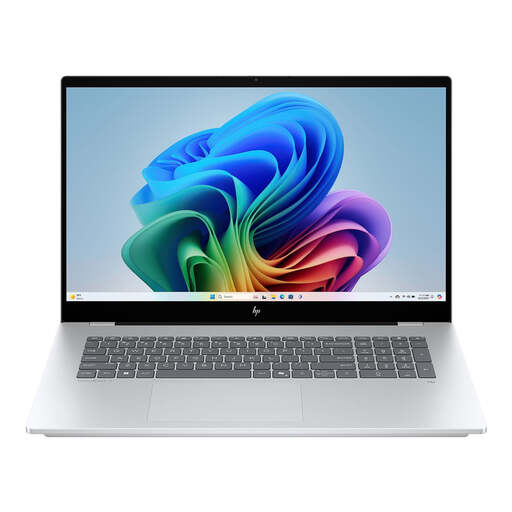 No image available
The 17.3-inch screen gives you more workspace for viewing project elements while editing.
Core Ultra 5 processor, 16 GB RAM, 512 GB SSD, and USB-A and USB-C connections.
 No image available
The 16-inch touchscreen and 360-degree hinge give you several ways to use the laptop when working in different places.
The product description lists Thunderbolt 4 and two USB-A ports. According to the description, the charger isn’t included.
 No image available
The 16-inch screen gives you more workspace while editing.
WUXGA OLED screen, Snapdragon X processor, 16 GB LPDDR5X, 512 GB SSD and Windows 11 Home.
 No image available
The 15.6-inch FHD screen gives you extra workspace when editing without an external monitor.
3050E processor, 16 GB DDR4 RAM and 512 GB SSD. The description lists USB 3.0, USB 2.0, USB-C and a 3.5 mm socket.
 No image available
The 15-inch screen gives you room to view project elements while editing. The product description lists a weight of 1.66 kg.
16 GB memory, 512 GB SSD, Windows 11 Pro and USB4 connectivity.
No, it isn’t a universal requirement. Ableton lists 8 GB RAM as the minimum for Live 12 and recommends 16 GB or more for heavier workloads. Also check the requirements of your own software and sessions.
Keep an editable project and make separate backups with clear names. Audacity distinguishes between a project and an exported WAV or MP3 file, and provides an option to make a project backup.
Check that you’re using a driver supported by your interface manufacturer, along with the USB connection and buffer settings. Focusrite’s instructions apply to the relevant interfaces and don’t mean that a particular laptop will work without latency.
There’s no universal yes or no. If a recording can be linked to an individual and an organisation processes the data, that organisation must have an appropriate legal basis under the GDPR. The Dutch Data Protection Authority lists consent as one possible legal basis; schools must also follow rules for protecting pupils’ data. Choosing a laptop doesn’t determine whether a particular recording is lawful.
According to ACM ConsuWijzer, online consumer purchases generally come with a 14-day cooling-off period after delivery. Check whether your purchase is covered by the rules and any exceptions.