
If you want to build offline
You want to be able to write code and consult instructions without a reliable internet connection. Set up the editor, project files and necessary documentation on your laptop in advance.


Choose your microcontroller and programming environment first, then check that the laptop supports your board’s software and connection. To work offline, make sure the editor, necessary files and documentation are available locally in advance. Portability and extra features only matter if they suit the way you plan to work on your project.
You want to be able to write code and consult instructions without a reliable internet connection. Set up the editor, project files and necessary documentation on your laptop in advance.
Choose your laptop with the software for your Arduino, Pico or micro:bit board in mind, as well as the cable connection. Arduino and the Micro:bit Educational Foundation describe different software and offline workflows, so check which one suits your board.
Consider screen space and portability alongside the cables or adapters you’ll need to carry. Check the specifications of the exact laptop configuration, rather than relying on the model range alone.
A good fit if: you want to use Arduino IDE 2 and can make the software and documentation available locally in advance. Arduino lists supported Windows, macOS and Linux systems; check the current system requirements for your version.
Bear in mind: having a compatible operating system doesn’t automatically make the necessary packages and files available offline.
A good fit if: micro:bit is your chosen board and you set up the offline workflow for MakeCode or the Python Editor in advance. The Micro:bit Educational Foundation says these editors can work offline on Windows, macOS, ChromeOS and Linux.
Bear in mind: according to the Micro:bit Educational Foundation, some extensions and services still require an internet connection.
A good fit if: the editor for your board works offline and you’ve tested how to transfer your programme to the board in advance.
Bear in mind: Arduino doesn’t list ChromeOS as a directly supported system for Arduino IDE 2. Linux on a Chromebook needs to be set up separately; Google notes that this option may not be available on managed work or school devices.
| What to consider | What should you check? | Who is this important for? |
|---|---|---|
| Working offline | If necessary, install the editor and open instructions and project files in advance without an internet connection. | If I want to carry on building without a connection, I need my software and files stored locally. Around 36% of consumers give working offline their highest priority. |
| Board and connections | Check that the operating system supports the editor and that the laptop is compatible with your board’s cable. | If you’re using a specific microcontroller board, you’ll want to know in advance that the software and connection work with it. Around 29% of consumers put this compatibility first. |
| Configuration and costs | Compare the memory, storage and screen of the exact configuration, and check which accessories you’ll need. | If I want to keep my code and documentation locally without paying for features I don’t need, I compare the actual configurations. Around 21% of consumers give this consideration priority. |
| Working in different locations | Consider the screen size and which cables or adapters you’ll need to take with you. | If you regularly move your workspace, you’ll want to weigh up screen space against what you can carry in your bag. Around 14% of consumers put having a portable workspace first. |
Offline capabilities vary by editor and feature. For example, the Micro:bit Educational Foundation notes that some extensions and services require an internet connection.
Before going offline, test that the editor, necessary extensions and instructions all work.
Having the right port doesn’t confirm that the software will work or that you can transfer the programme to your board. Lenovo specifications also show that ports and keyboard layouts can vary between configurations.
Check the full model number, the ports on the exact configuration and your board’s cable.
In the Netherlands, any manufacturer’s warranty is in addition to your statutory guarantee rights. According to ACM ConsuWijzer, if a product doesn’t meet reasonable expectations under normal use, the seller is responsible for providing a suitable solution.
When comparing additional cover, check what it offers beyond your statutory rights.
The IdeaPad Slim 3 14AHP10 and ThinkPad E14 Gen 7 are laptop ranges worth considering for local coding and documentation.
The HP ProBook 4 G1ah 14-inch is a specific configuration you can compare, not proof that every version is right for every project.
The Inspiron 14 2-in-1 7440 is worth comparing if a convertible design suits the way you read and work.
This selection focuses on Windows laptops for development software and documentation prepared for local use. Before buying, check that the editor and connection are compatible with your microcontroller.
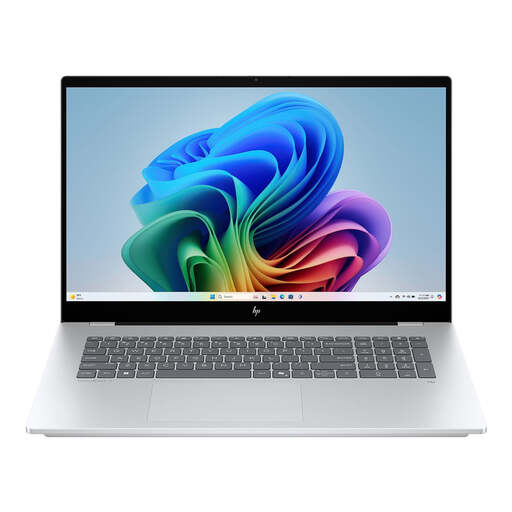 No image available
The 17.3-inch screen could suit you if you want plenty of room to view code and documentation. Check that the size works for your workspace.
17.3-inch FHD IPS touchscreen; Windows 11 Home; 16 GB memory; 512 GB SSD. The power adapter isn’t included and must be purchased separately.
 No image available
This 14-inch configuration could suit you if you’re looking for a more compact screen for reading and working. Check which connection your board’s cable uses first.
14-inch touchscreen with a 360-degree hinge; Windows 11 Home; 16 GB memory; 512 GB SSD; USB-A and USB-C connections. The laptop is supplied without a charger; a suitable USB-C charger is required separately.
 No image available
The listed 16-inch 16:10 touchscreen is worth considering if you want to view code and documentation side by side.
Windows 11 Home; 24 GB memory; 1 TB SSD; touchscreen with 2-in-1 modes.
 No image available
This configuration could suit you if you want to balance screen space with portability. Check that the QWERTY keyboard layout suits your preference.
15.3-inch screen; Windows 11 Home; Ryzen 7 8840HS; 16 GB memory; 512 GB SSD; two USB-A ports and one USB-C port. The charger must be purchased separately.
 No image available
The listed 18.4-inch screen gives you plenty of viewing space, but weigh that against carrying a laptop that, according to the description, weighs 2.60 kg.
Windows 11 Home; 16 GB memory; 512 GB SSD; USB-A and USB-C ports. A 45–65 W USB-C Power Delivery charger is required and isn’t included.
No, not for the offline workflows described by the Micro:bit Educational Foundation. Set up your chosen editor in advance; some extensions and services do require an internet connection.
Save the necessary instructions locally before going offline. Raspberry Pi describes a Pico extension for VS Code with offline SDK documentation; install the necessary development tools in advance.
Don’t assume that you can. Arduino lists Windows, macOS and 64-bit Linux with specific minimum versions, but doesn’t list direct ChromeOS support. A Chromebook may have a separate Linux environment that needs to be set up; Google notes that this may not be available on managed work or school devices.
You have statutory guarantee rights in addition to any manufacturer’s warranty. If a product doesn’t meet reasonable expectations under normal use, the seller must provide a suitable solution, according to ACM ConsuWijzer. This isn’t a general fixed two-year guarantee period.
In many cases, distance purchases come with a 14-day cooling-off period, according to the Dutch Government. Check the information and terms that apply to your purchase.