
Editor working to a tight deadline
You need to select, edit and export your interview footage and audio on time. The requirements of your editing software and source files will determine which specifications make sense for your work.


Start by considering your editing software, the resolution and the size of your source files. Then work out how much screen space, storage and portability you need for your review. For Premiere 25.x, Adobe specifies 16 GB RAM for HD media and recommends 32 GB or more and 8 GB of GPU memory for 4K and above. These are recommendations for that software version, not a guarantee of how quickly your project will run or requirements for every editing programme.
You need to select, edit and export your interview footage and audio on time. The requirements of your editing software and source files will determine which specifications make sense for your work.
You take your laptop between the filming location and your portfolio review. You’ll need to balance portability against the screen space required for your timeline and checking footage.
You want to check the footage, audio and final version ready for playback. Pay attention to the screen, ports and available space for your media files.
| What to consider | What should you check? | Who is this more relevant to? |
|---|---|---|
| Finishing editing and exporting on time | Compare the requirements for your software version and source resolution with the RAM, GPU memory and storage of the exact configuration. | If you still need to edit and export before your review, make sure the laptop suits your software and source material. Around 33% of consumers prioritise editing and exporting within the time available. |
| Taking it between locations | Compare the weight and screen size of the exact configuration, and check that it has the ports you need. | If you work between the filming location and the review, your laptop needs to be easy to carry without making the timeline impractically small. Around 27% of consumers prioritise portability between locations. |
| Checking the footage and speech | Check the screen configuration and test an export with the headphones or audio equipment you plan to use. | If you want to check both the footage and how clearly the speech can be heard before presenting, a usable screen and a thorough final check are important. Around 20% of consumers prioritise checking picture and sound. |
| Managing source files and the final version | Estimate how large your files will be, check the available SSD space and decide where to keep the final version ready for playback. | Store and move your source material, backup and final file in a way that works for your project. Around 20% of consumers prioritise file management. |
Memory, graphics card and screen can vary between configurations. Changing the configuration may affect other specifications too.
Compare the full model and the specific configuration you’ve selected with your software and project requirements. An unsuitable configuration could mean you need extra storage or a different laptop after all.
Adobe says that plug-ins built for Windows on Intel are not compatible with Windows on ARM.
Before you buy, check that the specific software version, camera files and plug-ins you need will work on the configuration you’ve chosen.
ACM ConsuWijzer distinguishes between statutory rights and any additional warranty offered by a retailer or manufacturer.
Check what a paid warranty plan adds and who you can contact if the product doesn’t meet your expectations.
The MacBook Pro with M5 Pro is worth considering if your editing programme and plug-ins suit a macOS workflow.
The Lenovo Legion Pro 5 Gen 10 configuration 83LT004SMH is a specific model to compare if you’re looking for a larger Windows laptop.
The ProArt P16 is designed for creative Windows workflows. Always compare the exact model before relying on screen or GPU specifications.
HP positions the ZBook X G1i for uses including video editing. The range may be relevant if you’re looking for a business workstation configuration.
The Dell Pro Max 16 Plus includes configurable workstation options for anyone looking to build a Windows setup to suit their needs.
These laptops are selected for editing and reviewing interview footage, with a range of screen sizes, storage configurations and ports. Compare the exact configuration with your software, source files and presentation setup.
 No image available
Consider comparing this configuration if you value a built-in screen and space for project files.
16-inch 3K OLED touchscreen; 32 GB RAM; 1 TB SSD.
 No image available
Compare this configuration if you’re considering an OLED screen for editing and checking footage.
15.3-inch OLED screen with 2560 × 1600 resolution; 32 GB memory; 512 GB SSD.
 No image available
Compare this 14-inch configuration if you’re looking for a laptop to take between locations.
14-inch Full HD screen; Intel Core 7 150U 10-Core; 16 GB DDR4; 512 GB SSD; stated weight 1.40 kg. The power adapter is not included and must be purchased separately.
 No image available
Compare this MacBook Pro if your editing programme and plug-ins suit a macOS workflow.
14.2-inch Liquid Retina XDR screen; 24 GB memory; 1 TB storage; QWERTY keyboard. The product information does not mention a charger.
 No image available
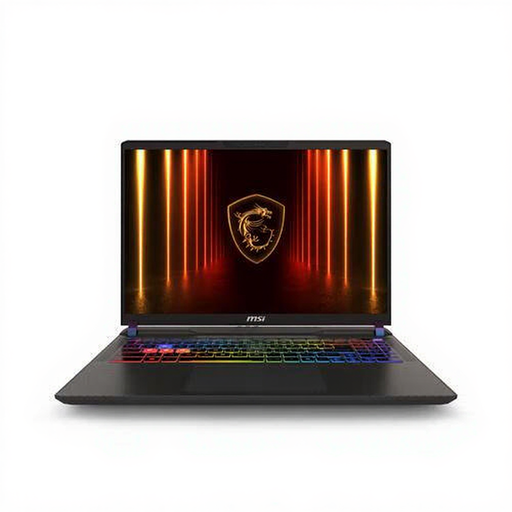
Compare this larger configuration if you want to weigh the stated GPU and storage against portability for your project.
16-inch screen with 2560 × 1600 resolution; NVIDIA GeForce RTX 5080 with 16 GB of video memory; 16 GB memory, upgradeable to 96 GB; 1 TB SSD; stated weight 2.7 kg.
Not necessarily. For Premiere 25.x, Adobe recommended 16 GB RAM for HD media and 32 GB or more for 4K and above. Check the requirements for your software version, resolution and effects; a recommendation doesn’t guarantee a particular export speed.
Not without first checking that your workflow is compatible. Adobe says that plug-ins built for Windows on Intel are not compatible with Windows on ARM, so check your version of Premiere and your camera files too.
Check that your editing programme and the codecs you need work with the laptop you’ve chosen. Import representative source files, test an export and try the playback setup you plan to use during the review.
ACM ConsuWijzer distinguishes between statutory rights and any warranty offered by the retailer or manufacturer. Compare what an additional plan includes and check who to contact if something goes wrong.
This depends in part on how and with whom you share the footage. The Dutch Data Protection Authority distinguishes between strictly private use and sharing with a wider audience. Discuss in advance with the interviewee where and how the material will be shared.