
Proofreader with a small desk
You replay recordings and edit the text using the built-in screen and keyboard. Sprekende Geschiedenis describes manual transcription as a way of working that gives you direct control over the text.


For listening to interviews and manually correcting transcripts, a compact laptop with an easy-to-read screen and keyboard is often a sensible place to start. The space available on your desk will also help determine which size is right for you. If you also want to transcribe automatically on your laptop, first check that your software works with the operating system and configuration of the exact model. Also consider the ports and included accessories: these determine whether you can use your existing headphones, storage or screen straight away.
You replay recordings and edit the text using the built-in screen and keyboard. Sprekende Geschiedenis describes manual transcription as a way of working that gives you direct control over the text.
You’re considering automatic transcription on your own computer. Check the requirements of your chosen software and how it handles recordings; the noScribe FAQ, for example, explains that compatibility may depend on the operating system.
You might use wired headphones, a USB device or a second screen, and want to know which ports the exact laptop configuration has. Manufacturers publish port lists for each model or configuration, so check the version on offer.
Start with the space on your desk and the way you work, then check software compatibility and the ports you need.
| What to consider | What to look for when buying | Who is this important for? |
|---|---|---|
| Desk space | Compare the screen size and laptop dimensions with the space available on your desk. Also consider whether you want to view audio and text side by side. | If you work at a small desk and need room for your laptop, audio controls and any peripherals, size matters even more. Around 36% of consumers put desk space first. |
| Extended listening and editing | Check the screen layout, keyboard configuration and whether there’s a headphone socket. Specifications don’t tell you how comfortable the keyboard is to type on. | For consumers who spend a long time editing, readability and comfortable typing matter more than compact size alone. Around 29% of consumers prioritise this way of working. |
| Software and processing | Check the operating system and system requirements for your transcription software. Find out whether recordings are processed locally or through a service. | If you want to transcribe automatically on your own computer, the software needs to be compatible with the configuration you choose. Around 21% of consumers prioritise software compatibility and processing. |
| Ports and accessories | Compare the ports with the connectors on your headphones, storage devices and screen. Also check whether the power adapter you need is included. | If you want to connect your existing equipment directly, the ports and included accessories may determine what else you need. Around 14% of consumers make this their top priority. |
A label in the product name doesn’t confirm that your transcription software will work with that specific configuration or that processing will take place on the laptop itself.
Compare the published system requirements for your software with the full model number and configuration you’re planning to buy.
Laptops can have different port configurations. For the ASUS Zenbook 14 OLED configuration reviewed, ASUS also states that the power adapter isn’t included; this won’t necessarily apply to other configurations.
Make a note of the connectors on your headphones, storage devices and screen, then check the ports and box contents for the exact model. Depending on what you find, you may need an adapter, hub or separate power adapter.
Apple quotes battery life for specific activities, such as video streaming and wireless internet use. This isn’t the same as measuring battery life during your transcription workflow.
Check which activity the stated test refers to, and don’t assume the same battery life will apply when using your software.
The 13-inch MacBook Air M5 is a compact macOS option if your transcription software works on macOS and you mainly use the built-in screen.
The ThinkPad X13 Gen 6 (Intel) is a compact Windows option with a range of port types.
The Dutch Zenbook 14 OLED UX3405CA range is a 14-inch Windows alternative; check the exact configuration.
The Dutch 14-inch OmniBook configurations are worth considering if you’re looking for a Windows laptop with more built-in screen space.
This selection includes compact Windows and macOS laptops, as well as 14-inch Windows models, for listening to and correcting transcripts and working with peripherals.
 No image available
The 13.3-inch screen suits a compact workspace; the listed ports are useful if you want to connect peripherals.
13.3-inch Full HD screen, AMD Ryzen AI 5, 16 GB of memory and a 512 GB SSD. The product description lists USB-A, USB-C and HDMI.
 No image available
The 14-inch screen gives you space for text and audio on the laptop itself; check that this size will fit on your desk.
Intel Core 3 304, 8 GB of RAM and a 512 GB SSD. The screen is 14 inches, with a 1920 × 1200 resolution and a 16:10 aspect ratio. The description lists two USB-A ports, two USB-C ports, HDMI and a combined audio socket.
A USB-C charger and stylus aren’t included. You’ll need a compatible USB-C Power Delivery charger to charge the laptop.
 No image available
This compact macOS laptop is an option if your transcription software works on macOS and you want to use the built-in screen.
13.6-inch screen, 24 GB of memory and 1 TB of storage. The description lists two Thunderbolt 4 ports and a headphone socket.
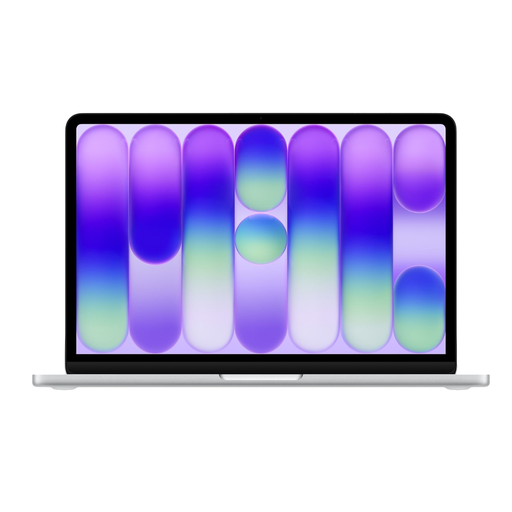 No image available
The 13-inch size is designed for people who use the built-in screen in a compact workspace; check that your software is compatible with macOS.
8 GB of memory and 512 GB of storage. The product description lists a resolution of 2408 × 1506 and two USB-C ports.
A USB-C power adapter isn’t included. You’ll need a USB-C adapter that supports USB Power Delivery and provides at least 20 W to charge the laptop.
 No image available
The 14-inch screen gives you more built-in workspace than a smaller model; measure your desk and check the keyboard layout.
Snapdragon X, 16 GB of RAM and a 512 GB SSD. The description lists a 14-inch WUXGA OLED screen with a 16:10 aspect ratio and a Dutch QWERTY keyboard. Ports include USB-A, USB-C, HDMI and 3.5 mm audio.
A compatible 65 W USB-C Power Delivery charger isn’t included and must be purchased separately.
Not for the correction task alone: listening to audio and editing text is different from generating an automatic transcript locally. If you want to do the latter, use your software’s system requirements as your guide; the available information doesn’t support a universal GPU requirement.
First measure the available width and depth, decide whether you’ll work with one window or two, and check how your headphones connect. An external screen or hub could be an option, but it also takes up space; the right setup depends on your desk and equipment.
First consider the content and purpose of the processing. According to the Dutch Data Protection Authority, collecting and using personal data requires a legal basis under the GDPR. Consent is one possible legal basis, but it isn’t automatically the only one or always the right one. Also check how your chosen service handles recordings.
When you buy online from a business, you generally have a 14-day cooling-off period, with some exceptions. The Dutch government also distinguishes between the cooling-off period and your rights if a product is faulty; according to the Dutch government, the Netherlands doesn’t have a fixed statutory warranty period of two years. Check the terms that apply to your purchase.