What should you look for?
Simple interview editing
Choose this option if: you mainly edit a single interview with few effects and want to take your laptop with you. Check that 16 GB of RAM and the rest of the configuration meet the needs of your software.
Bear in mind: 16 GB is not a general recommendation for 4K. The Consumers' Association recommends this amount for creative use, while Adobe recommends 32 GB or more for Premiere at 4K.
4K or editing with more effects
Choose this option if: your footage is in 4K or your timeline contains lots of effects. Compare your software’s requirements with the exact RAM, GPU and storage configuration.
Bear in mind: for Premiere on Windows, Adobe recommends 32 GB of RAM or more and 8 GB of GPU memory for 4K. Adobe also describes proxy files as a way to work with high-quality footage; make sure you allow space for your working files.
First, decide which resolution and software you’ll use. Then compare the configuration, storage and ports of the exact laptop model.
| What to consider |
What to look for when buying |
Who this matters most to |
| Editing and memory |
Compare the resolution and codec with your editing software’s requirements and the exact RAM and GPU configuration. The Consumers' Association recommends 16 GB for creative use; Adobe recommends 32 GB of RAM or more for Premiere at 4K, plus 8 GB of GPU memory on Windows. |
I want to make sure my laptop suits my footage and editing software before comparing other features. Around 33% of consumers put editing performance first. |
| Storage for project files |
Check the SSD capacity and where your footage, cache and proxy files will be stored. The Consumers' Association recommends 512 GB as a starting point for creative use; Adobe describes using a fast internal SSD for the app and cache, with additional fast storage for media. |
I want enough space for my footage and working files while I edit. Around 25% of consumers give project storage their highest priority. |
| Portability and connections |
Compare the screen size, weight and ports of the model you’re considering with your camera, storage and any monitor. Apple lists an SDXC slot among the features of the 14-inch MacBook Pro with M5 Pro; Lenovo describes the Yoga Pro 9i Gen 9 as a 16-inch model. |
I want to transfer files and edit on location without overlooking connections or portability. Around 17% of consumers give portability and connections their highest priority. |
| Room to grow |
Think about the resolution and features you expect to need for future projects, then check the full model specifications for RAM, GPU and storage. A product line name alone doesn’t tell you which configuration you’re buying. |
I want the configuration to suit my current interview project as well as the projects I expect to edit in future. Around 25% of consumers put future-proofing first. |
Laptops at Joybuy
This selection includes laptops with a range of memory, storage and graphics configurations for editing, as well as a MacBook Pro for those using macOS. Check that each model’s full configuration suits your software and footage.
 No image available
Thunderobot 16-inch laptop, i7-14700HX, RTX 5070, 32 GB, 1 TB
For those considering a Windows configuration with plenty of memory and storage; check your editing software’s requirements.
The product name lists an Intel Core i7-14700HX, RTX 5070, 32 GB RAM, 1 TB SSD and a 16-inch screen with 2560 × 1600 pixels. It also specifies a UK RGB keyboard.
View at Joybuy
 No image available
Lenovo Yoga 9 16N1X11 83N70020MH, 16-inch 2-in-1, 32 GB, 1 TB
For those considering a 16-inch 2-in-1 configuration with plenty of memory and storage; check your editing software’s requirements.
The product name lists 32 GB RAM and a 1 TB SSD. The product description mentions an OLED touchscreen with 2880 × 1800 pixels, a 360-degree hinge and pen input.
View at Joybuy
 No image available
Apple MacBook Pro 14-inch M5 Pro, 24 GB, 1 TB, Space Black
For those using macOS who want to run their chosen editing app on that platform; check that the memory and storage suit your project.
This model lists 24 GB of memory and a 1 TB SSD. Apple lists a media engine for H.264, HEVC and ProRes on the 14-inch M5 Pro; the product description also mentions SDXC and HDMI.
View at Joybuy
 No image available
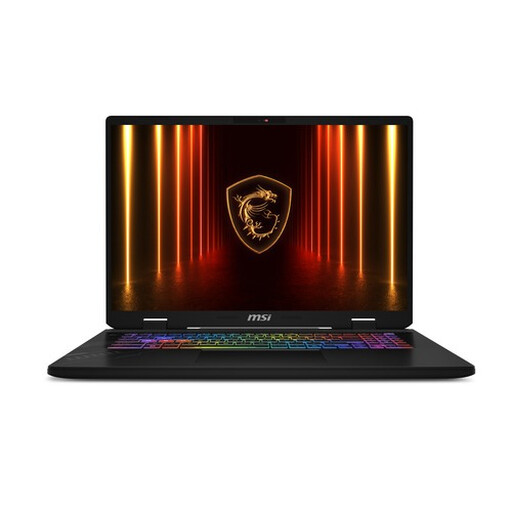
MSI Crosshair 17 HX AI D2XWFKG-071NL, RTX 5060, 32 GB, 1 TB
For those considering a 17-inch Windows model with 32 GB of RAM and a discrete GPU; compare the specifications with your software’s requirements.
The description lists an RTX 5060 with 8 GB of graphics memory, a 17-inch QHD+ screen and a 1 TB SSD. It weighs 2.8 kg, which is worth bearing in mind if you’ll be taking the laptop with you often.
View at Joybuy
 No image available
MSI Cyborg A15 AI B2HWGKG-248NL, RTX 5070, 16 GB, 512 GB
For those considering a 15.6-inch Windows laptop with 16 GB of RAM for interview editing; check separately that this configuration suits your resolution and editing software.
The description lists an RTX 5070 with 8 GB of graphics memory, 16 GB RAM, a 512 GB SSD, HDMI and a MicroSD card reader. For Premiere at 4K on Windows, Adobe recommends 32 GB of RAM or more.
View at Joybuy
Frequently asked questions
Do you need to buy a 4K laptop just to edit one interview?
Not just because you’re editing a video. First, check the resolution and codec of your footage and which editing app you’ll use. Adobe distinguishes between minimum requirements for HD and recommendations for HD and 4K, and recommends 32 GB of RAM or more for Premiere at 4K on Windows. Adobe also describes proxy files as a way to edit using lighter copies of your original footage.
How should you plan for storage while editing?
Allow space for both your footage and working files. Adobe describes transferring source files, creating proxy files and using a fast internal SSD for the app and cache. Set up your storage to suit your project, and keep the original footage for the final export.
What are your rights if a laptop bought online disappoints or develops a fault?
For a consumer purchase made online, ACM ConsuWijzer says you’ll generally have up to 14 days after delivery to change your mind, subject to exceptions. Your statutory rights are separate from any manufacturer’s warranty: if the product doesn’t perform as you could reasonably expect under normal use, the seller is responsible for putting things right. ACM ConsuWijzer warns that consumer protection may not apply automatically if you’re using the contract mainly for business purposes.
Can you publish an identifiable interview online without permission?
Don’t assume that you can. The Dutch Data Protection Authority explains that organisations need a lawful basis under the GDPR to publish personal data online, and that consent is required in most cases. There are exceptions, including for journalistic purposes. Before publishing, check the purpose, legal basis and any agreements that apply to the interview.


