
Writers who plan scenes
You want to plan, move and find scenes and chapters as you work on your novel.


Choose your writing software first, then check that the keyboard layout and screen space suit the way you work; you don’t necessarily need a powerful processor for a novel with section outlines. A compact model is useful if you write in different places, while a larger screen can give you more room for your manuscript and historical sources. The right option also depends on the software: according to Literature & Latte, the desktop version of Scrivener requires Windows or macOS.
You want to plan, move and find scenes and chapters as you work on your novel.
You refer to historical notes alongside your manuscript and want enough screen space and memory to run several programmes.
You’re weighing up a compact size against screen space and the battery life you need for your work.
First, choose the software you want to use to organise your chapters and scenes. Then compare the keyboard and screen space with the places where you write.
A good fit if: you want to use Scrivener for Windows or Word with heading styles and the Navigation pane.
Bear in mind: the makers of Scrivener list 64-bit Windows 10 or later and a minimum resolution of 1024 × 768 pixels as requirements for the desktop app; also check the specifications of the particular model.
A good fit if: you want to use macOS and the Mac version of Scrivener, and a compact writing setup matters to you.
Bear in mind: Literature & Latte lists macOS 11 or later for Scrivener; check this alongside the screen size of the configuration you’re considering.
A good fit if: Google Docs and its document outline meet your needs for organising chapters and sections.
Bear in mind: the makers of Scrivener list Windows and macOS for the desktop licences, not ChromeOS; check that the laptop suits your entire writing workflow before you choose.
| What to consider | What should you check? | Who is this important for? |
|---|---|---|
| Organising sections and scenes | Try your structure in the app you plan to use and check the operating system and other software requirements. | If I want to plan and find scenes, I want my writing programme to support the way I work. Around 36% of consumers put section planning first. |
| Comfort during long typing sessions | Try the keyboard layout, key feel and position of frequently used keys on the exact configuration. | If I write for long periods, I want to know first whether the keyboard feels comfortable. Around 29% of consumers put typing comfort first. |
| Sources alongside your manuscript | Decide whether you want to view documents side by side and check the screen, memory and ports on the configuration. | If I refer to historical notes alongside my writing, I want a clear view without constantly switching between windows. Around 21% of consumers prioritise source material and screen space. |
| Writing on the go | Compare the size and weight of the configuration; when looking at battery figures, check the activity and test conditions they refer to. | If I write in different places, I want to be able to take my laptop with me without choosing more screen space than I need. Around 14% of consumers put portability first. |
You don’t automatically need powerful graphics hardware for writing and planning sections. The Consumentenbond distinguishes between basic office work and more demanding tasks such as 4K video editing in its laptop advice.
Start with the writing software, keyboard and screen. Choose more powerful hardware only if you also use applications that require it.
Google Docs can show headings in a document outline, while Literature & Latte lists Windows and macOS for the Scrivener desktop licences covered here.
Try an example of your chapter structure in the software you actually want to use, and check the system requirements before choosing a laptop.
The Dutch government describes manufacturer and extended warranties as additions to existing consumer rights.
Read what any additional cover includes. If a product is faulty, contact the seller.
The MacBook Air with M5 is a macOS option to compare if you want a compact writing setup and use Mac software.
The ThinkPad E14 Gen 7 is a 14-inch Windows range to compare if keyboard layout and portability matter to you.
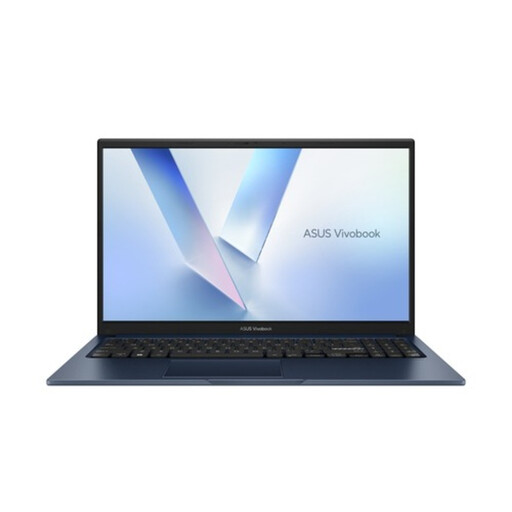
The Vivobook 15 X1504 is a Windows range with a larger built-in screen than more compact models.
The OmniBook 5 Flip 14 range is worth considering if you specifically want to compare a convertible 2-in-1 with a standard laptop.
This selection features Windows laptops to compare for writing software, document outlines and working with historical sources. Check that the features and accessories of each configuration suit the way you work.
 No image available
A Windows laptop to compare if you want to use writing software and documents on a 14-inch screen.
14-inch IPS touchscreen, 1920 × 1200 resolution, 16:10 aspect ratio, 8 GB RAM and 512 GB SSD; Windows 11 Home.
The USB-C charger isn’t included. The product description specifies a compatible 45–100 W USB-C Power Delivery charger.
 No image available
A Windows option to compare if you want to view your manuscript and historical sources on a larger built-in screen.
15.6-inch screen, 8 GB RAM and 256 GB SSD; Windows 11 Home and QWERTY keyboard.
 No image available
A Windows configuration to compare if you want extra built-in screen space and memory for running several programmes.
15-inch touchscreen, 2496 × 1664 resolution, 3:2 aspect ratio and 16 GB RAM; Windows 11 Pro and 512 GB storage.
 No image available
A Windows option to compare if you want a more compact screen for writing in different places.
13.8-inch touchscreen, 2304 × 1536 resolution, 3:2 aspect ratio, 16 GB RAM and 512 GB SSD; Windows 11 Pro. The stated weight is 1,34 kg.
 No image available
A Windows configuration to compare if you want plenty of built-in screen space for documents; its 18-inch size makes it less compact than smaller models.
18-inch WQXGA screen, 16 GB RAM, 1 TB SSD and GeForce RTX 5060 with 8 GB GDDR7; Windows 11 Home.
No. According to Literature & Latte, Scrivener has an Outliner for planning projects; Word can show heading styles in the Navigation pane, and Google Docs can display headings in a document outline. Try a sample chapter using the workflow you’re considering.
No. For the desktop licences covered here, Literature & Latte lists macOS 11 or later, or 64-bit Windows 10 or later with a minimum resolution of 1024 × 768 pixels. Check the requirements for the version you want to use.
When syncing a Scrivener project to the cloud, don’t treat it as a single document: Literature & Latte describes projects as files and folders. Follow the project-specific syncing instructions and keep a separate backup.
Not necessarily. The Consumentenbond says a basic processor is enough for light use; memory may be more relevant if you keep lots of programmes open at once. Demanding graphics work is a different use case.
For a consumer purchase, the Dutch government says the seller must supply a product that is fit for purpose; there is no fixed statutory warranty period that applies to every product. For eligible distance purchases, you generally have 14 days to change your mind, subject to statutory exceptions.